
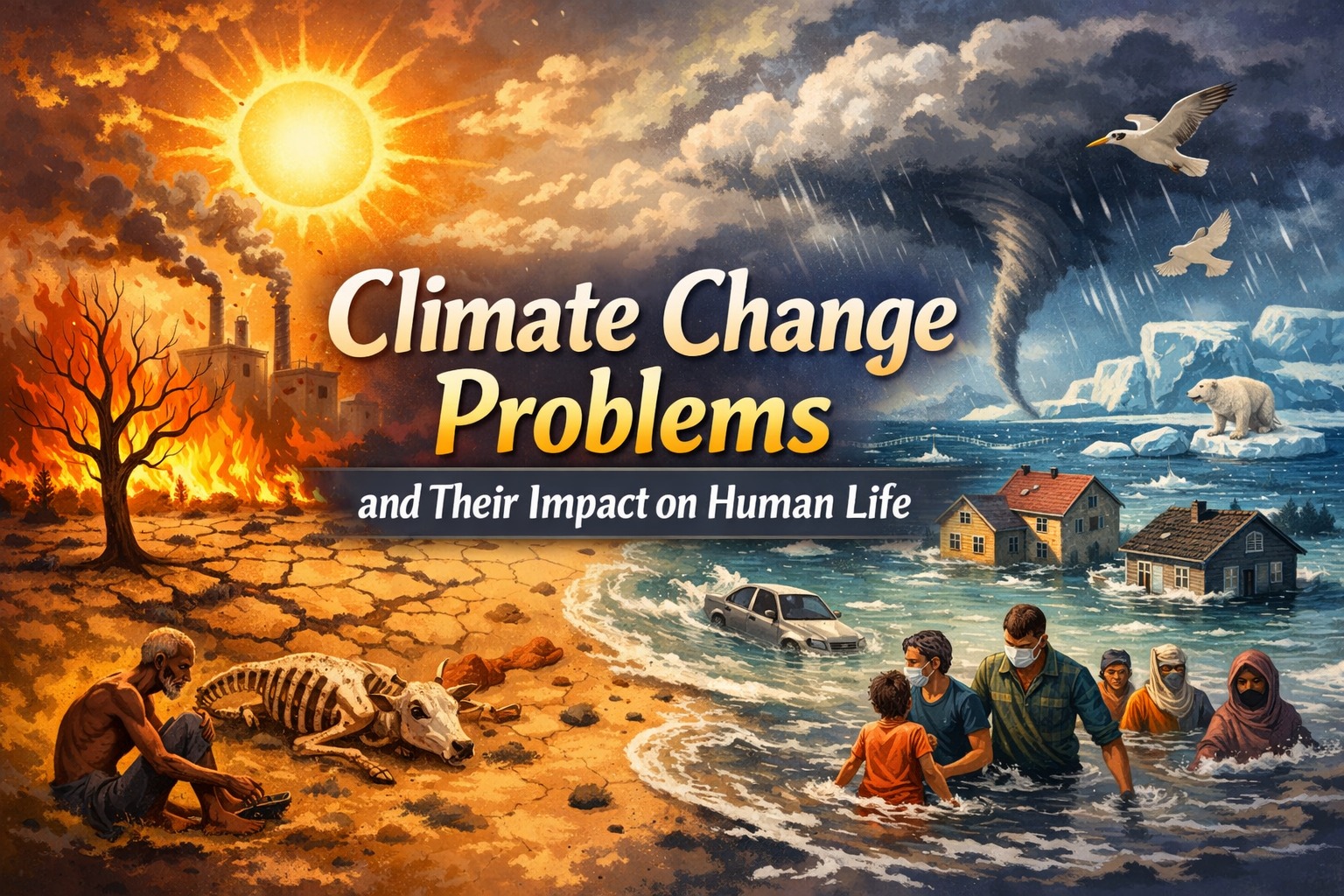
Climate change has become one of the biggest global challenges of the 21st century. Rising temperatures, unpredictable weather patterns, and environmental degradation are affecting millions of people worldwide. The issue is no longer a distant threat because its impacts can already be seen in daily life, from extreme heat to food shortages and natural disasters. Understanding climate change problems and their effects on human life is important to encourage awareness and collective action.
UNDERSTANDING CLIMATE CHANGE
Climate change refers to long-term changes in global temperatures and weather conditions. Although climate variations naturally occur over time, human activities have accelerated the process significantly. The excessive use of fossil fuels such as coal, oil, and natural gas releases greenhouse gases into the atmosphere. These gases trap heat and increase the Earth’s temperature.
Deforestation, industrial pollution, and rapid urbanization also contribute to environmental imbalance. As a result, the planet experiences global warming, melting ice caps, rising sea levels, and changing ecosystems.
MAJOR CLIMATE CHANGE PROBLEMS
GLOBAL WARMING
Global warming is one of the most serious climate-related problems. Increasing global temperatures cause heatwaves, droughts, and reduced water supplies. Many regions are experiencing hotter summers and shorter winters, disrupting agriculture and human activities.
EXTREME WEATHER EVENTS
Climate change increases the frequency and intensity of natural disasters such as floods, hurricanes, storms, and wildfires. These events destroy homes, infrastructure, and farmland, leading to economic losses and human suffering.
SEA LEVEL RISE
Melting glaciers and polar ice caps cause sea levels to rise. Coastal communities are at risk of flooding and erosion, forcing many people to relocate. Small islands are among the most vulnerable areas affected by rising oceans.
LOSS OF BIODIVERSITY
Climate change threatens plants and animals worldwide. Many species struggle to survive due to habitat destruction and temperature changes. The disappearance of biodiversity disrupts ecosystems that humans depend on for food, medicine, and clean air.
IMPACT OF CLIMATE CHANGE ON HUMAN LIFE
HEALTH PROBLEMS
Climate change directly affects human health. Air pollution and rising temperatures increase respiratory diseases, heatstroke, and cardiovascular problems. In some areas, warmer climates also contribute to the spread of infectious diseases carried by mosquitoes and other insects.
FOOD AND WATER INSECURITY
Agricultural production becomes less stable because of droughts, floods, and changing rainfall patterns. Crop failures can lead to food shortages and higher prices. At the same time, clean water becomes more difficult to access in regions experiencing prolonged dry seasons.
ECONOMIC CHALLENGES
Natural disasters and environmental damage create major financial burdens. Governments spend large amounts of money on disaster recovery and infrastructure repair. Farmers, fishermen, and small businesses are among the groups most affected by climate-related economic losses.
SOCIAL AND HUMANITARIAN ISSUES
Climate change can trigger migration and social conflict. People who lose their homes or livelihoods due to environmental disasters may move to other regions in search of safety and better opportunities. This situation can increase pressure on urban areas and public services.
SOLUTIONS TO REDUCE CLIMATE CHANGE IMPACTS
Addressing climate change requires cooperation from governments, businesses, and individuals. One important step is reducing greenhouse gas emissions by using renewable energy sources such as solar and wind power. Protecting forests and planting more trees also help absorb carbon dioxide from the atmosphere.
People can contribute by saving energy, reducing plastic waste, using public transportation, and supporting environmentally friendly products. Education and public awareness are essential to encourage sustainable lifestyles and environmental responsibility.
CONCLUSION
Climate change problems continue to affect human life in many ways, including health, food security, economic stability, and environmental sustainability. Without immediate action, future generations may face even greater challenges. By working together and adopting sustainable practices, society can reduce the negative impacts of climate change and create a healthier planet for everyone.
About the Author
Gusti Ayu Tita P
Author — STEKOM University
An active author focused on academic issues, educational technology, and human resource development in the campus environment.