
Creative Activities to Improve the Homeschooling Experience
Gusti Ayu Tita P
7 Oktober 2026
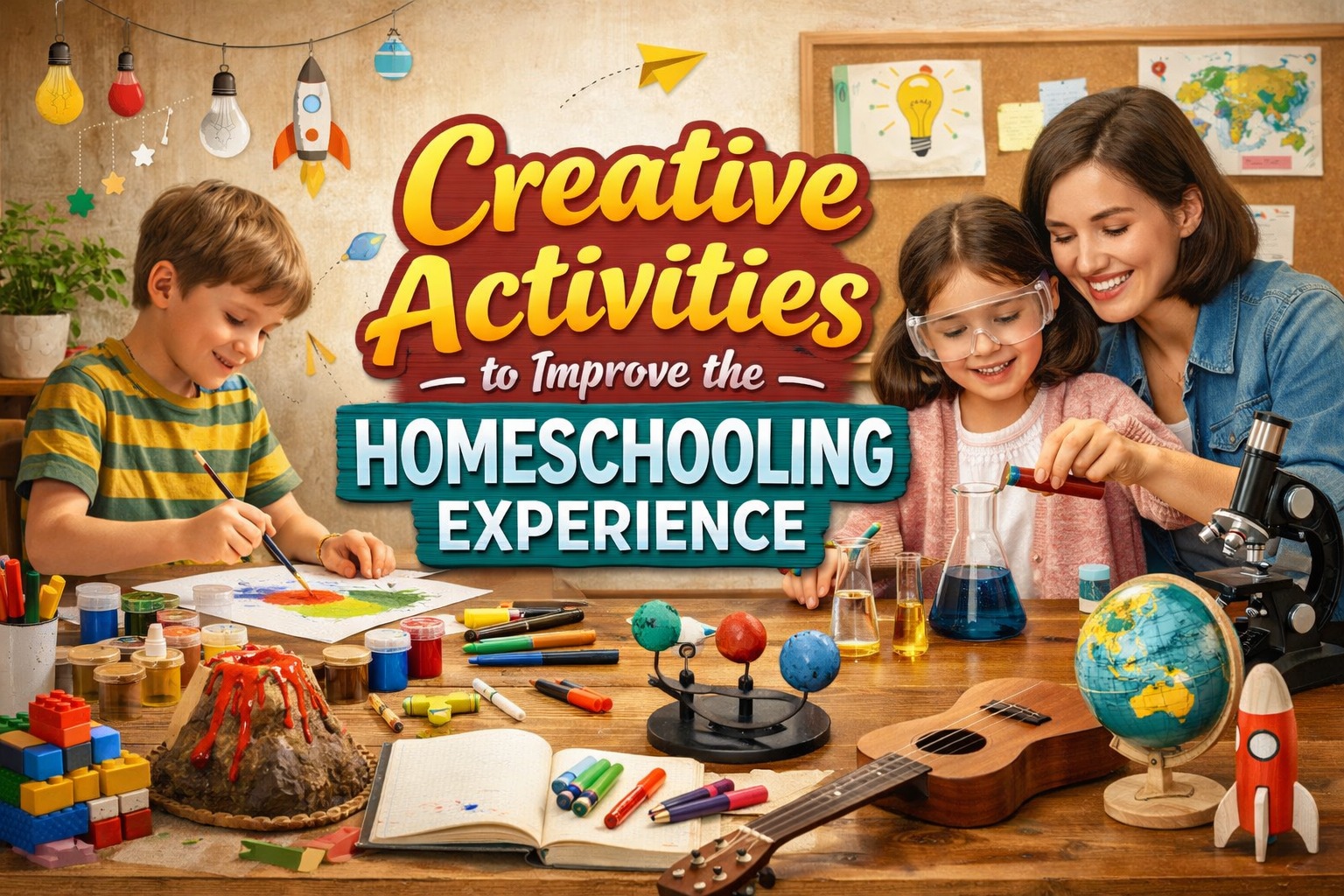
Homeschooling has become an increasingly popular learning method because it offers flexibility, personalized education, and a comfortable learning environment. However, maintaining motivation and enthusiasm can sometimes become a challenge if learning activities are too repetitive. Incorporating creative activities into daily lessons can make homeschooling more enjoyable while improving academic understanding and practical skills.
Creative learning experiences encourage children to become more curious, independent, and actively involved in the educational process. These activities also help develop important life skills such as communication, problem-solving, teamwork, and creativity. By combining education with fun experiences, homeschooling can become more engaging and effective for learners of all ages.
HANDS-ON SCIENCE EXPERIMENTS
One of the most effective ways to improve homeschooling is by introducing hands-on science experiments. Practical activities allow students to see theories come to life rather than simply reading about them in textbooks. Simple experiments using household materials can teach concepts related to chemistry, physics, biology, and environmental science in an enjoyable way.
Activities such as creating a volcano eruption model, growing plants, or building a simple electrical circuit encourage curiosity and critical thinking. These experiences help children remember lessons longer because they actively participate in the learning process. Practical experiments also develop observation skills and encourage students to ask meaningful questions about the world around them.
ART AND CRAFT PROJECTS
Art and craft projects provide an excellent opportunity for students to express their creativity while strengthening important academic skills. Drawing, painting, sculpting, and designing handmade projects can improve concentration and fine motor skills. Creative projects can also be connected with subjects such as history, geography, and literature.
For example, students can create historical models, design maps, or illustrate scenes from books they have read. These activities transform traditional lessons into memorable experiences. In addition, artistic activities often reduce stress and help maintain enthusiasm for learning over long homeschooling periods.
EDUCATIONAL COOKING ACTIVITIES
Cooking is a highly effective homeschooling activity because it combines learning with real-life experience. Preparing meals teaches important concepts in mathematics, science, and nutrition simultaneously. Measuring ingredients, calculating portions, and following instructions improve both accuracy and problem-solving abilities.
Children also develop responsibility and independence through cooking activities. Discussing healthy ingredients introduces valuable lessons about balanced diets and wellness. Educational cooking projects can easily become enjoyable family activities that strengthen relationships while supporting academic growth.
OUTDOOR LEARNING ADVENTURES
Learning outside the home environment can significantly improve the homeschooling experience. Nature walks, gardening projects, and local exploration activities provide valuable opportunities for practical education. Outdoor learning helps students connect classroom knowledge with real-world situations.
Observing plants, insects, weather patterns, and ecosystems makes science lessons more meaningful and engaging. Physical activities outside also improve health, concentration, and emotional well-being. A change of environment often refreshes students' minds and increases their motivation to learn.
STORYTELLING AND CREATIVE WRITING
Encouraging children to participate in storytelling and creative writing activities can greatly improve communication skills. Writing stories allows students to explore their imagination while developing vocabulary and grammar abilities. Reading stories aloud also strengthens speaking confidence and presentation skills.
Students can write short stories, create comic books, or develop scripts for family performances. These activities make language learning more enjoyable and interactive. Creative writing also encourages emotional expression and helps children organize their thoughts more effectively.
EDUCATIONAL GAMES AND ROLE PLAY
Games and role-playing activities transform lessons into exciting experiences. Educational board games, quizzes, and simulations can reinforce important concepts without creating unnecessary pressure. Students often learn faster when they feel entertained and involved.
Role-playing historical events, scientific discoveries, or business situations helps learners understand topics from different perspectives. These activities improve memory retention and communication abilities. Interactive learning methods also encourage collaboration and teamwork within homeschooling families or learning groups.
DIGITAL CREATION PROJECTS
Modern homeschooling benefits greatly from digital creation projects. Students can create presentations, videos, podcasts, or simple websites to demonstrate their understanding of a topic. These projects combine creativity with valuable technology skills that are increasingly important in today's world.
Digital projects encourage independent research and improve information literacy. Producing original content also helps students develop confidence in presenting ideas. By using technology creatively, homeschooling becomes more dynamic and aligned with future educational and professional needs.
CONCLUSION
Creative activities play a major role in making homeschooling more engaging, effective, and enjoyable. Combining academic subjects with practical experiences, creative expression, and interactive learning methods helps students remain motivated and enthusiastic about education. These activities also develop essential life skills that extend beyond traditional academic knowledge.
Parents and tutors who regularly introduce new learning experiences can create a richer educational environment. A balanced combination of creativity and structure allows homeschooling students to achieve both academic success and personal growth. As homeschooling continues to evolve, creative learning approaches will remain one of its greatest strengths.
About the Author
Gusti Ayu Tita P
Author — STEKOM University
An active author focused on academic issues, educational technology, and human resource development in the campus environment.