Understanding The Role Of Campus Volunteers In Supporting Academic And Non-Academic Activities
Gusti Ayu Tita P
7 Oktober 2026
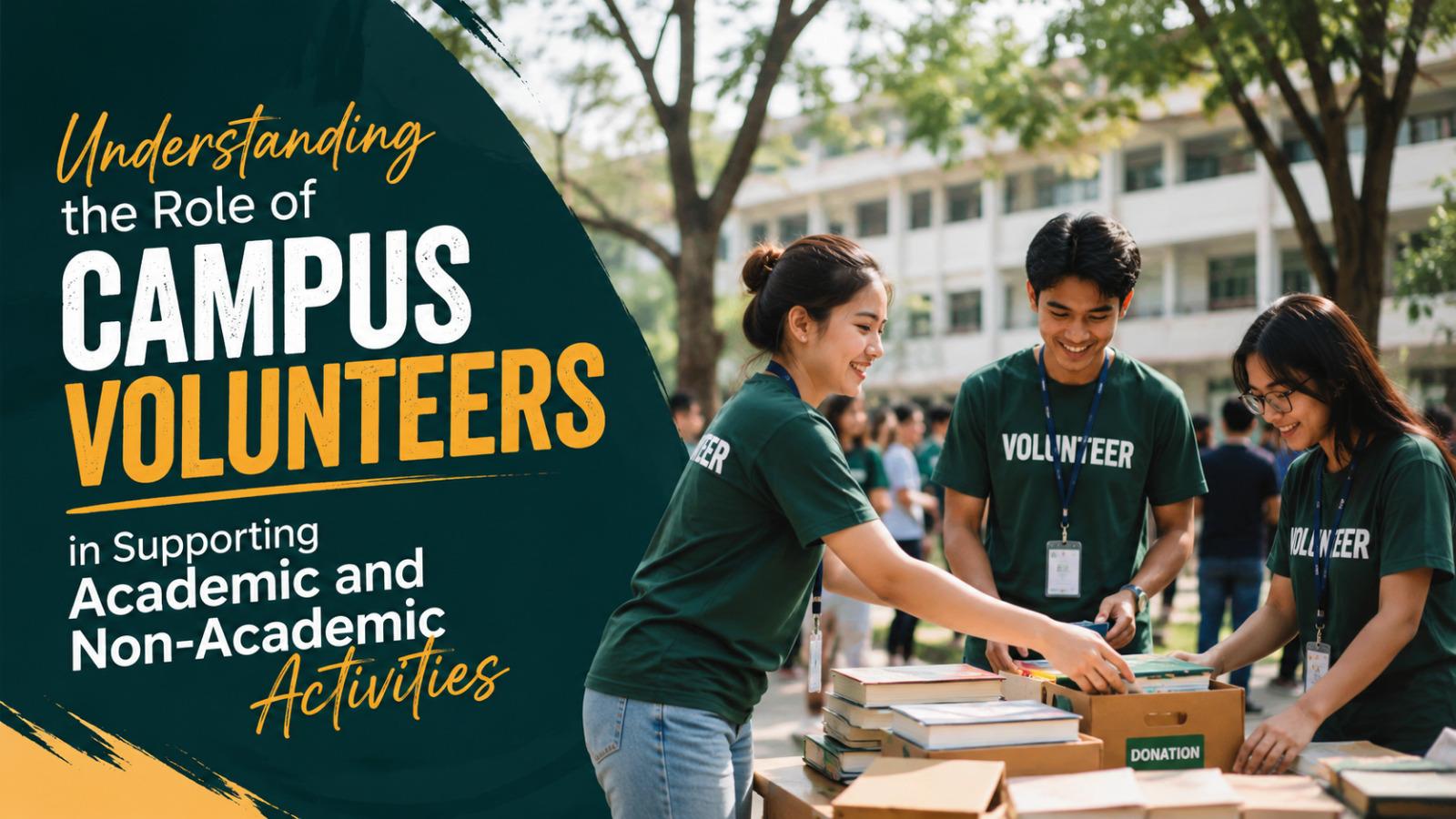
Campus life is not only about attending classes and completing assignments. Universities also provide various opportunities for students to develop leadership, teamwork, and organizational skills through volunteer activities. One of the most valuable contributions students can make is becoming campus volunteers who actively support both academic and non-academic programs.
The presence of volunteers helps universities organize events, improve student engagement, and create a more dynamic learning environment. Through their participation, volunteers gain practical experience while contributing positively to the campus community. Understanding the role of campus volunteers is essential because their involvement significantly impacts the success of many university activities.
THE IMPORTANCE OF CAMPUS VOLUNTEERS IN HIGHER EDUCATION
Campus Volunteers play a crucial role in supporting university operations and student development. They assist in organizing events, facilitating communication, and ensuring that activities run smoothly. Their contributions help create a welcoming and productive environment for students, faculty members, and visitors.
In addition, volunteer programs provide opportunities for students to develop practical skills beyond the classroom. By participating in different projects, volunteers gain experience in leadership, problem-solving, and collaboration. These experiences prepare them for future careers and personal growth.
SUPPORTING ACADEMIC ACTIVITIES ON CAMPUS
One of the primary responsibilities of volunteers is assisting with Academic Activities. They often help organize seminars, workshops, conferences, research presentations, and orientation programs for new students. Their support allows educational events to be conducted more efficiently and effectively.
Volunteers may also assist lecturers and organizers with registration processes, participant coordination, and event logistics. Through these responsibilities, they learn how academic programs are planned and executed. This experience strengthens their organizational abilities and professional mindset.
CONTRIBUTING TO NON-ACADEMIC PROGRAMS
Beyond academics, volunteers actively participate in various Student Engagement initiatives. These may include cultural festivals, sports competitions, charity programs, leadership training, and community service activities. Such events enrich campus life and encourage students to become more involved in extracurricular experiences.
Their involvement helps create a vibrant campus atmosphere where students can explore their interests and talents. Volunteers often serve as coordinators, facilitators, or team members who ensure activities are enjoyable and beneficial for participants. Their dedication contributes significantly to the overall student experience.
DEVELOPING ESSENTIAL PROFESSIONAL SKILLS
Participating in volunteer programs is an effective way to improve Leadership Skills and other professional competencies. Volunteers frequently work with diverse groups of people, requiring them to communicate clearly, manage responsibilities, and solve challenges efficiently.
They also develop adaptability and time management skills while balancing academic commitments with volunteer duties. These competencies are highly valued by employers because they demonstrate initiative, responsibility, and a willingness to learn. As a result, volunteer experience can become a strong addition to a student's portfolio.
STRENGTHENING COMMUNITY CONNECTIONS
Volunteer activities often encourage collaboration between universities and the wider community. Through Community Support programs, students participate in educational outreach, environmental campaigns, social initiatives, and public service projects. These activities help address community needs while promoting social responsibility.
By engaging directly with society, volunteers gain a broader perspective on real-world challenges. They learn the importance of empathy, teamwork, and civic engagement. This experience helps shape well-rounded graduates who are prepared to contribute positively to society.
ENHANCING CAMPUS DEVELOPMENT
The contribution of volunteers extends beyond event support. Through Volunteer Programs, students often provide valuable feedback, innovative ideas, and creative solutions that help improve campus services and activities. Their involvement allows universities to better understand student needs and expectations.
Furthermore, active volunteers often become role models for their peers. Their enthusiasm and commitment inspire others to participate in campus initiatives. This creates a culture of collaboration, responsibility, and continuous improvement within the university environment.
CONCLUSION
Campus Volunteers play a vital role in supporting both academic and non-academic activities in higher education. Their contributions help universities organize successful programs, strengthen student engagement, and create a more dynamic campus environment. Through volunteer experiences, students develop valuable professional skills, expand their networks, and enhance their personal growth.
By participating in Volunteer Programs, students not only contribute to campus success but also prepare themselves for future career opportunities. Their involvement demonstrates leadership, responsibility, and commitment to positive change, making campus volunteering an important part of the university experience.
About the Author
Gusti Ayu Tita P
Author — STEKOM University
An active author focused on academic issues, educational technology, and human resource development in the campus environment.