Differences Between UMR, UMK, and UMP Salaries
Gusti Ayu Tita P
12 Juli 2026
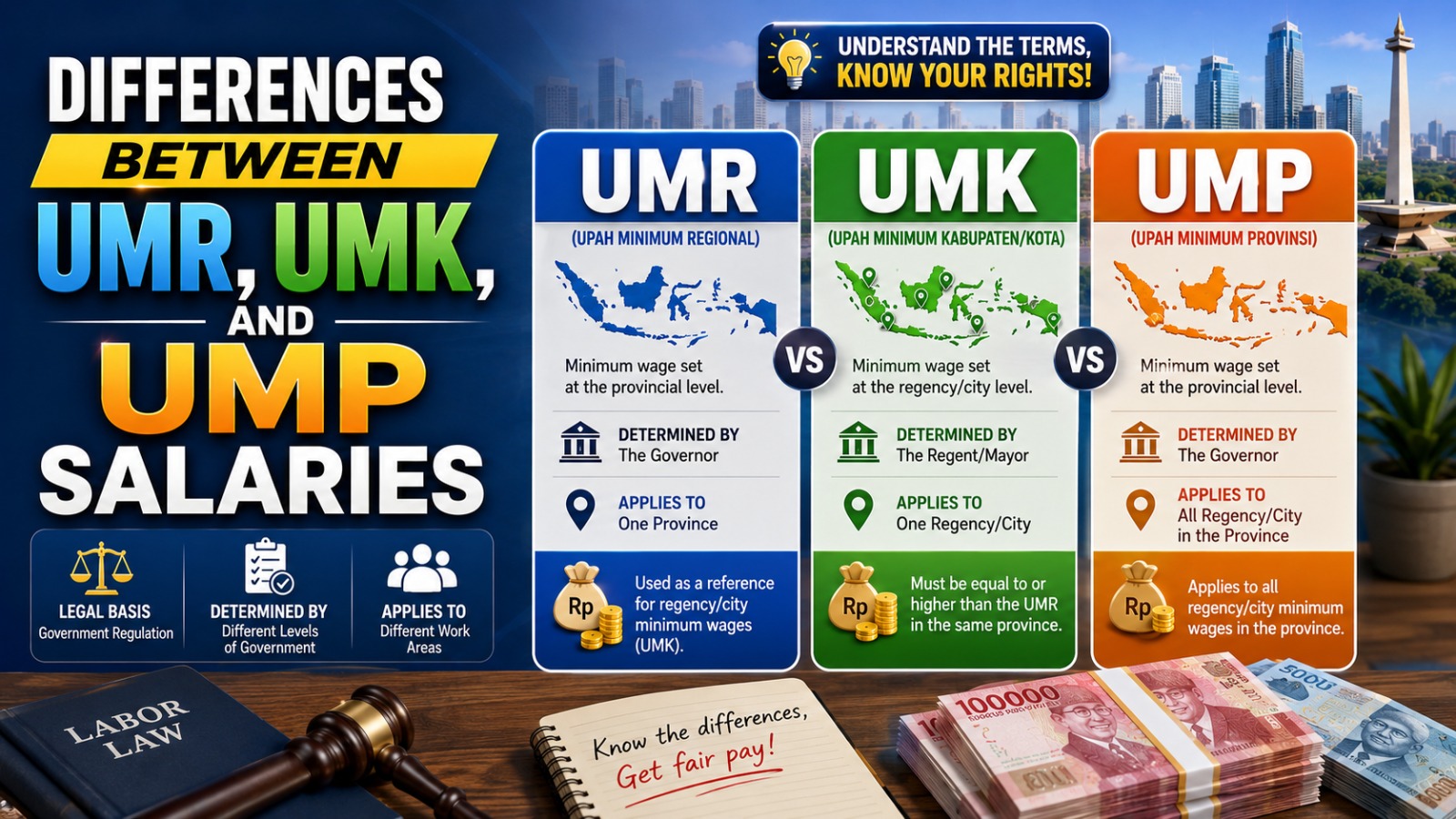
Many workers in Indonesia still feel confused about the differences between UMR, UMK, and UMP salaries. These terms are often used in job advertisements, employment contracts, and salary discussions. Although they all relate to minimum wage standards, each term has a different meaning and legal scope.
Understanding these differences is important for employees, job seekers, and business owners to avoid misunderstandings regarding salary regulations in Indonesia.
WHAT IS UMR
UMR stands for Upah Minimum Regional or Regional Minimum Wage. This term was widely used in Indonesia before the government updated labor regulations.
In the past, UMR referred to the minimum salary standard determined by regional governments. However, the term UMR is no longer officially used in current labor policies. Even so, many people still commonly use the word UMR in everyday conversations.
Today, UMR has been replaced by two official wage systems: UMP and UMK.
WHAT IS UMP
UMP stands for Upah Minimum Provinsi or Provincial Minimum Wage. This is the minimum wage determined by the governor for an entire province.
The UMP applies to workers in all cities and regencies within the province if those areas do not yet have their own UMK rates. Provincial governments calculate UMP based on several economic factors such as inflation, economic growth, and living costs.
Usually, UMP becomes the basic reference for salary standards across the province.
EXAMPLE OF UMP
For example, the UMP of DKI Jakarta is higher than many other provinces because the cost of living and economic activity in Jakarta are significantly higher.
Workers in industries such as finance, technology, and services generally receive salaries based on or above the provincial minimum wage.
WHAT IS UMK
UMK stands for Upah Minimum Kabupaten/Kota or Regency/City Minimum Wage. This wage standard is determined specifically for cities or regencies within a province.
UMK is usually higher than UMP because cities and industrial areas often have greater living expenses and stronger economic activities.
Local governments propose UMK rates to governors after considering recommendations from labor councils and business sectors.
EXAMPLE OF UMK
Industrial cities such as Bekasi, Karawang, and Batam often have higher UMK salaries compared to their provincial UMP standards. This happens because these regions have many factories, manufacturing companies, and international investments.
As a result, companies must offer more competitive wages to attract workers.
MAIN DIFFERENCES BETWEEN UMR, UMP, AND UMK
The main differences can be seen in their legal status, authority, and coverage area.
| Type | Meaning | Coverage | Status |
|---|---|---|---|
| UMR | Regional Minimum Wage | General regional term | Old term |
| UMP | Provincial Minimum Wage | Entire province | Official |
| UMK | Regency/City Minimum Wage | Specific city or regency | Official |
In practice, UMK is often higher than UMP because city living costs are generally more expensive than provincial averages.
WHY THESE SALARY STANDARDS ARE IMPORTANT
Minimum wage regulations help protect workers from unfair salaries and ensure a minimum standard of living. They also create guidelines for companies in determining employee compensation.
For job seekers, understanding UMP and UMK helps compare salaries between different regions before accepting job offers.
Meanwhile, employers use these standards to comply with labor laws and maintain fair workplace practices.
FACTORS THAT AFFECT MINIMUM WAGES
Several factors influence the determination of UMP and UMK every year, including:
- Inflation rate
- Economic growth
- Cost of living
- Productivity levels
- Employment conditions
- Regional economic development
Industrial and metropolitan areas usually receive larger wage increases compared to rural regions.
CONCLUSION
The differences between UMR, UMK, and UMP salaries mainly lie in their scope and legal usage. UMR is an old term that is no longer officially used, while UMP and UMK are the current wage systems applied in Indonesia.
UMP applies at the provincial level, while UMK applies specifically to cities and regencies. Understanding these salary systems can help workers and employers make better employment and financial decisions.
About the Author
Gusti Ayu Tita P
Author — STEKOM University
An active author focused on academic issues, educational technology, and human resource development in the campus environment.