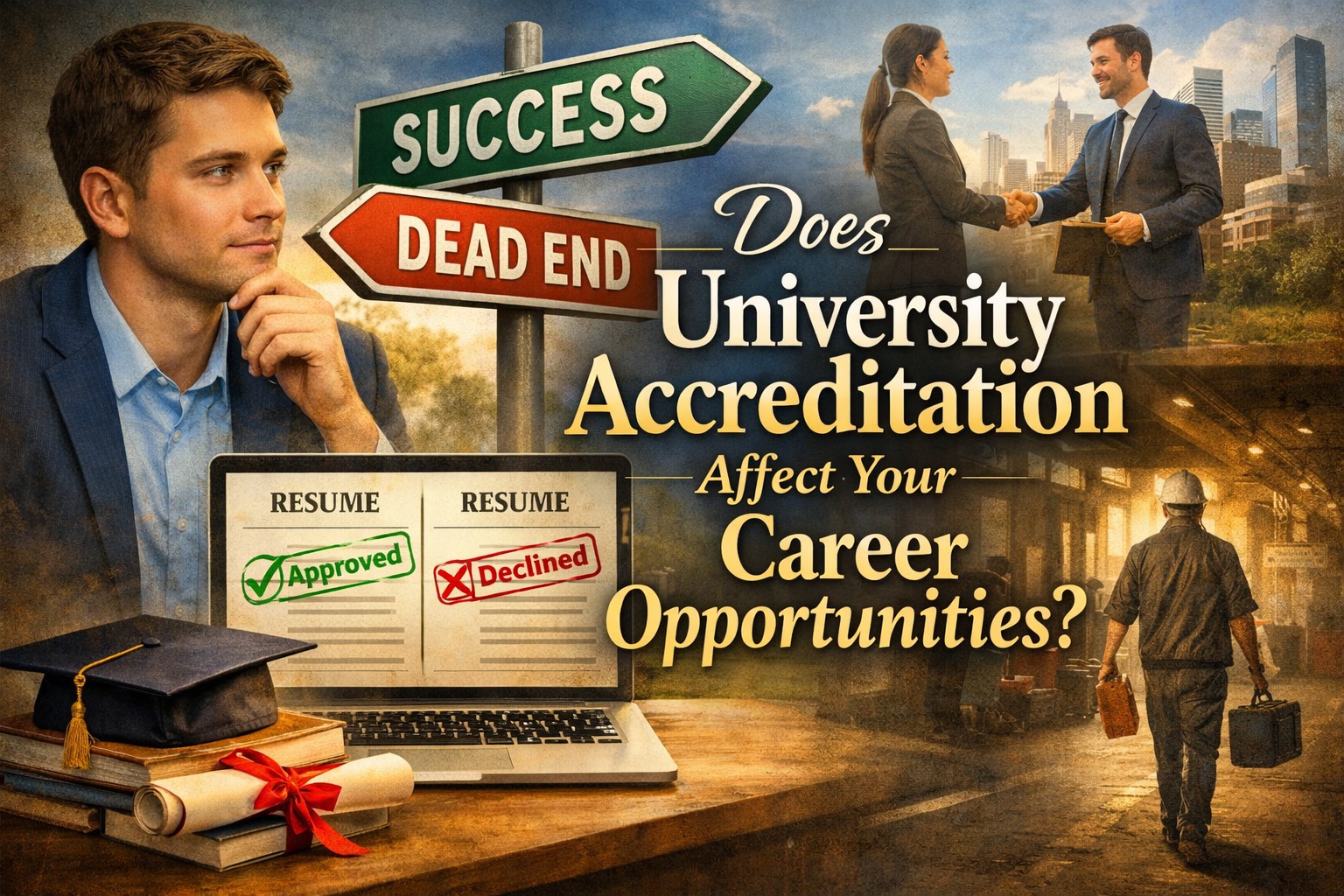
Choosing a university is an important investment in your future. While students often focus on tuition fees, campus facilities, and academic programs, university accreditation is another factor that deserves careful attention. Accreditation reflects whether a university meets recognized educational standards and can influence how employers and institutions view a degree.
Many prospective students wonder whether university accreditation really affects career opportunities after graduation. The answer is yes, but accreditation is only one part of the equation. Employers also value practical skills, work experience, communication abilities, and professional achievements when evaluating job candidates.
WHAT IS UNIVERSITY ACCREDITATION?
University accreditation is a formal quality assurance process that evaluates whether a higher education institution meets established academic standards. The assessment includes important areas such as curriculum, faculty qualifications, research, student support, governance, and campus facilities. Universities that meet these standards receive accredited status.
Accreditation demonstrates that a university is committed to maintaining educational quality and continuous improvement. It also assures students that they are earning a degree from a recognized institution.
HOW ACCREDITATION CAN IMPACT YOUR CAREER?
In many industries, university accreditation can positively influence career opportunities. Some employers, government agencies, and professional organizations prefer or require applicants to graduate from accredited institutions. An accredited degree may also satisfy eligibility requirements for certain professional certifications or postgraduate education.
However, accreditation alone does not guarantee employment. Most employers focus on whether candidates have the knowledge, technical abilities, and workplace skills needed to perform successfully in their roles.
OTHER FACTORS EMPLOYERS CONSIDER?
Besides accreditation, employers often evaluate a candidate's technical skills, communication abilities, teamwork, leadership, and problem-solving capabilities. Internship experience, volunteer work, research projects, certifications, and extracurricular activities also strengthen a graduate's professional profile.
Students who actively develop both hard skills and soft skills during university usually have stronger career prospects. Practical experience often becomes a key advantage during the recruitment process.
WHY ACCREDITED UNIVERSITIES STILL MATTER?
Studying at an accredited university provides access to quality education, experienced faculty, updated curricula, and better academic resources. These advantages help students build the knowledge and competencies required in today's competitive job market.
Accredited universities may also have stronger partnerships with industries, internship providers, and international institutions. These connections can create additional opportunities for career development before and after graduation.
HOW TO IMPROVE YOUR CAREER PROSPECTS?
Students should not rely solely on university accreditation to build successful careers. Participating in internships, professional training, research, student organizations, and networking events can significantly improve employability. Earning industry certifications and continuously updating professional skills are equally valuable.
Building a strong portfolio and maintaining a positive attitude toward lifelong learning will help graduates remain competitive regardless of their chosen career path.
CONCLUSION
University accreditation can positively affect career opportunities by demonstrating that a university meets recognized educational standards. It may provide advantages for employment, scholarships, postgraduate education, and professional licensing. However, long-term career success depends on much more than accreditation. Developing practical experience, technical expertise, communication skills, and professional competence remains essential for achieving career goals.
About the Author
Gusti Ayu Tita P
Author — STEKOM University
An active author focused on academic issues, educational technology, and human resource development in the campus environment.