
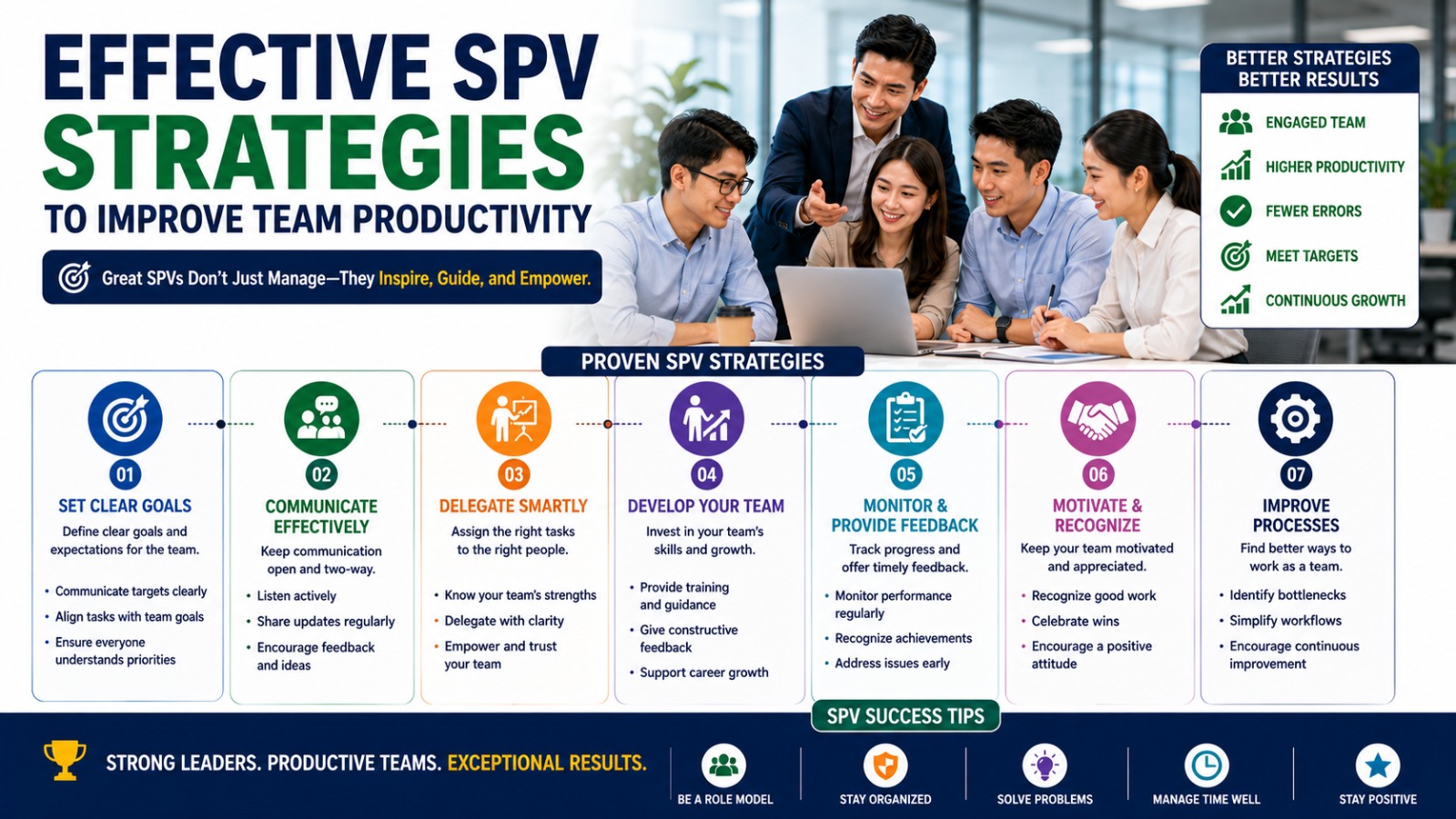
Supervisors, commonly known as SPVs, play a major role in improving team productivity within a company. They are responsible for guiding employees, managing daily operations, maintaining discipline, and ensuring organizational targets are achieved efficiently. A productive team not only improves business performance but also creates a healthier and more motivated work environment.
To achieve high productivity, supervisors must apply effective leadership and management strategies. Strong SPV strategies help employees stay focused, motivated, and committed to company goals.
WHY TEAM PRODUCTIVITY IS IMPORTANT
Team productivity directly affects company performance, operational efficiency, and customer satisfaction. Productive teams can complete tasks faster, reduce errors, and contribute more effectively to business growth.
High productivity also provides several benefits, including:
- Improved operational efficiency
- Better teamwork and communication
- Higher employee motivation
- Increased customer satisfaction
- Stronger company competitiveness
Supervisors who successfully improve team productivity can significantly support organizational success.
SET CLEAR GOALS AND EXPECTATIONS
One of the most effective strategies for improving productivity is setting clear goals and expectations. Employees should understand their responsibilities, deadlines, and performance standards clearly.
HOW TO IMPLEMENT THIS STRATEGY
SPVs should:
- Communicate work targets clearly
- Define employee responsibilities
- Set realistic deadlines
- Provide measurable performance standards
Clear expectations reduce confusion and help employees stay focused on priorities.
IMPROVE WORKPLACE COMMUNICATION
Effective communication is essential for productive teamwork. Poor communication often leads to misunderstandings, delays, and workplace conflicts.
WAYS TO IMPROVE COMMUNICATION
- Conduct regular team meetings
- Encourage employee feedback
- Provide clear work instructions
- Listen actively to employee concerns
- Maintain open communication channels
Good communication helps teams work more efficiently and strengthens workplace relationships.
MOTIVATE EMPLOYEES REGULARLY
Motivated employees are generally more productive and committed to their work. Supervisors should create a positive environment that encourages employee enthusiasm and engagement.
EFFECTIVE MOTIVATION METHODS
- Recognizing employee achievements
- Providing constructive feedback
- Offering career development opportunities
- Supporting employee growth
- Celebrating team successes
Employee motivation improves morale and encourages better work performance.
DELEGATE TASKS EFFECTIVELY
Some supervisors make the mistake of handling too many responsibilities themselves. Effective delegation helps distribute workloads fairly and allows employees to develop their skills.
BENEFITS OF TASK DELEGATION
- Improves operational efficiency
- Reduces supervisor workload
- Increases employee confidence
- Encourages teamwork
- Develops employee skills
SPVs should assign tasks based on employee abilities and provide proper guidance when necessary.
PROVIDE TRAINING AND DEVELOPMENT
Employee skills directly affect team productivity. Supervisors should encourage continuous learning and development to improve employee performance.
TYPES OF PRODUCTIVITY TRAINING
- Technical skill training
- Communication workshops
- Leadership development
- Time management training
- Problem-solving exercises
Training helps employees perform tasks more efficiently and adapt to workplace changes.
MONITOR PERFORMANCE CONSISTENTLY
Regular performance monitoring helps supervisors identify problems early and provide timely support to employees.
EFFECTIVE PERFORMANCE MONITORING METHODS
- Reviewing work progress regularly
- Tracking productivity metrics
- Conducting performance evaluations
- Providing constructive feedback
- Identifying improvement areas
Consistent monitoring helps maintain accountability and operational efficiency.
ENCOURAGE TEAMWORK AND COLLABORATION
Strong teamwork improves productivity and workplace morale. Supervisors should create an environment where employees support each other and work toward shared goals.
WAYS TO STRENGTHEN TEAMWORK
- Promote mutual respect
- Encourage idea sharing
- Resolve conflicts quickly
- Organize team-building activities
- Support collaborative problem-solving
Collaborative teams usually perform more efficiently and effectively.
MANAGE TIME EFFECTIVELY
Time management is critical for maintaining productivity. Supervisors should help employees prioritize tasks and avoid unnecessary delays.
TIME MANAGEMENT STRATEGIES
- Create clear work schedules
- Set task priorities
- Reduce unnecessary meetings
- Monitor deadlines carefully
- Encourage efficient work habits
Good time management helps teams complete tasks more efficiently.
CREATE A POSITIVE WORK ENVIRONMENT
A positive workplace culture can significantly improve employee productivity and job satisfaction. Employees work better when they feel respected, supported, and appreciated.
ELEMENTS OF A POSITIVE WORKPLACE
- Fair treatment
- Respectful communication
- Employee recognition
- Supportive leadership
- Healthy work relationships
Positive environments encourage employees to stay motivated and productive.
SOLVE PROBLEMS QUICKLY
Operational issues and workplace conflicts can reduce team productivity if not handled properly. Supervisors should respond to problems quickly and professionally.
Strong problem-solving skills help SPVs maintain smooth operations and minimize disruptions.
LEAD BY EXAMPLE
Employees often follow the behavior of their supervisors. SPVs who demonstrate discipline, professionalism, responsibility, and positive attitudes can inspire employees to do the same.
Leading by example helps build employee trust and encourages stronger work performance.
CONCLUSION
Effective SPV strategies are essential for improving team productivity and supporting organizational success. Supervisors who communicate clearly, motivate employees, encourage teamwork, and manage operations effectively can create highly productive work environments.
By continuously improving leadership skills and supporting employee development, SPVs can help teams achieve better performance, stronger collaboration, and long-term business growth.
About the Author
Gusti Ayu Tita P
Author — STEKOM University
An active author focused on academic issues, educational technology, and human resource development in the campus environment.