Essential Skills Every Tax Accounting Student Should Master
Gusti Ayu Tita P
26 Juni 2026
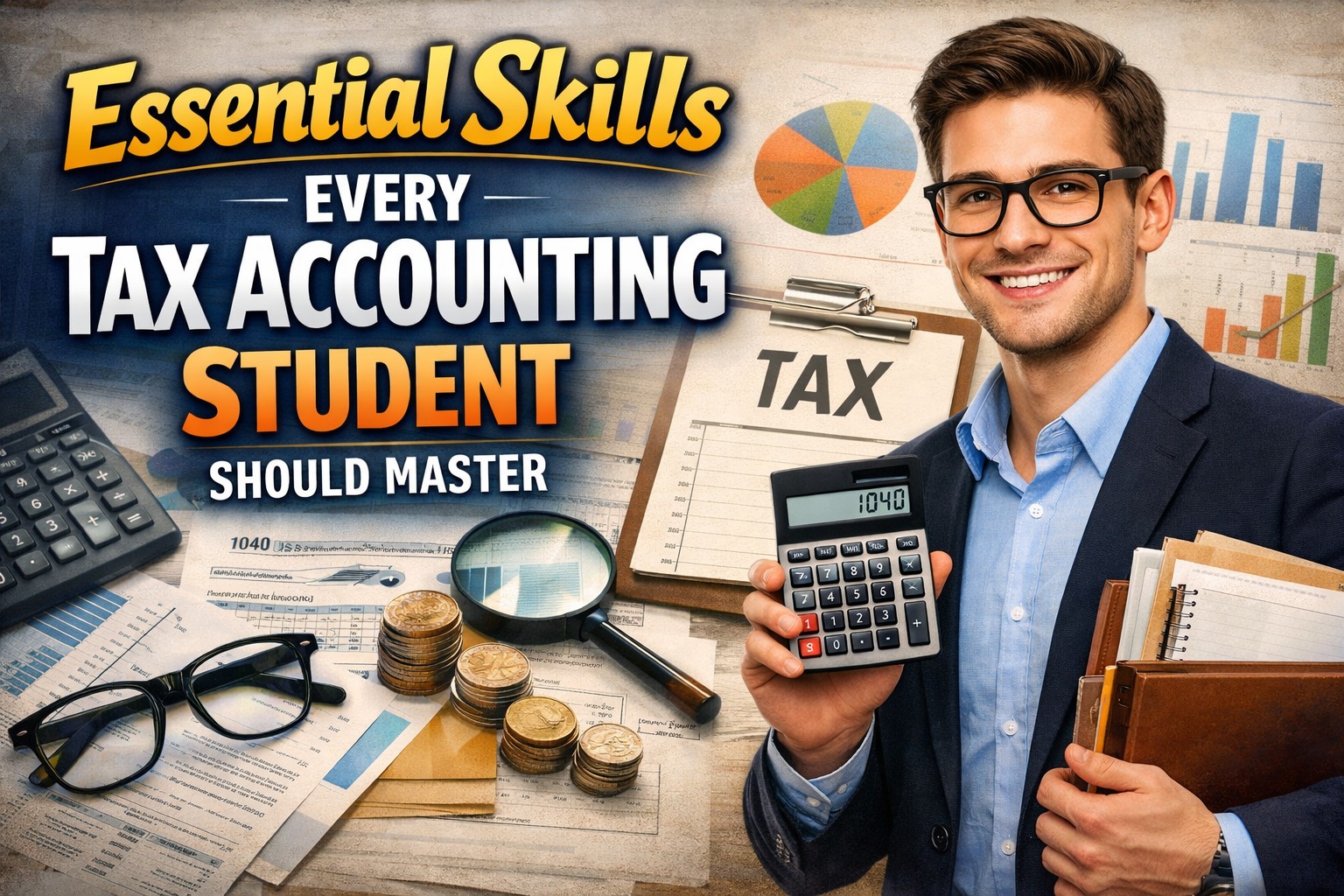
Tax accounting is one of the most promising fields in the finance industry. As tax regulations continue to evolve and businesses face increasingly complex financial obligations, the demand for skilled tax accounting professionals keeps growing. Students who pursue tax accounting must not only understand taxation rules but also develop a combination of technical and soft skills to succeed in their careers.
Mastering the right skills during college can help students become more competitive in the job market and prepare them for various career opportunities in taxation, auditing, consulting, and financial management. Below are the essential skills every tax accounting student should master.
UNDERSTANDING TAX REGULATIONS AND POLICIES
A strong understanding of tax laws, regulations, and government policies is the foundation of tax accounting. Students need to learn how taxes are calculated, reported, and paid according to applicable regulations. This knowledge helps ensure compliance and reduces the risk of tax-related errors.
In addition, tax regulations frequently change due to economic conditions and government policies. Therefore, students must develop the habit of staying updated with new tax rules and industry developments. Continuous learning is essential for maintaining professional competence in the taxation field.
DEVELOPING STRONG ACCOUNTING FUNDAMENTALS
Tax accounting is closely connected to general accounting principles. Students should master financial statements, bookkeeping, journal entries, and accounting standards. These fundamentals provide the basis for understanding how taxes affect business operations and financial reporting.
A strong accounting foundation also enables students to analyze transactions accurately and identify tax implications. Without a solid understanding of accounting concepts, it becomes difficult to perform tax calculations and prepare reliable reports.
IMPROVING ANALYTICAL AND CRITICAL THINKING SKILLS
Tax professionals regularly deal with complex financial data and regulations. Therefore, analytical thinking is a critical skill for interpreting information and identifying potential issues. Students should learn how to evaluate financial records carefully and draw logical conclusions.
Critical thinking also helps tax accounting students solve problems efficiently. Whether reviewing tax documents or assessing compliance risks, the ability to analyze situations objectively can lead to better decision-making and improved professional performance.
MASTERING TAX AND ACCOUNTING SOFTWARE
Technology has transformed the accounting industry. Modern tax professionals rely on various accounting and taxation software to manage data, prepare reports, and improve efficiency. Students should become familiar with commonly used digital tools and accounting systems.
Learning software applications during college can provide a significant advantage when entering the workforce. Employers often prefer candidates who can quickly adapt to digital environments and use technology effectively to complete accounting tasks.
ENHANCING ATTENTION TO DETAIL
Accuracy is one of the most important qualities in tax accounting. Even small mistakes in calculations or documentation can lead to financial losses, penalties, or compliance issues. Students must develop the habit of reviewing their work carefully and checking for errors.
Strong attention to detail also improves the quality of financial reporting and tax preparation. By maintaining accuracy, future tax professionals can build trust with employers, clients, and regulatory authorities.
BUILDING EFFECTIVE COMMUNICATION SKILLS
Tax accounting professionals often interact with clients, managers, auditors, and government agencies. Therefore, communication skills are essential for explaining tax matters clearly and professionally. Students should practice both written and verbal communication throughout their academic journey.
Effective communication also supports teamwork and collaboration. Being able to present financial information in a simple and understandable way helps reduce misunderstandings and improves workplace efficiency.
DEVELOPING ETHICS AND PROFESSIONAL INTEGRITY
Tax accounting requires a high level of responsibility and ethical behavior. Professionals in this field handle sensitive financial information and must comply with legal requirements. Students should understand the importance of honesty, transparency, and confidentiality.
Maintaining strong professional ethics helps build a positive reputation and long-term career success. Employers highly value individuals who demonstrate integrity and commitment to ethical standards in every aspect of their work.
STRENGTHENING TIME MANAGEMENT AND ORGANIZATIONAL SKILLS
Tax professionals often work under strict deadlines, especially during tax reporting periods. Students should learn how to prioritize tasks, manage workloads, and complete assignments efficiently. Good time management reduces stress and increases productivity.
Organizational skills also help students manage documents, records, and financial information systematically. These abilities become increasingly important as responsibilities grow in professional environments.
CONCLUSION
Success in tax accounting requires more than understanding tax regulations. Students must develop a combination of technical knowledge, analytical abilities, communication skills, ethical standards, and technology proficiency. These competencies prepare graduates to meet industry demands and perform effectively in various accounting and taxation roles.
By mastering these essential skills early, tax accounting students can enhance their career opportunities, improve professional performance, and build a strong foundation for long-term success in the financial sector.
About the Author
Gusti Ayu Tita P
Author — STEKOM University
An active author focused on academic issues, educational technology, and human resource development in the campus environment.