Highest Regional Minimum Wages in Indonesia in 2026
Gusti Ayu Tita P
10 Juli 2026
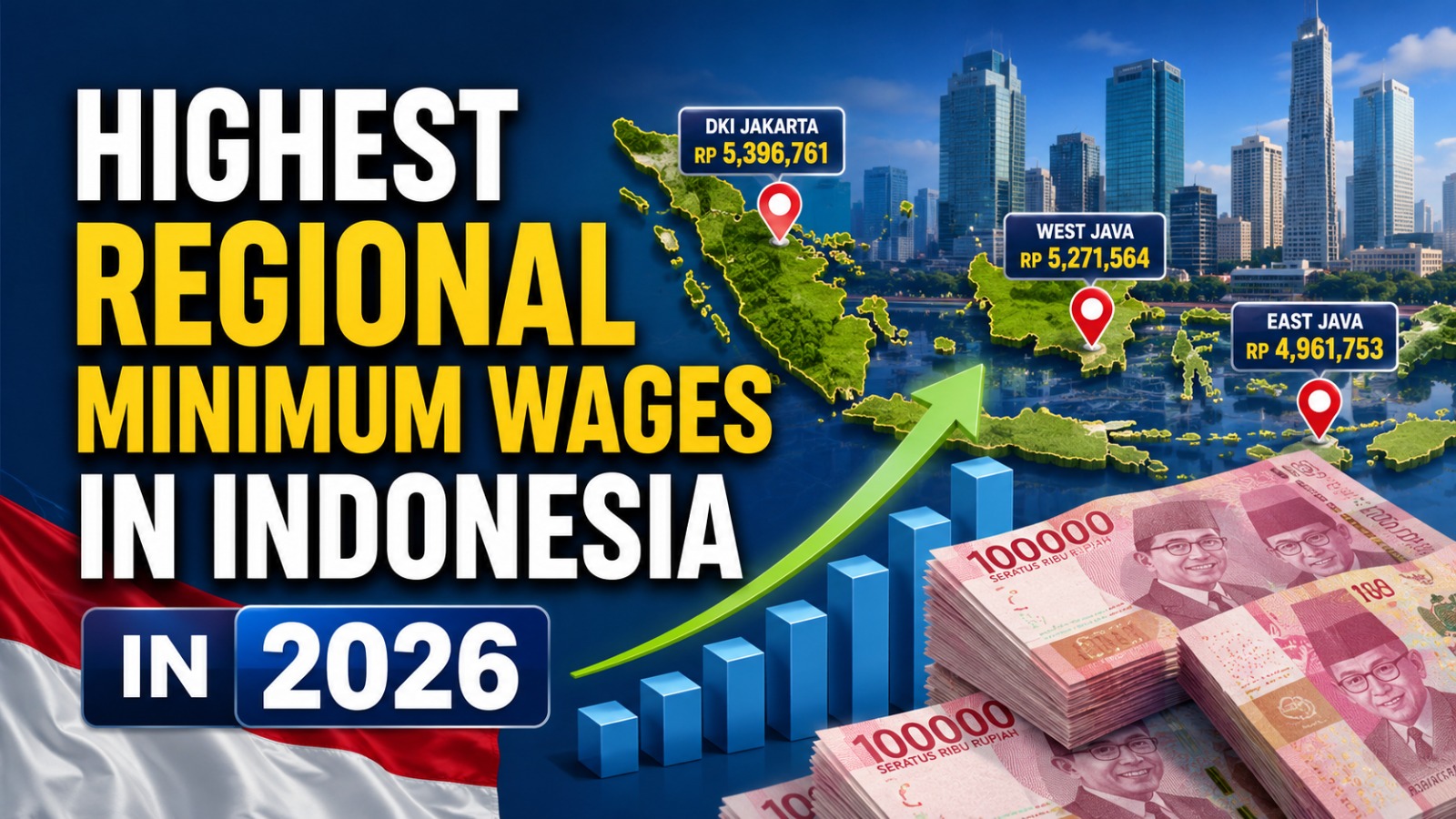
Indonesia continues to experience significant economic growth in 2026, influencing salary standards across many provinces. One of the most discussed topics among workers and employers is the regional minimum wage or UMP (Upah Minimum Provinsi). Every province sets its own minimum wage based on inflation, economic growth, and living costs. As a result, several regions in Indonesia now offer some of the highest minimum wages in Southeast Asia.
This article discusses the highest regional minimum wages in Indonesia in 2026, the factors affecting wage increases, and the impact on workers and businesses.
WHAT IS REGIONAL MINIMUM WAGE IN INDONESIA
Regional minimum wage is the lowest monthly salary that employers are legally required to pay workers. In Indonesia, provincial governments determine the wage annually after considering recommendations from labor councils, inflation data, and economic conditions.
The minimum wage system aims to protect workers from unfair salaries and ensure a decent standard of living. However, the wage amount differs greatly between provinces because living costs and economic activities vary from one region to another.
PROVINCES WITH THE HIGHEST MINIMUM WAGES IN 2026
Several provinces dominate the list of the highest regional minimum wages in Indonesia in 2026. Industrial areas and provinces with strong economic sectors generally offer higher wages compared to rural regions.
DKI JAKARTA
DKI Jakarta remains the province with one of the highest minimum wages in Indonesia. As the capital city and business center, Jakarta has a high cost of living, forcing companies to offer better salaries to workers.
Workers in sectors such as finance, technology, retail, and manufacturing benefit from competitive wages and better employment opportunities.
PAPUA
Papua consistently records high regional minimum wages due to transportation costs, geographic challenges, and limited infrastructure. The cost of daily necessities is significantly higher compared to other provinces in Indonesia.
Mining and natural resource industries also contribute to higher salary standards in Papua.
NORTH KALIMANTAN
North Kalimantan has become one of the fastest-growing economic regions in Indonesia. Investments in mining, energy, and industrial development have pushed wage levels higher in 2026.
Many companies compete to attract skilled workers, resulting in increased salaries and better benefits.
RIAU ISLANDS
The Riau Islands province benefits from its strategic location near Singapore and Malaysia. Manufacturing, shipping, and tourism industries continue to grow rapidly, supporting higher minimum wages for workers.
Batam, in particular, has become an industrial hub with strong international investment.
FACTORS THAT INFLUENCE MINIMUM WAGE INCREASES
Several important factors determine regional minimum wages in Indonesia each year.
INFLATION RATE
Inflation directly affects living expenses such as food, transportation, and housing. Higher inflation usually leads to higher wage adjustments to maintain workers’ purchasing power.
ECONOMIC GROWTH
Regions with strong economic performance generally experience higher wage increases. Growing industries create more job opportunities and increase demand for labor.
COST OF LIVING
Provinces with expensive housing, transportation, and daily necessities tend to have higher minimum wages. Urban areas often require higher salaries compared to rural regions.
INDUSTRIAL DEVELOPMENT
Industrial regions attract domestic and foreign investments, encouraging companies to offer competitive wages to recruit and retain employees.
IMPACT OF HIGHER MINIMUM WAGES
Higher regional minimum wages provide several advantages for workers. Employees can improve their quality of life, afford better education, healthcare, and meet daily needs more comfortably.
However, businesses also face challenges. Small companies may struggle with rising operational costs, while some industries may reduce hiring or automate certain tasks to control expenses.
Despite these challenges, balanced wage policies are important for maintaining economic stability and supporting long-term growth.
TIPS FOR JOB SEEKERS IN 2026
Job seekers should pay attention to regional minimum wages before choosing a work location. Provinces with high salaries may also have higher living costs, so comparing expenses and income is essential.
Improving skills in technology, communication, and management can also help workers secure better-paying jobs in competitive industries.
CONCLUSION
The highest regional minimum wages in Indonesia in 2026 reflect the country’s economic development and changing labor market conditions. Provinces such as DKI Jakarta, Papua, North Kalimantan, and the Riau Islands continue to lead in wage standards due to strong industries and higher living costs.
Understanding minimum wage trends can help workers, employers, and job seekers make better financial and career decisions in the future.
About the Author
Gusti Ayu Tita P
Author — STEKOM University
An active author focused on academic issues, educational technology, and human resource development in the campus environment.