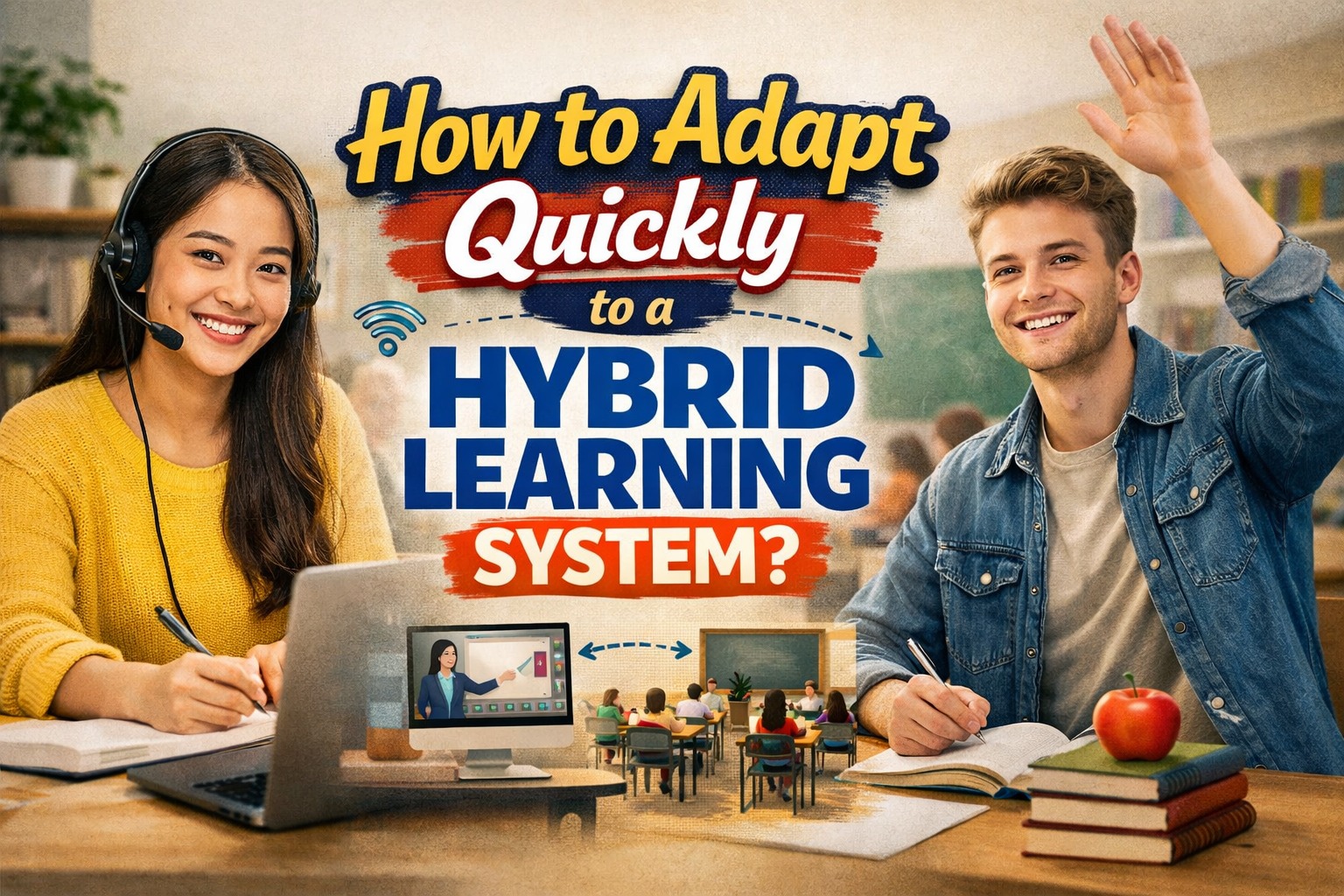
The hybrid learning system has become increasingly popular in schools, colleges, and universities worldwide. This learning model combines face-to-face classes with online learning, allowing students to enjoy greater flexibility while still benefiting from direct interaction with instructors. Although hybrid learning offers many advantages, adapting to this system can be challenging for students who are used to traditional classroom environments.
To succeed in a hybrid learning environment, students need effective strategies, strong discipline, and the ability to manage their time efficiently. Understanding how to adapt quickly can help improve academic performance, reduce stress, and create a more enjoyable learning experience.
UNDERSTAND THE STRUCTURE OF HYBRID LEARNING
The first step in adapting to a hybrid learning system is understanding how it works. Hybrid learning usually combines classroom sessions with virtual meetings, recorded lectures, online assignments, and digital discussions. Knowing the schedule and learning format helps students prepare for both online and offline activities.
Students should carefully review course guidelines, learning platforms, and communication channels used by instructors. By becoming familiar with these tools early, they can avoid confusion and participate more actively in the learning process.
CREATE A CONSISTENT STUDY SCHEDULE
One of the biggest challenges in hybrid learning is managing time effectively. Since online learning offers flexibility, students may be tempted to postpone assignments or skip study sessions. Creating a structured study schedule helps maintain consistency and productivity.
Set specific hours each day for attending online classes, reviewing materials, and completing assignments. A well-planned routine reduces procrastination and ensures that important academic responsibilities are completed on time.
DEVELOP STRONG DIGITAL SKILLS
Hybrid learning relies heavily on technology. Students should become comfortable using learning management systems, video conferencing applications, cloud storage platforms, and digital collaboration tools. These skills make learning more efficient and reduce technical difficulties.
Regular practice with digital tools can improve confidence and save valuable time. Students who are technologically prepared can focus more on understanding course content rather than dealing with technical issues.
BUILD AN EFFECTIVE LEARNING ENVIRONMENT
Having a dedicated study space can significantly improve concentration and productivity. A quiet, organized, and comfortable environment helps students stay focused during both online and offline learning activities.
Make sure the study area has a stable internet connection, proper lighting, and minimal distractions. An effective learning environment supports better engagement and enhances overall academic performance.
STAY ACTIVE AND ENGAGED IN CLASS
Active participation is essential for success in hybrid learning. Students should ask questions, contribute to discussions, and interact with classmates whenever possible. Engagement helps improve understanding and strengthens communication skills.
During online sessions, keeping the camera on when appropriate and responding to discussions can create a stronger connection with instructors and peers. Active learners often retain information more effectively and achieve better results.
IMPROVE SELF-DISCIPLINE AND MOTIVATION
Hybrid learning requires a higher level of independence than traditional classroom education. Without strong self-discipline, students may struggle to keep up with coursework and deadlines. Developing personal accountability is crucial for long-term success.
Setting clear academic goals and tracking progress can help maintain motivation. Celebrating small achievements also encourages students to remain focused and committed to their learning journey.
MAINTAIN COMMUNICATION WITH INSTRUCTORS AND PEERS
Effective communication plays a vital role in adapting to hybrid learning. Students should regularly communicate with instructors regarding assignments, deadlines, and course expectations. Prompt communication can prevent misunderstandings and improve learning outcomes.
Building relationships with classmates is equally important. Study groups, online discussions, and collaborative projects create opportunities for knowledge sharing and mutual support throughout the semester.
CONCLUSION
Adapting quickly to a hybrid learning system requires time management, digital literacy, self-discipline, and active participation. By understanding the learning structure, creating a consistent routine, developing technology skills, and maintaining strong communication, students can thrive in both online and face-to-face learning environments. With the right approach, hybrid learning can become an effective and rewarding educational experience that prepares students for the future.
About the Author
Gusti Ayu Tita P
Author — STEKOM University
An active author focused on academic issues, educational technology, and human resource development in the campus environment.