
How To Create An Accurate And Professional Reference List?
Gusti Ayu Tita P
16 September 2026
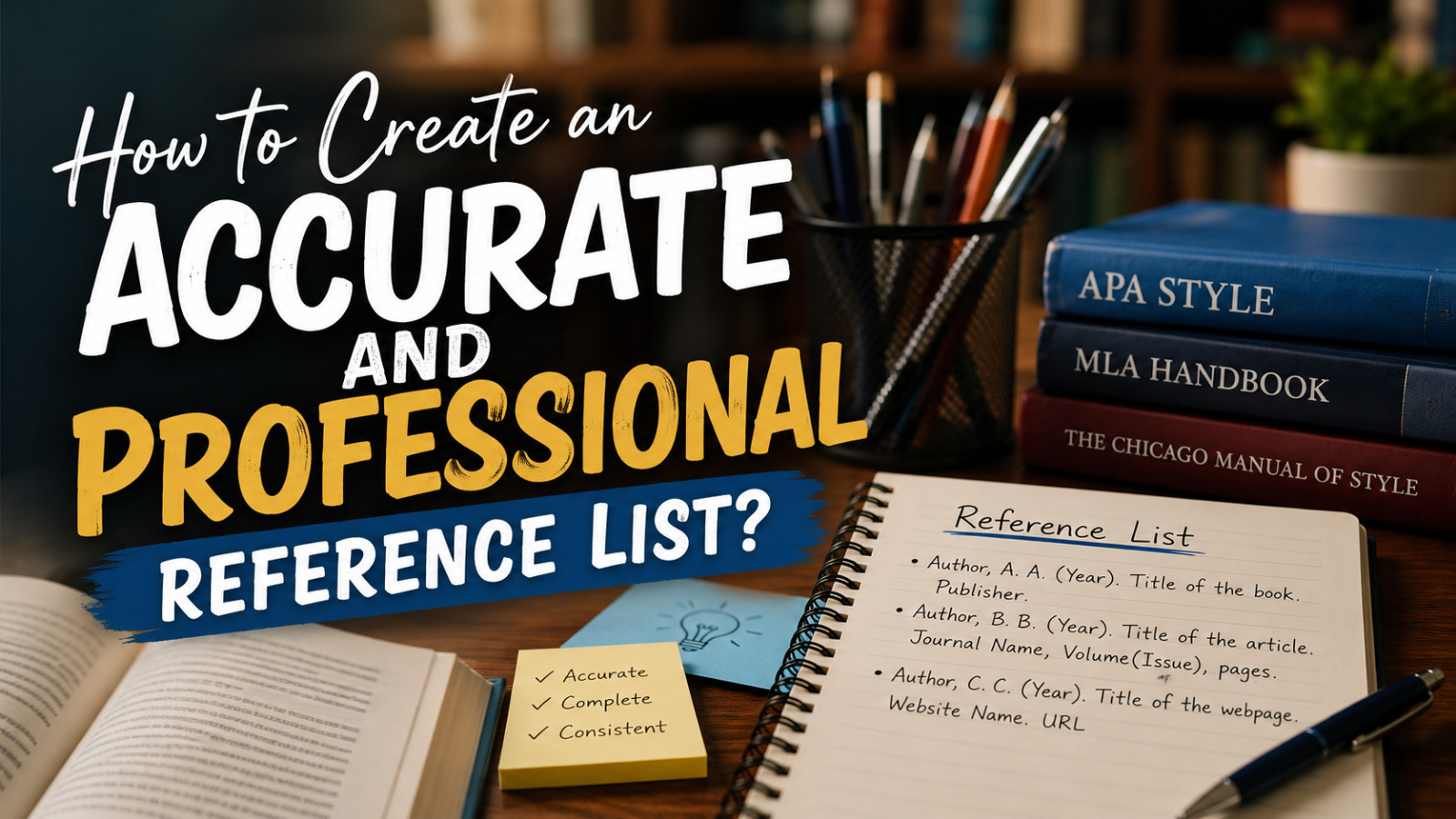
Creating an accurate and professional Reference List is an essential part of Academic Writing. A well-prepared reference list demonstrates academic integrity, gives proper credit to original authors, and helps readers locate the sources used in your research. Whether you are writing a research paper, thesis, journal article, or assignment, a correctly formatted reference list increases the credibility of your work. Many students lose valuable marks because of incorrect citation formatting, missing references, or inconsistent styles. Learning the proper techniques will help you produce a polished and reliable academic paper.
UNDERSTANDING THE IMPORTANCE OF A REFERENCE LIST
A Reference List is a complete collection of all sources that have been cited within your academic paper. It provides readers with detailed publication information so they can verify the sources or explore them further. Preparing an accurate reference list is an important part of maintaining Academic Integrity and avoiding plagiarism. Every source included in the text should also appear in the reference list using the correct citation format.
A professional reference list also reflects careful research and attention to detail. Universities and academic journals often require specific citation styles such as APA Style, MLA Style, or Chicago Style. Following these guidelines consistently makes your work easier to read and evaluate. A well-organized reference section strengthens the overall quality of your academic writing.
CHOOSING THE CORRECT CITATION STYLE
The first step in creating a professional reference list is selecting the required citation style. Different academic disciplines use different formats, so you should always follow the guidelines provided by your instructor, university, or publisher. Using the wrong style can reduce the professionalism of your paper even when the research itself is excellent.
Each citation style has unique rules for listing authors, publication years, titles, and publication details. For example, APA Style is widely used in social sciences, while MLA Style is common in humanities. Understanding these differences helps you create consistent and accurate citations. Using the same format throughout your paper also improves readability and academic consistency.
COLLECTING COMPLETE SOURCE INFORMATION
Before writing your reference list, gather complete information for every source you use. Important details include the author's name, publication year, article or book title, publisher, journal name, volume, issue number, page range, and DOI or URL when applicable. Recording this information while conducting research prevents missing details later.
Keeping organized research notes also makes the writing process more efficient. Many students forget publication details and spend unnecessary time searching for them again. By collecting complete information from the beginning, you can prepare a more accurate Reference List with fewer errors. Good organization also supports better research management throughout the project.
FORMATTING REFERENCES CONSISTENTLY
Consistency is one of the most important characteristics of a professional reference list. Every reference should follow the same formatting rules for punctuation, capitalization, italics, spacing, and author names. Even small inconsistencies may reduce the overall quality of your academic work.
Carefully review each reference before submitting your paper. Compare every citation with the official style guide to ensure accuracy. You may also use reliable citation management software to simplify formatting, but always double-check the final results. Careful proofreading helps eliminate formatting mistakes that automated tools sometimes miss.
REVIEWING AND VERIFYING YOUR REFERENCE LIST
The final step is reviewing your reference list thoroughly. Check that every In Text Citation has a matching entry in the Reference List, and ensure there are no unused references included. Missing or incorrect references can negatively affect both credibility and academic assessment.
You should also verify spelling, publication dates, author names, and citation order. Reading your reference list one final time helps identify formatting inconsistencies or incomplete information. A careful review ensures your paper meets academic standards and presents a professional impression. This final quality check is an important step before submission.
CONCLUSION
Creating an accurate and professional Reference List requires careful planning, consistency, and attention to detail. By understanding citation requirements, selecting the correct style, collecting complete source information, formatting references consistently, and reviewing every citation carefully, you can significantly improve the quality of your Academic Writing. A well-prepared reference list strengthens Academic Integrity, prevents plagiarism, and increases the credibility of your research. Investing time in proper referencing is an essential skill that supports long-term academic success.
About the Author
Gusti Ayu Tita P
Author — STEKOM University
An active author focused on academic issues, educational technology, and human resource development in the campus environment.