How to Develop Communication Skills for the Working World
Gusti Ayu Tita P
3 Juli 2026
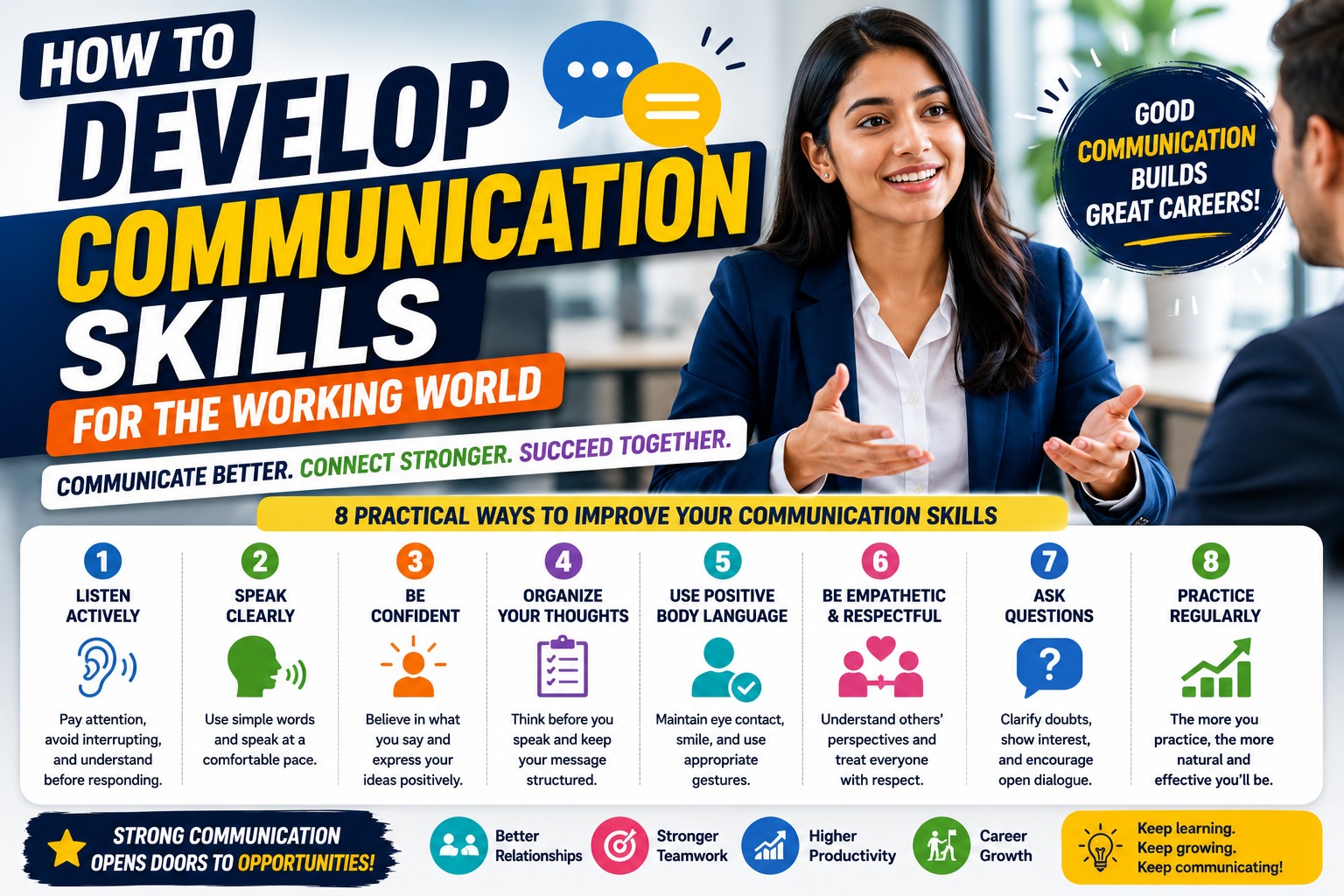
Communication skills are one of the most important abilities for achieving success in the professional world. In every workplace, employees need to communicate clearly with coworkers, supervisors, clients, and business partners. Good communication not only helps individuals express ideas effectively but also improves teamwork, productivity, and professional relationships. Employees with strong communication skills are often more confident, respected, and trusted in the workplace. Developing these abilities early can provide significant advantages for long-term career growth.
UNDERSTAND THE IMPORTANCE OF COMMUNICATION
Communication is more than simply speaking or writing. It involves listening actively, understanding information correctly, and responding appropriately in different situations.
In professional environments, effective communication helps reduce misunderstandings, improve collaboration, and support better decision-making. Employers highly value employees who can communicate clearly and professionally.
PRACTICE ACTIVE LISTENING
Good communication starts with good listening. Active listening means paying full attention when others are speaking without interrupting unnecessarily.
Employees who listen carefully can understand instructions more accurately, respond more effectively, and build stronger professional relationships. Active listening also shows respect and professionalism in workplace interactions.
IMPROVE VERBAL COMMUNICATION
Verbal communication is essential for meetings, presentations, interviews, and daily workplace discussions. Speaking clearly and confidently helps individuals express ideas effectively.
Practice speaking in an organized and professional manner. Avoid speaking too quickly, using unclear language, or interrupting others during conversations.
DEVELOP WRITTEN COMMUNICATION SKILLS
Written communication is equally important in the modern workplace. Emails, reports, proposals, and messages should be written clearly, professionally, and politely.
Employees should pay attention to grammar, sentence structure, and clarity when writing professional documents. Good written communication reflects professionalism and attention to detail.
BUILD CONFIDENCE THROUGH PRACTICE
Confidence plays a major role in effective communication. Many people feel nervous when speaking in front of others, especially in professional situations.
Joining discussions, participating in presentations, and practicing public speaking can help improve confidence gradually. The more frequently individuals practice communication, the more comfortable they become.
LEARN TO ADAPT YOUR COMMUNICATION STYLE
Different workplace situations require different communication approaches. Employees should learn how to communicate professionally with supervisors, collaborate effectively with coworkers, and interact politely with clients.
Adaptability helps individuals communicate more effectively with people from different backgrounds and personalities.
IMPROVE NONVERBAL COMMUNICATION
Body language, facial expressions, eye contact, and tone of voice all influence communication effectiveness. Positive nonverbal communication can strengthen messages and create better impressions.
Maintaining eye contact, using confident posture, and showing friendly expressions help build trust and professionalism during interactions.
ACCEPT FEEDBACK POSITIVELY
Constructive feedback is valuable for improving communication skills. Employees should remain open to suggestions and use feedback to identify areas for improvement.
Learning from mistakes and practicing continuously can help individuals become more effective communicators over time.
EXPAND YOUR VOCABULARY AND KNOWLEDGE
Having broad knowledge and vocabulary can improve communication quality. Reading books, articles, and industry-related materials helps individuals express ideas more clearly and confidently.
Understanding workplace terminology and professional language also supports better communication in specific industries.
PRACTICE TEAMWORK AND COLLABORATION
Working with others provides valuable opportunities to improve communication skills. Team projects, group discussions, and collaborative activities teach employees how to share ideas, solve conflicts, and cooperate effectively.
Strong teamwork communication helps create healthier workplace relationships and improves overall productivity.
CONCLUSION
Developing communication skills is essential for achieving success in the working world. By practicing active listening, improving verbal and written communication, building confidence, and adapting communication styles, individuals can become more professional and effective in workplace interactions. Strong communication abilities not only improve productivity but also support career growth and long-term professional success.
About the Author
Gusti Ayu Tita P
Author — STEKOM University
An active author focused on academic issues, educational technology, and human resource development in the campus environment.