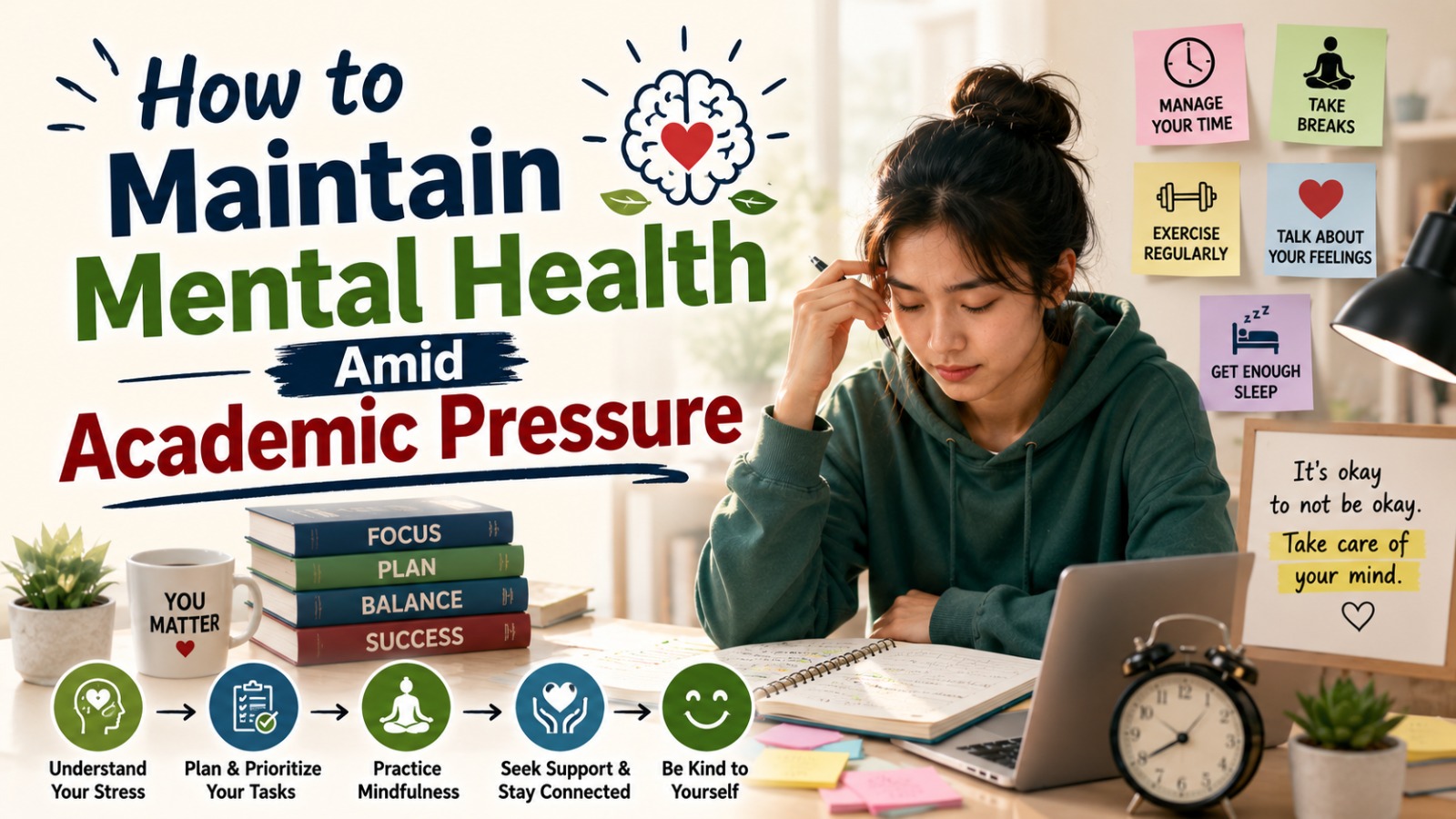
Academic life can be both rewarding and challenging. Students are expected to complete assignments, prepare for examinations, participate in extracurricular activities, and achieve high academic performance. These responsibilities often create intense pressure that affects emotional and psychological well-being. Without proper stress management, academic pressure may lead to anxiety, burnout, and decreased motivation.
Maintaining mental health is essential for students to stay productive, focused, and emotionally balanced. A healthy mental condition helps students handle challenges effectively and improves their ability to achieve academic goals. Therefore, understanding how to maintain mental health amid academic pressure is important for long-term success and personal well-being.
UNDERSTANDING ACADEMIC PRESSURE
Academic pressure refers to the stress students experience because of educational demands and expectations. Pressure may come from examinations, deadlines, competition, parental expectations, or personal goals. While moderate pressure can motivate students to perform better, excessive pressure can negatively impact mental health.
Many students experience emotional exhaustion when they constantly worry about grades and achievements. Over time, this stress can affect concentration, sleep quality, physical health, and self-confidence. If left unmanaged, academic pressure may reduce productivity and decrease interest in learning.
Recognizing the signs of stress early is an important step in maintaining emotional well-being. Students who understand their emotional conditions are more likely to seek healthy solutions before stress becomes overwhelming.
THE IMPACT OF POOR MENTAL HEALTH ON STUDENTS
Mental health problems can significantly affect academic performance and daily life. Students who experience stress and anxiety often struggle to focus during classes and complete assignments effectively. Emotional exhaustion may also decrease motivation and reduce confidence in academic abilities.
Poor mental health can affect physical health as well. Many students experience headaches, fatigue, insomnia, or loss of appetite due to excessive stress. Social relationships may also suffer because stressed students tend to isolate themselves from friends and family.
In severe cases, prolonged academic stress can lead to burnout and depression. These conditions may interfere with educational progress and overall quality of life. Therefore, maintaining mental health should be considered a priority in every academic environment.
EFFECTIVE WAYS TO MAINTAIN MENTAL HEALTH
1. MANAGE TIME EFFECTIVELY
Time management is one of the most effective strategies for reducing academic stress. Students should create realistic schedules that balance study time, rest, and personal activities. Breaking large tasks into smaller goals can make assignments feel more manageable and less overwhelming.
Avoiding procrastination is also important because delayed work often increases pressure before deadlines. Completing tasks gradually helps students stay organized and maintain emotional stability.
2.MAINTAIN A HEALTHY LIFESTYLE
Physical health has a strong connection with mental well-being. Regular exercise can reduce stress and improve mood by increasing energy and relaxation. Students should also maintain balanced nutrition and drink enough water to support concentration and overall health.
Adequate sleep is equally important. Lack of sleep can increase anxiety, reduce memory performance, and negatively affect emotional balance. Getting enough rest allows the brain to function more effectively during learning activities.
3.BUILD POSITIVE SOCIAL SUPPORT
Supportive relationships can help students cope with academic pressure. Friends, family members, and teachers can provide emotional encouragement and practical advice during difficult situations. Talking openly about stress and challenges helps students feel less isolated.
Students should not hesitate to seek professional help when necessary. Counseling services and mental health professionals can provide guidance for managing anxiety and emotional difficulties.
4.PRACTICE RELAXATION TECHNIQUES
Relaxation methods such as meditation, mindfulness, and deep breathing exercises are effective for reducing stress. These activities help calm the mind and improve focus during academic tasks.
Taking short breaks while studying is also beneficial. Continuous studying without rest may increase mental fatigue and reduce productivity. Relaxing for a few minutes can refresh the mind and improve concentration.
THE ROLE OF EDUCATIONAL INSTITUTIONS
Schools and universities have an important responsibility in supporting student mental health. Educational institutions should create positive and inclusive environments where students feel safe and valued.
Providing counseling services, stress management programs, and mental health awareness campaigns can help students manage academic challenges more effectively. Teachers should also encourage healthy communication and avoid creating excessive pressure in the classroom.
Flexible learning approaches and supportive academic policies can reduce emotional burdens on students. When institutions prioritize mental well-being, students are more likely to succeed academically and personally.
CONCLUSION
Maintaining mental health amid academic pressure is essential for achieving academic success and personal well-being. Excessive stress can negatively affect concentration, motivation, physical health, and emotional stability. However, students can protect their mental health through effective time management, healthy lifestyles, supportive relationships, and relaxation techniques.
Educational institutions also play a vital role in promoting emotional well-being by creating supportive environments and providing mental health resources. By prioritizing mental health, students can face academic challenges with greater confidence, resilience, and balance.
A healthy mind not only improves academic performance but also supports long-term personal growth and happiness.
About the Author
Gusti Ayu Tita P
Author — STEKOM University
An active author focused on academic issues, educational technology, and human resource development in the campus environment.