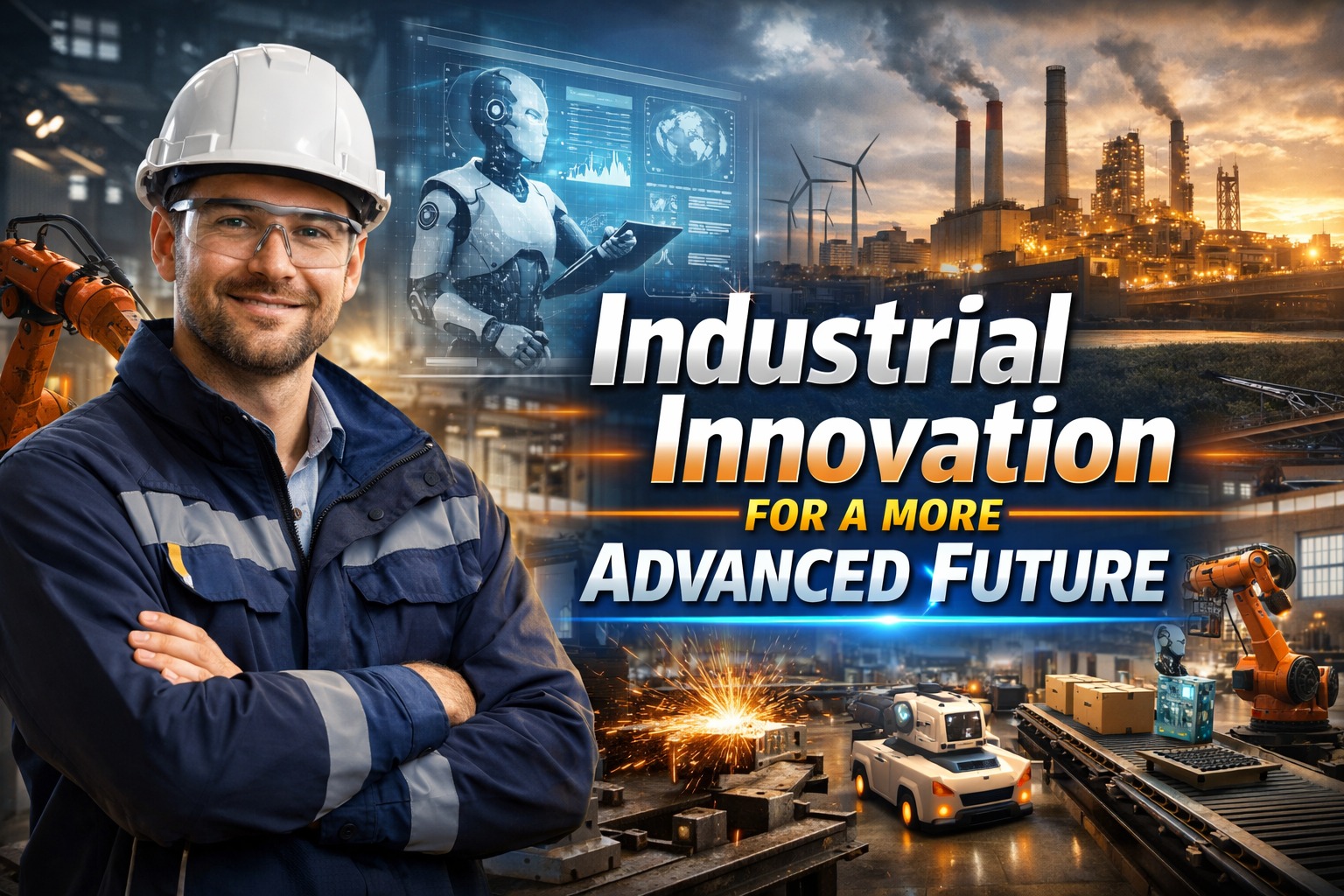
Industrial innovation has become one of the most important factors in building a more advanced future. Modern industries continue to develop through the use of new technologies, smarter systems, and more efficient production methods. Companies around the world are competing to create innovations that can improve productivity while reducing operational costs. This development not only changes the way factories operate but also influences the global economy and human lifestyles.
Today, industries are entering a new era where automation, digitalization, and sustainability play a major role. The combination of advanced machines and intelligent systems helps businesses produce goods faster and with better quality. As a result, industrial innovation is no longer an option but a necessity for companies that want to survive in a highly competitive market.
THE ROLE OF TECHNOLOGY IN INDUSTRIAL DEVELOPMENT
Technology is the main driver behind modern industrial innovation. The use of Artificial Intelligence, robotics, and the Internet of Things allows industries to improve efficiency in many areas. Machines can now perform complex tasks automatically with minimal human intervention. This helps companies reduce errors and increase production speed significantly.
In addition, digital technology allows industries to collect and analyze data more effectively. Companies can monitor production performance in real time and make faster decisions based on accurate information. Smart factories are becoming more common because they provide better operational control and improve overall productivity.
BENEFITS OF INDUSTRIAL INNOVATION FOR SOCIETY
Industrial innovation does not only benefit companies but also provides positive impacts for society. One of the biggest advantages is the creation of new job opportunities in technology and engineering sectors. Although automation replaces some traditional jobs, it also opens opportunities for workers with modern technical skills.
Another important benefit is the improvement of product quality and accessibility. Innovative industries can produce goods more efficiently, making products more affordable for consumers. In healthcare, transportation, and communication sectors, industrial innovation has improved daily life and increased convenience for millions of people around the world.
SUSTAINABLE INDUSTRIAL INNOVATION
Modern industries are increasingly focusing on sustainability and environmental responsibility. Many companies now develop eco friendly technologies to reduce pollution and minimize waste production. Renewable energy sources such as solar and wind power are being integrated into industrial operations to support greener manufacturing processes.
Sustainable innovation also helps industries save resources and lower long term costs. Recycling systems, energy efficient machines, and environmentally friendly materials are becoming important parts of industrial strategies. By prioritizing sustainability, industries can contribute to economic growth while protecting the environment for future generations.
CHALLENGES IN INDUSTRIAL INNOVATION
Despite its many benefits, industrial innovation also faces several challenges. One major challenge is the high cost of implementing advanced technologies. Small and medium sized companies often struggle to invest in modern equipment and digital systems because of limited financial resources.
Another challenge is the need for skilled workers who can operate advanced technologies. Industries must invest in employee training and education to ensure workers can adapt to technological changes. Cybersecurity is also becoming increasingly important as industries rely more on digital systems and online networks.
THE FUTURE OF INDUSTRIAL INNOVATION
The future of industrial innovation looks highly promising as technology continues to evolve rapidly. Industries are expected to become more automated, connected, and intelligent in the coming years. Innovations such as smart manufacturing, autonomous robots, and advanced data analytics will continue transforming production systems worldwide.
Furthermore, collaboration between governments, educational institutions, and private companies will play a major role in driving industrial progress. Countries that invest in innovation and technological development will have stronger economic growth and global competitiveness. Industrial innovation will continue shaping a future that is more efficient, sustainable, and technologically advanced.
CONCLUSION
Industrial innovation is a powerful force that drives economic growth, technological advancement, and social development. Through modern technology, industries can improve productivity, create better products, and support environmental sustainability. Although there are challenges in implementation, the long term benefits of innovation are far greater than the obstacles faced by industries today.
As the world moves toward a more digital and connected era, industrial innovation will become even more important for future progress. Companies and governments must continue investing in technology, education, and sustainable practices to ensure industries remain competitive and beneficial for society. With continuous innovation, humanity can build a smarter and more advanced future for generations to come.
About the Author
Gusti Ayu Tita P
Author — STEKOM University
An active author focused on academic issues, educational technology, and human resource development in the campus environment.