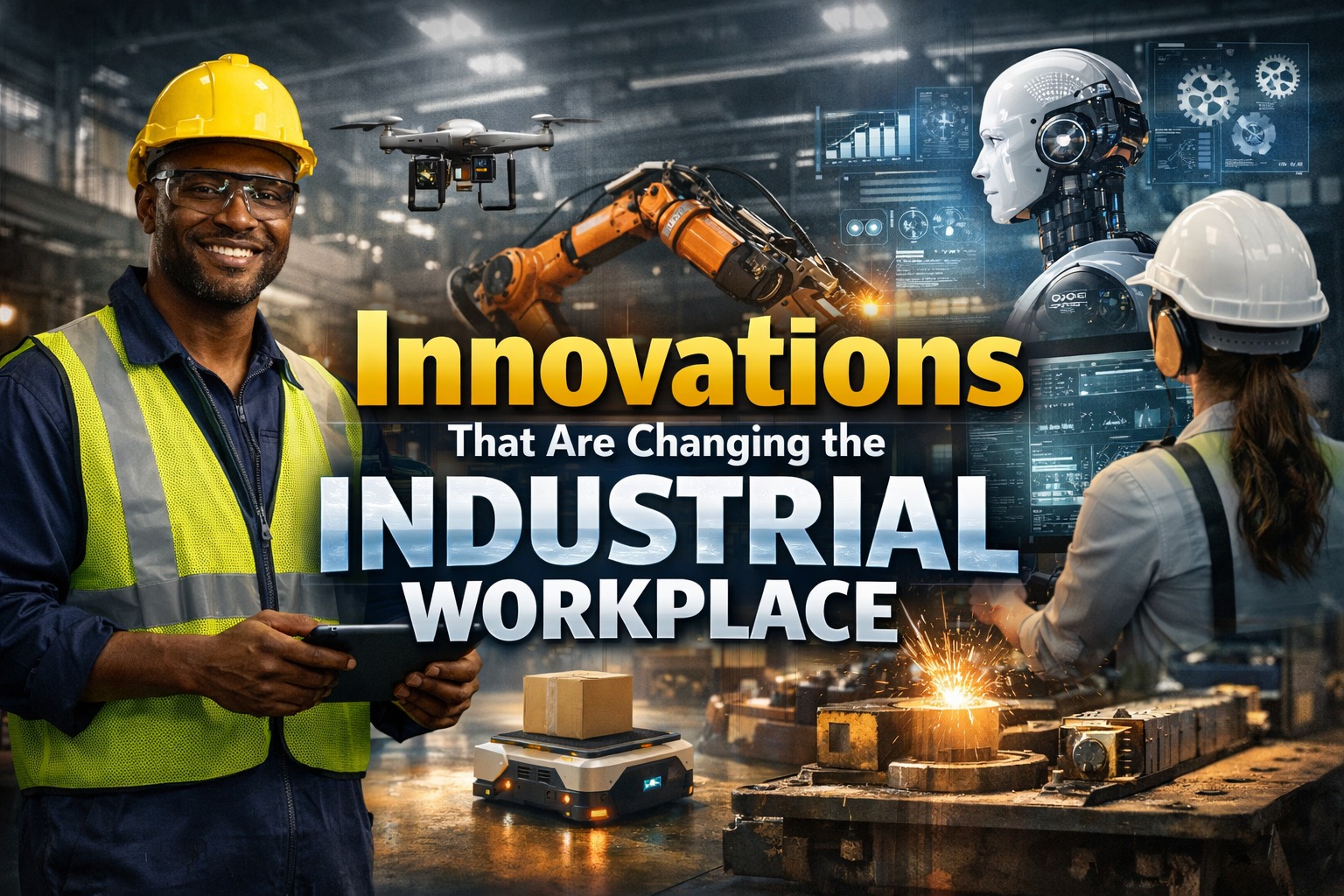
The industrial sector is experiencing rapid transformation driven by modern technology and smarter working systems. Companies around the world are adopting innovative solutions to improve productivity, workplace safety, and operational efficiency. These changes are not only reshaping factories but also influencing how employees work, communicate, and solve problems. From automation to artificial intelligence, industrial workplaces are becoming more advanced and connected than ever before. Understanding these innovations is important for businesses and workers who want to stay competitive in the modern industrial era.
THE RISE OF AUTOMATION IN INDUSTRIAL WORKPLACES
Automation technology has become one of the biggest innovations in the industrial world. Many factories now use automated machines and robotic systems to handle repetitive tasks that once required human labor. This technology helps companies reduce production time, minimize human error, and increase manufacturing accuracy. As a result, businesses can produce goods faster while maintaining high-quality standards.
In addition to improving efficiency, automation also helps reduce workplace accidents. Dangerous tasks such as heavy lifting, welding, and handling hazardous materials are increasingly performed by machines. Employees can focus on more strategic and technical responsibilities instead of physically exhausting work. This shift creates a safer and more productive industrial environment for everyone involved.
ARTIFICIAL INTELLIGENCE IMPROVING DECISION MAKING
Artificial Intelligence is changing how industrial companies analyze data and make decisions. AI systems can process massive amounts of information in real time, helping businesses predict equipment failures, monitor production quality, and optimize workflows. This technology allows companies to solve problems before they become costly disruptions.
AI is also improving customer satisfaction and supply chain management. Smart systems can forecast market demand, manage inventory automatically, and recommend efficient production schedules. Employees benefit because they can make faster and more accurate decisions with the help of intelligent software. The combination of human expertise and AI support creates stronger industrial performance.
SMART FACTORIES AND THE INTERNET OF THINGS
The concept of Smart Factories is becoming increasingly popular in modern industries. Smart factories use connected devices and sensors through the Internet Of Things to monitor machines, equipment, and production lines continuously. These connected systems provide real-time updates that help managers improve operational efficiency.
With IoT technology, companies can quickly identify machine problems and prevent production delays. Workers also gain access to accurate information that supports faster communication and teamwork. Smart factories create a more organized workplace where every process is monitored digitally. This innovation helps industries save energy, reduce waste, and improve overall productivity.
DIGITAL TRAINING AND WORKFORCE DEVELOPMENT
Modern industrial workplaces are investing heavily in Digital Training programs for employees. Virtual simulations, online courses, and augmented reality systems are helping workers learn technical skills more effectively. Employees can now practice operating complex machines in virtual environments before using them in real situations.
This training method reduces learning risks and improves employee confidence. Companies also benefit because workers become more adaptable to technological changes. Continuous learning is now an important part of industrial success because technology evolves rapidly. Businesses that prioritize workforce development are more likely to remain competitive in the future.
GREEN TECHNOLOGY AND SUSTAINABLE INDUSTRY
Environmental awareness has encouraged industries to adopt Green Technology solutions. Many companies are now using renewable energy, energy-efficient machinery, and environmentally friendly production systems. These innovations help reduce pollution while lowering long-term operational costs.
Sustainability is becoming an important factor for customers and investors when evaluating industrial companies. Businesses that implement eco-friendly practices often gain stronger public trust and better market reputation. Employees also feel more motivated working in companies that care about environmental responsibility. Green innovation is not only beneficial for the planet but also for long-term business growth.
THE FUTURE OF INDUSTRIAL WORKPLACES
The future industrial workplace will continue evolving through technological innovation and digital transformation. New technologies such as collaborative robots, cloud computing, and advanced cybersecurity systems will further improve industrial operations. Companies that embrace innovation early will have stronger opportunities to grow in highly competitive markets.
At the same time, workers must continue improving their skills to adapt to changing workplace demands. Technical knowledge, problem-solving ability, and digital literacy will become increasingly valuable in industrial careers. The combination of advanced technology and skilled employees will shape a smarter, safer, and more efficient industrial future. Innovation is no longer optional because it has become the key to industrial success in the modern world.
About the Author
Gusti Ayu Tita P
Author — STEKOM University
An active author focused on academic issues, educational technology, and human resource development in the campus environment.