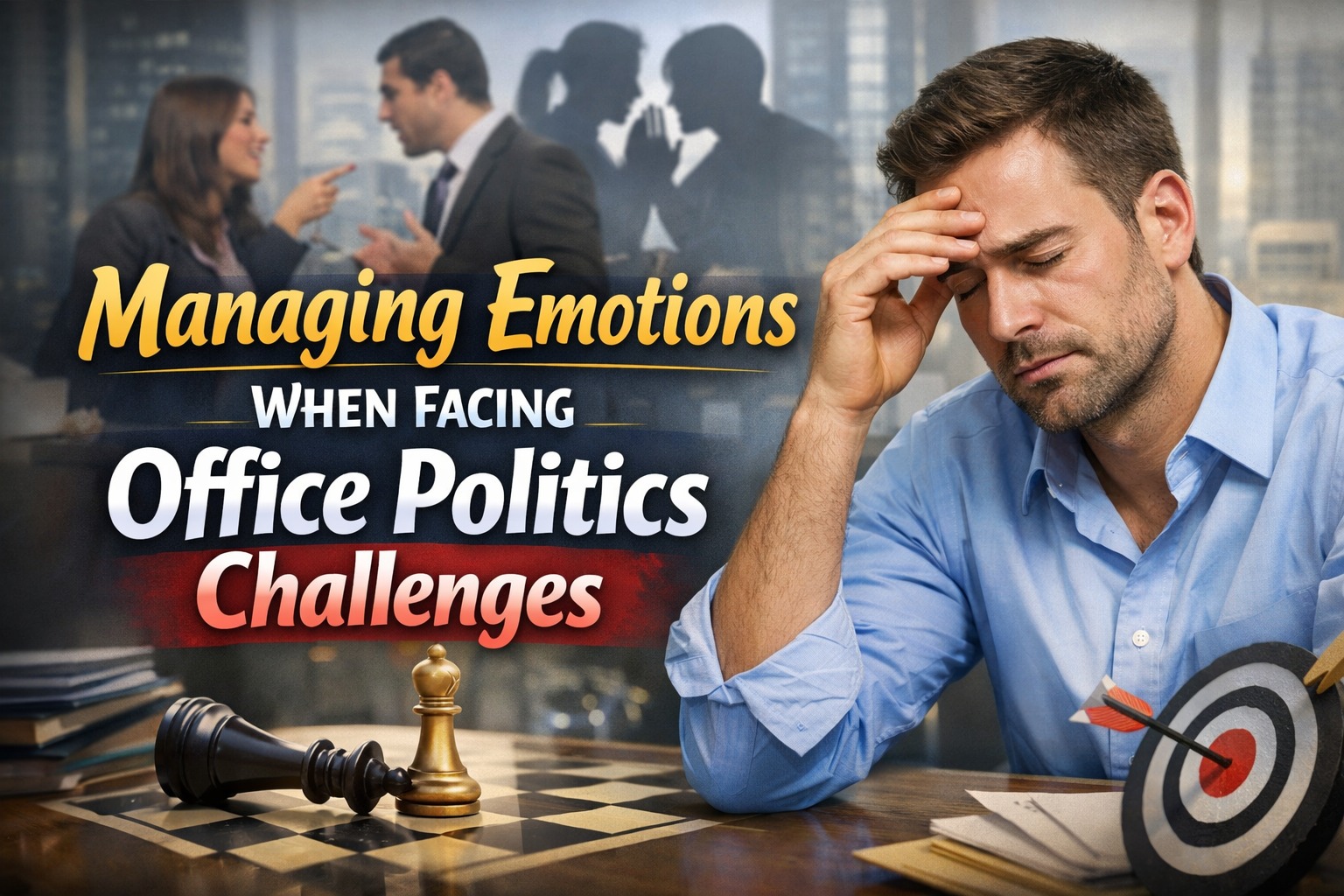
Office politics is a common part of many workplaces. Employees often deal with competition, misunderstandings, favoritism, and different opinions while trying to achieve career goals. These situations can create emotional pressure that affects focus, motivation, and productivity. Learning how to manage emotions properly is important to maintain professionalism and build healthy workplace relationships. By controlling emotional reactions, employees can handle office politics challenges more wisely and avoid unnecessary conflict.
UNDERSTANDING OFFICE POLITICS IN THE WORKPLACE
Office politics refers to behaviors used by individuals or groups to gain influence, recognition, or advantages at work. These behaviors can include competition for promotions, forming alliances, or trying to influence decisions within the company. While office politics may sound negative, it is actually a normal part of professional environments. The problem appears when emotions are not managed properly during difficult situations.
Employees who fail to control emotions often react impulsively when facing criticism, unfair treatment, or workplace rumors. This can damage professional relationships and create tension within teams. Understanding that office politics exists in almost every organization helps employees prepare mentally and emotionally. A calm and rational mindset makes it easier to respond professionally instead of emotionally.
RECOGNIZING EMOTIONAL TRIGGERS
One of the most important steps in emotional management is identifying emotional triggers. Workplace situations such as being ignored in meetings, receiving unfair feedback, or experiencing favoritism can easily create stress and frustration. Every employee has different emotional triggers depending on their personality and work experiences. Recognizing these triggers helps individuals respond more carefully in difficult moments.
People who understand their emotional reactions are more capable of staying calm during workplace conflicts. Instead of reacting immediately, they can pause and evaluate the situation objectively. This approach reduces the risk of making emotional decisions that could harm career growth. Self-awareness is the foundation of strong emotional control in professional environments.
DEVELOPING PROFESSIONAL COMMUNICATION SKILLS
Good communication plays a major role in managing emotions during office politics challenges. Employees should express concerns clearly, respectfully, and professionally without allowing anger to control conversations. Open communication helps reduce misunderstandings and creates better cooperation between coworkers. It also builds trust and improves workplace relationships.
When discussing sensitive issues, using calm language and active listening is very important. Employees who listen carefully can better understand different perspectives before responding emotionally. This helps prevent unnecessary arguments and encourages problem-solving discussions. Professional communication allows employees to handle difficult situations while maintaining respect and credibility.
MAINTAINING EMOTIONAL BALANCE UNDER PRESSURE
Workplace pressure can become overwhelming when office politics increases stress levels. Employees may feel disappointed, anxious, or emotionally exhausted after dealing with toxic behavior or unfair situations. Maintaining emotional balance is necessary to protect mental well-being and work performance. Simple habits such as taking short breaks, practicing mindfulness, and managing workloads can help reduce emotional stress.
A healthy work-life balance also supports emotional stability. Employees who spend time relaxing, exercising, or enjoying hobbies outside work often manage workplace stress more effectively. Emotional balance allows individuals to think clearly and avoid overreacting to office politics challenges. Stress management is essential for maintaining long-term career success and emotional health.
BUILDING STRONG PROFESSIONAL RELATIONSHIPS
Positive workplace relationships can reduce the negative impact of office politics. Employees who build supportive professional connections usually experience better teamwork and communication. Respectful relationships also create a healthier working environment where conflicts can be resolved more easily. Networking within the workplace should focus on collaboration rather than manipulation.
Trust and professionalism are important when building workplace relationships. Employees should avoid gossip, negative comments, and unnecessary drama that may increase tension. Instead, they should focus on teamwork, honesty, and mutual respect. Strong professional relationships help employees feel more confident and emotionally secure when facing workplace challenges.
FOCUSING ON PERSONAL GROWTH AND CAREER GOALS
Employees should avoid allowing office politics to distract them from their personal and professional goals. Staying focused on skill development, productivity, and career improvement is more beneficial than becoming involved in unnecessary conflicts. A growth-oriented mindset helps individuals remain motivated despite workplace challenges. Continuous learning also increases confidence and professional value.
Successful employees understand that emotional control is part of career development. They focus on improving their abilities instead of reacting emotionally to every workplace issue. Maintaining professionalism during difficult situations creates a positive reputation and opens more career opportunities. Career growth becomes easier when emotions are managed wisely and professionally.
CONCLUSION
Managing emotions when facing office politics challenges is an important skill in modern workplaces. Employees who develop emotional awareness, communication skills, and stress management strategies can handle difficult situations more effectively. Professional behavior and emotional balance help create healthier workplace relationships and improve career success. By focusing on personal growth and maintaining professionalism, individuals can navigate office politics with confidence and maturity.
About the Author
Gusti Ayu Tita P
Author — STEKOM University
An active author focused on academic issues, educational technology, and human resource development in the campus environment.