Minimum Wage vs Cost of Living: Is It Enough?
Gusti Ayu Tita P
5 Juli 2026
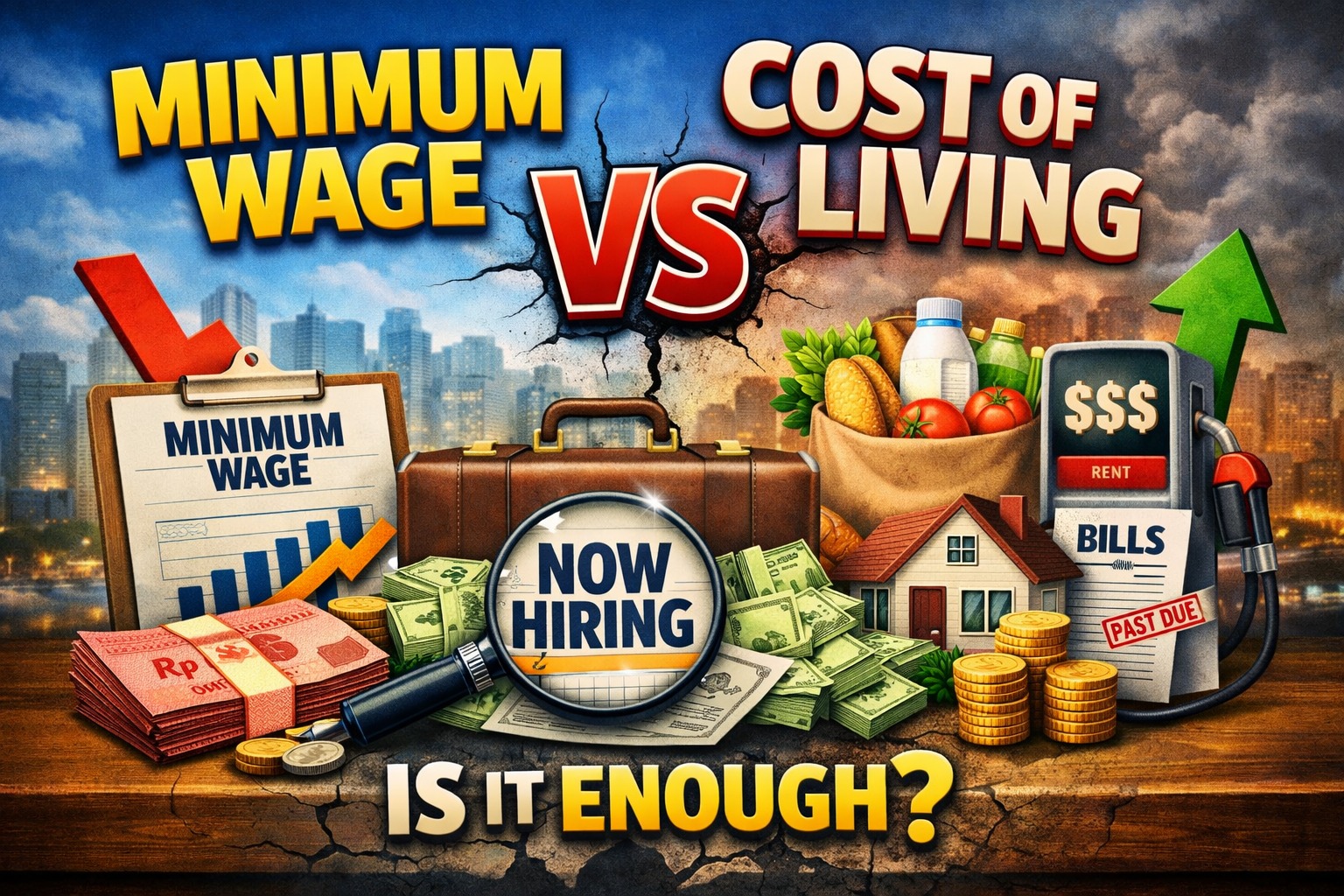
The debate about minimum wage and cost of living continues to grow in many countries. While governments regularly increase minimum wages to help workers survive rising prices, many employees still struggle financially. Housing costs, transportation expenses, food prices, healthcare, and education continue increasing faster in many urban areas, making people question whether minimum wages are truly enough for a decent standard of living.
Understanding the relationship between minimum wages and living costs is important for workers, employers, students, and policymakers.
WHAT IS A MINIMUM WAGE?
A minimum wage is the lowest legal salary employers are allowed to pay workers. Governments establish minimum wages to protect employees from unfair compensation and ensure basic income standards.
Minimum wage policies are usually influenced by:
- Inflation rates
- Economic growth
- Labor market conditions
- Cost of living
- Worker productivity
- Business capabilities
Most countries review minimum wages regularly, often once every year.
WHAT IS THE COST OF LIVING?
The cost of living refers to the amount of money needed to cover basic daily expenses in a specific area. Living costs vary greatly between cities and regions.
Common living expenses include:
- Housing or rent
- Food and groceries
- Transportation
- Utilities
- Healthcare
- Education
- Internet and communication
- Personal needs
Large cities usually have much higher living costs than smaller towns or rural areas.
WHY MINIMUM WAGES DIFFER BETWEEN REGIONS
Regions with higher living costs often set higher minimum wages. Major business and industrial cities usually offer larger salaries because workers face more expensive daily expenses.
For example, large urban areas commonly experience:
- Expensive apartment rents
- Traffic and transportation costs
- Higher food prices
- Increased utility bills
This is why cities such as Jakarta, Singapore, Tokyo, or New York generally have higher minimum wage standards compared to smaller regions.
IS MINIMUM WAGE ENOUGH FOR SINGLE WORKERS?
For some single workers, minimum wage may be enough to survive if spending is carefully managed. Workers who live modestly, share housing, or use public transportation may still meet their basic needs.
However, financial pressure often depends on:
- City of residence
- Lifestyle choices
- Transportation needs
- Debt obligations
- Family support responsibilities
In expensive urban areas, even single workers may struggle to save money after paying monthly expenses.
FAMILY RESPONSIBILITIES MAKE FINANCES MORE DIFFICULT
Minimum wage becomes far more challenging for workers supporting families. Parents often face additional costs such as:
- Child education
- Healthcare
- Baby supplies
- Family transportation
- Larger housing needs
For many households, one minimum wage salary alone may not be enough to provide long-term financial stability.
HOUSING IS OFTEN THE BIGGEST EXPENSE
In many cities, rent or housing payments consume a large portion of minimum wage income. Rapid urbanization and limited housing availability continue pushing property prices higher.
Workers sometimes spend:
- 30%–50% of income on rent
- Additional utility costs
- Transportation from affordable suburbs
High housing expenses are one of the main reasons workers feel minimum wages are insufficient.
TRANSPORTATION COSTS ALSO AFFECT WORKERS
Transportation expenses can heavily impact monthly budgets, especially in large cities with traffic congestion and long commuting distances.
Common transportation costs include:
- Fuel
- Public transport fares
- Parking fees
- Vehicle maintenance
- Motorcycle installments
Workers who live far from workplaces may spend a significant percentage of their salary on commuting.
FOOD PRICES CONTINUE RISING
Inflation affects food prices almost every year. Even small increases in grocery prices can create financial stress for minimum wage workers.
Essential food items that often increase in price include:
- Rice
- Eggs
- Cooking oil
- Meat
- Vegetables
- Milk
Because food is a daily necessity, rising prices directly reduce purchasing power.
HEALTHCARE AND EDUCATION ADD FINANCIAL PRESSURE
Medical expenses and education costs are major financial concerns for many families. Even workers with health insurance may still face unexpected costs.
Examples include:
- Medicine
- Emergency treatment
- School fees
- Books and supplies
- Childcare costs
These expenses can quickly exceed monthly budgets if workers only rely on minimum wage income.
SOME WORKERS TAKE SIDE JOBS TO SURVIVE
Because minimum wage may not fully cover living costs, many workers search for additional income sources.
Popular side jobs include:
- Freelancing
- Online selling
- Delivery services
- Content creation
- Tutoring
- Graphic design
Extra income often helps workers pay bills, save money, or handle emergencies.
MINIMUM WAGE INCREASES DO NOT ALWAYS SOLVE THE PROBLEM
Governments regularly increase minimum wages, but living costs often rise at the same time. This means workers may not feel significant financial improvement after wage adjustments.
For example:
- Rent may increase after wage hikes
- Food prices may rise because of inflation
- Transportation costs may continue climbing
As a result, workers sometimes feel their real purchasing power remains unchanged.
DIFFERENT PEOPLE HAVE DIFFERENT DEFINITIONS OF “ENOUGH”
Whether minimum wage is “enough” depends on personal circumstances and financial expectations.
Some people prioritize:
- Basic survival
- Stable housing
- Supporting family
- Saving money
- Entertainment and lifestyle
- Long-term investments
A salary that feels sufficient for one person may feel inadequate for another.
FINANCIAL MANAGEMENT BECOMES VERY IMPORTANT
Workers earning minimum wage often need strong financial discipline to survive comfortably.
Helpful financial habits include:
- Creating monthly budgets
- Avoiding unnecessary debt
- Cooking at home
- Saving regularly
- Limiting impulsive spending
- Building emergency funds
Good money management can reduce financial stress even with limited income.
SKILL DEVELOPMENT CAN IMPROVE FUTURE INCOME
One of the best ways to move beyond minimum wage limitations is by improving professional skills.
Skills with strong earning potential include:
- Programming
- Digital marketing
- Graphic design
- Data analysis
- Public speaking
- Foreign languages
Workers who continue learning often gain access to better-paying job opportunities over time.
GOVERNMENTS FACE A DIFFICULT BALANCE
Governments must balance worker welfare with economic stability when determining minimum wages. Raising wages too slowly may hurt workers, while increasing wages too aggressively may pressure businesses.
Policymakers must consider:
- Inflation
- Employment rates
- Business sustainability
- Investment conditions
- Economic growth
Finding the right balance remains one of the biggest economic challenges worldwide.
CONCLUSION
Minimum wages are designed to protect workers and support basic living standards, but whether they are truly enough depends on living costs, family responsibilities, location, and personal financial habits. In many urban areas, rising housing, transportation, and food expenses continue making life difficult for minimum wage workers.
Although minimum wage increases help improve purchasing power, many employees still rely on careful budgeting, side income, and skill development to achieve long-term financial stability. Understanding the relationship between wages and living costs is essential for making smarter career and financial decisions.
About the Author
Gusti Ayu Tita P
Author — STEKOM University
An active author focused on academic issues, educational technology, and human resource development in the campus environment.