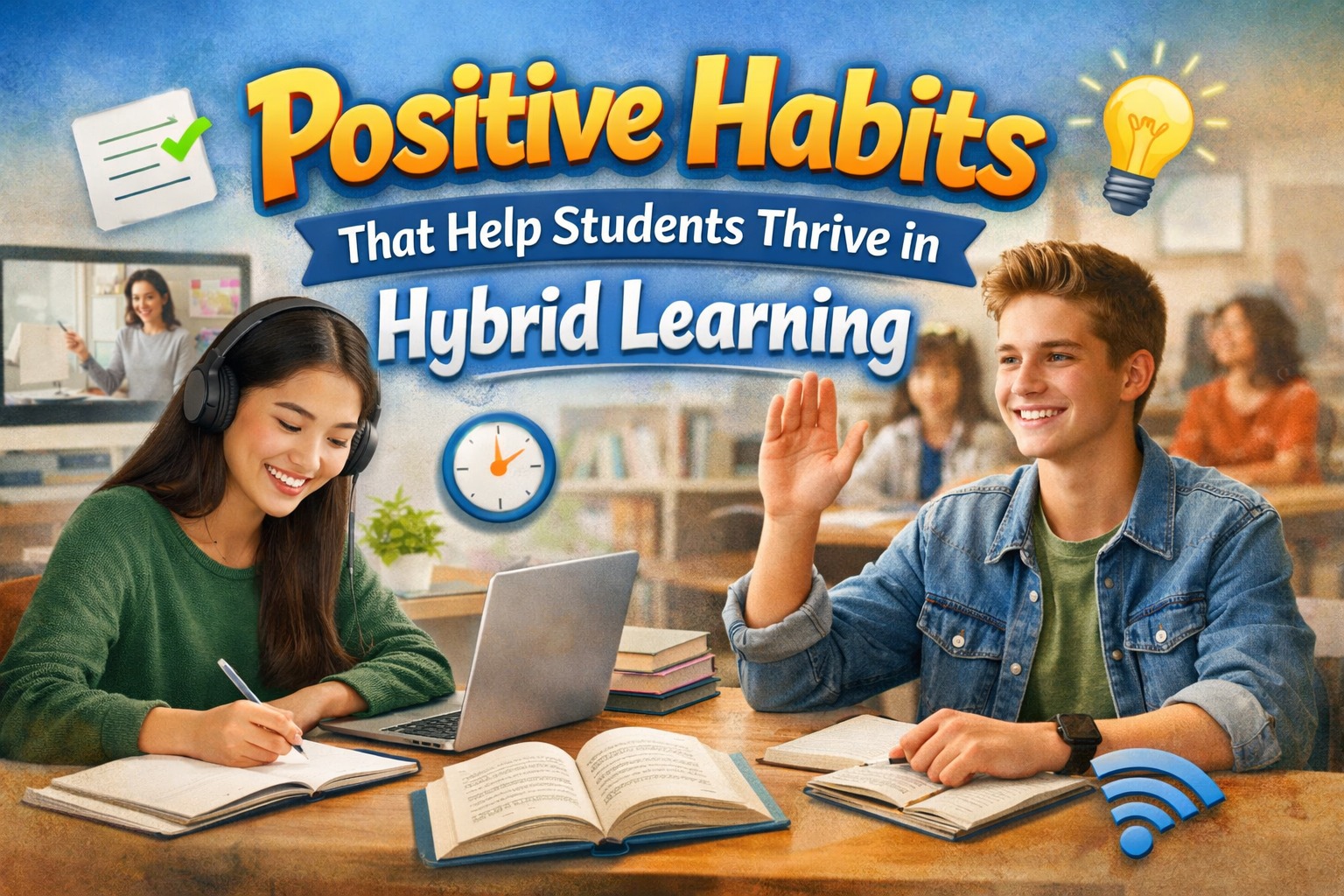
Hybrid learning has become an important part of modern education. This learning model combines face-to-face classes with online learning, allowing students to enjoy greater flexibility while continuing to achieve academic goals. However, success in hybrid learning does not depend solely on technology or teaching methods. It also depends on the habits students develop every day.
Students who build positive habits are more likely to stay focused, manage their responsibilities, and maintain consistent academic performance. By adopting effective routines, learners can overcome challenges and maximize the benefits of hybrid education.
CREATE A CONSISTENT STUDY SCHEDULE
One of the most important habits for success in hybrid learning is maintaining a consistent study schedule. Since students divide their time between online and in-person classes, it is easy to lose track of assignments and deadlines. Having a clear timetable helps create structure and reduces confusion throughout the week.
A regular schedule also improves time management and helps students avoid procrastination. Setting specific hours for studying, reviewing lessons, and completing assignments encourages discipline and increases productivity. Over time, this habit makes learning more efficient and less stressful.
DEVELOP STRONG SELF-DISCIPLINE
Hybrid learning requires a high level of self-discipline because students often learn independently outside the classroom. Without direct supervision, distractions such as social media, entertainment, or household activities can easily interrupt study sessions.
Students who practice self-discipline are better able to stay focused on their goals. They complete tasks on time, attend virtual classes regularly, and maintain a positive attitude toward learning. This habit contributes significantly to long-term academic success.
STAY ORGANIZED WITH LEARNING MATERIALS
Keeping learning materials organized is another habit that supports success in hybrid education. Students often manage both digital files and physical notes, making organization essential for efficient learning.
Using folders, digital storage systems, and planners can help students quickly access important resources. An organized study environment reduces wasted time and allows learners to concentrate more effectively on understanding course content rather than searching for information.
PARTICIPATE ACTIVELY IN EVERY CLASS
Active participation is a valuable habit that strengthens understanding and engagement. Whether attending classes online or in person, students should make an effort to ask questions, contribute to discussions, and interact with instructors.
Being actively involved helps improve critical thinking skills and increases knowledge retention. Students who participate regularly often feel more connected to the learning process and gain greater confidence in expressing their ideas.
TAKE CARE OF PHYSICAL AND MENTAL WELL-BEING
Academic success is closely linked to physical health and mental well-being. Students who get enough sleep, exercise regularly, and maintain healthy eating habits are generally more focused and productive during classes.
Managing stress is equally important in hybrid learning. Taking short breaks, practicing relaxation techniques, and maintaining social connections can help students stay motivated. A healthy mind and body create a strong foundation for effective learning and personal growth.
USE TECHNOLOGY RESPONSIBLY
Technology plays a central role in hybrid education, making responsible use of digital tools an essential habit. Students should become familiar with learning platforms, communication tools, and educational resources that support their studies.
At the same time, it is important to limit unnecessary screen time and avoid digital distractions. Using technology wisely allows students to enhance learning experiences while maintaining concentration and productivity.
CONCLUSION
Success in hybrid learning is not achieved overnight. It comes from developing positive habits that support academic performance, personal responsibility, and overall well-being. By creating a consistent schedule, practicing self-discipline, staying organized, participating actively, maintaining good health, and using technology responsibly, students can thrive in any hybrid learning environment. These habits not only improve educational outcomes but also prepare learners for future academic and professional success.
About the Author
Gusti Ayu Tita P
Author — STEKOM University
An active author focused on academic issues, educational technology, and human resource development in the campus environment.