Preserving Cultural Heritage Amid Modernization
Gusti Ayu Tita P
27 Juni 2026
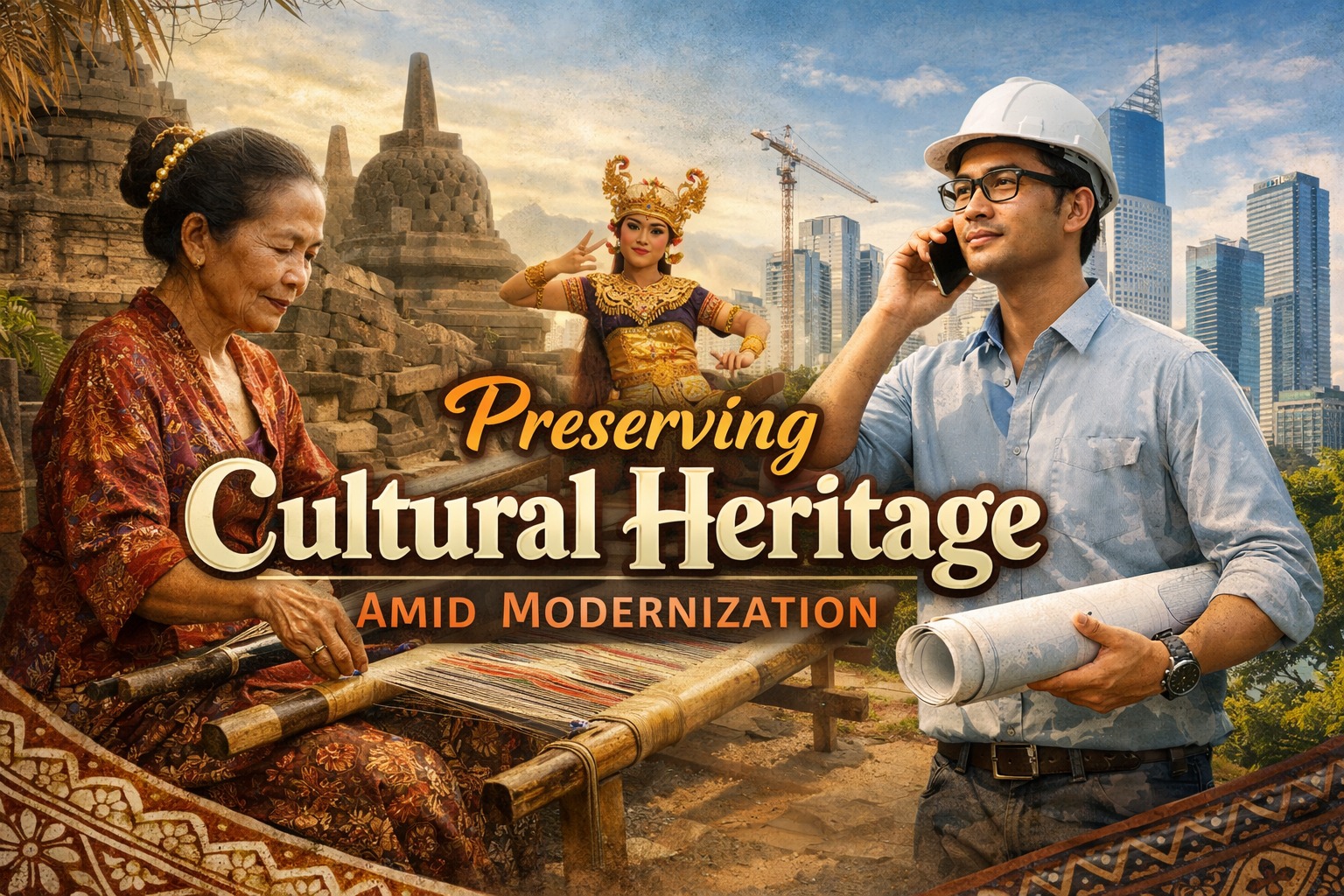
In today's rapidly changing world, modernization has transformed the way people live, work, and communicate. Technological advancements, urban development, and globalization have created countless opportunities for economic growth and social progress. However, these changes also present significant challenges to the preservation of cultural heritage. Many traditional customs, languages, historical sites, and cultural practices are at risk of being forgotten as societies embrace modern lifestyles.
Preserving cultural heritage is essential because it reflects the identity, history, and values of a community. Cultural heritage connects present generations with their ancestors and provides a sense of belonging. While modernization is necessary for development, maintaining cultural traditions ensures that valuable knowledge and unique cultural expressions continue to enrich society. Finding a balance between progress and preservation has become increasingly important in the modern era.
THE IMPORTANCE OF CULTURAL HERITAGE
Cultural heritage includes tangible and intangible elements that have been passed down through generations. Tangible heritage consists of historical buildings, monuments, artifacts, and traditional architecture. Intangible heritage includes languages, folklore, music, dances, festivals, and traditional knowledge. Together, these elements form the foundation of a community’s cultural identity.
Preserving cultural heritage helps societies maintain their uniqueness in an increasingly globalized world. It strengthens social cohesion by fostering a shared sense of history and belonging. Additionally, cultural heritage serves as an educational resource, allowing younger generations to learn about their roots and understand the experiences of those who came before them. Without preservation efforts, valuable traditions and historical knowledge may disappear permanently.
CHALLENGES OF MODERNIZATION
Modernization often encourages the adoption of new technologies, lifestyles, and cultural influences from around the world. While these developments bring many benefits, they can also reduce interest in traditional practices. Younger generations may prioritize modern entertainment and communication methods, leading to a decline in the transmission of cultural traditions.
Urbanization also poses a significant threat to cultural heritage. Historical neighborhoods, traditional buildings, and archaeological sites are sometimes replaced by modern infrastructure projects. Furthermore, globalization can contribute to cultural homogenization, where local customs gradually lose prominence in favor of widely accepted global trends. These challenges make preservation efforts more critical than ever.
STRATEGIES FOR PROTECTING CULTURAL HERITAGE
Governments, communities, and cultural organizations play a vital role in protecting heritage. One effective strategy is the implementation of laws and regulations that safeguard historical sites and cultural landmarks. Such policies help prevent the destruction or alteration of culturally significant locations.
Education is another powerful tool for preservation. Schools and cultural institutions can teach students about traditional customs, local history, and cultural values. By encouraging appreciation for cultural heritage from an early age, societies can inspire future generations to continue preserving their traditions and historical assets.
THE ROLE OF TECHNOLOGY IN PRESERVATION
Although modernization presents challenges, technology can also support cultural preservation efforts. Digital archives, virtual museums, and online databases make it easier to document and share historical information with a global audience. These tools help preserve valuable cultural materials that might otherwise be lost due to aging or environmental damage.
Advanced technologies such as 3D scanning and digital reconstruction are increasingly used to protect historical sites and artifacts. Social media platforms and digital storytelling also provide opportunities to promote cultural awareness and engage younger generations. When used responsibly, technology can become a valuable ally in preserving cultural heritage.
COMMUNITY PARTICIPATION AND CULTURAL SUSTAINABILITY
Local communities are among the most important guardians of cultural heritage. Their active involvement in preservation initiatives ensures that traditions remain relevant and meaningful. Community-based programs, cultural festivals, and heritage workshops encourage participation and strengthen cultural pride.
Sustainable cultural preservation requires cooperation between governments, educational institutions, businesses, and citizens. By working together, societies can create environments where modernization and cultural heritage coexist harmoniously. This collaborative approach helps ensure that future generations can enjoy both technological progress and rich cultural traditions.
CONCLUSION
The preservation of cultural heritage amid modernization is a complex but essential task. While technological advancement, urbanization, and globalization continue to reshape societies, cultural traditions and historical assets remain vital components of human identity. Protecting cultural heritage helps preserve collective memory, strengthens social bonds, and promotes cultural diversity.
Achieving a balance between modernization and preservation requires commitment from governments, communities, and individuals alike. Through education, technology, legal protection, and community engagement, societies can safeguard their cultural legacy while embracing progress. By valuing both innovation and tradition, humanity can build a future that respects its past while moving confidently forward.
About the Author
Gusti Ayu Tita P
Author — STEKOM University
An active author focused on academic issues, educational technology, and human resource development in the campus environment.