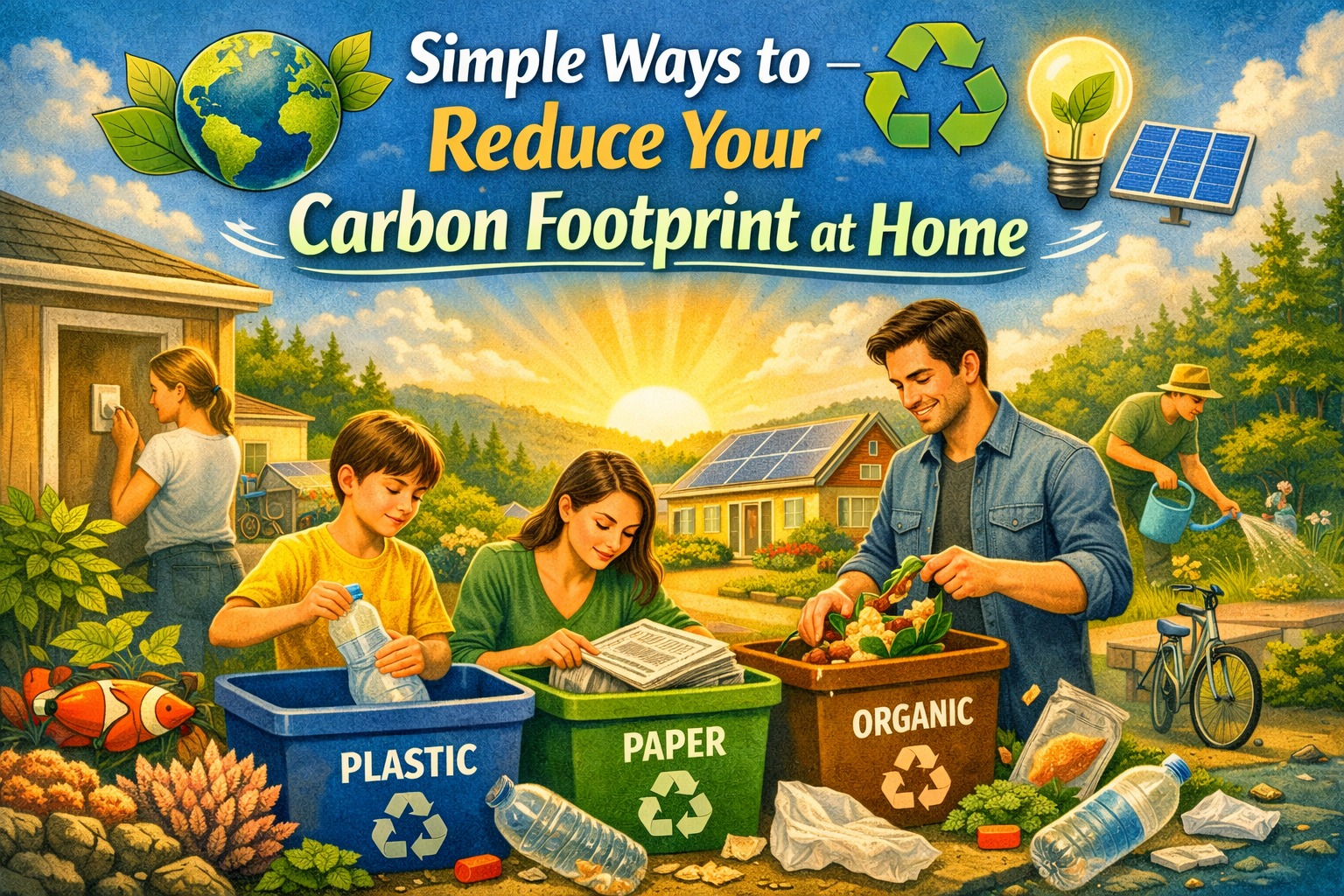
Living sustainably no longer requires major lifestyle changes or expensive upgrades. Small daily habits can significantly reduce your carbon footprint and help protect the planet. By making conscious choices at home, you can save energy, reduce waste, and inspire others to adopt eco-friendly habits.
WHY REDUCING YOUR CARBON FOOTPRINT MATTERS
Your carbon footprint represents the total amount of greenhouse gases produced by your daily activities. Household energy use, waste production, and consumption patterns are major contributors to climate change. When millions of people adopt small eco-friendly habits, the combined impact becomes powerful and meaningful.
Reducing emissions at home also offers personal benefits. You can lower utility bills, create a healthier living environment, and contribute to a more sustainable future for the next generation.
SWITCH TO ENERGY-EFFICIENT LIGHTING
Lighting is one of the easiest areas to improve. Traditional incandescent bulbs waste a large portion of energy as heat, while LED bulbs use significantly less electricity and last much longer.
Replacing all bulbs in your home with LEDs can reduce energy consumption dramatically over time. Make it a habit to turn off lights when leaving a room and take advantage of natural sunlight during the day.
UNPLUG DEVICES WHEN NOT IN USE
Many electronics continue to consume power even when turned off. This “phantom energy” can quietly increase your electricity bill and environmental impact.
Simple actions like unplugging chargers, switching off power strips, and turning off unused appliances can save energy effortlessly. Smart power strips are also helpful for reducing standby power consumption.
USE WATER MORE WISELY
Water usage is directly connected to energy consumption because heating and pumping water requires electricity. Reducing water waste helps both the environment and your monthly expenses.
Take shorter showers, fix leaking faucets, and use water-efficient showerheads and toilets. Running full loads in dishwashers and washing machines also minimizes water and energy usage.
REDUCE SINGLE-USE PLASTICS
Plastic production and disposal contribute heavily to carbon emissions. A simple shift toward reusable items can make a big difference.
Use reusable shopping bags, water bottles, food containers, and cloth towels. Choosing products with minimal packaging also reduces waste and environmental impact.
ADOPT SUSTAINABLE EATING HABITS
Food choices influence your carbon footprint more than many people realize. Reducing food waste and choosing locally sourced products helps cut emissions linked to transportation and production.
Try planning meals, storing food properly, and incorporating more plant-based meals into your weekly routine. Even small dietary adjustments can have a positive environmental impact.
IMPROVE HOME INSULATION
A well-insulated home maintains temperature more efficiently, reducing the need for heating and cooling. This results in lower energy consumption throughout the year.
Seal gaps around doors and windows, use thick curtains, and consider upgrading insulation if possible. These steps keep your home comfortable while lowering energy use.
CREATE A GREEN DAILY ROUTINE
Consistency is the key to sustainability. Simple daily habits such as recycling, composting organic waste, and reducing unnecessary purchases contribute to long-term environmental benefits.
Encourage family members to participate so eco-friendly practices become part of your household culture.
CONCLUSION
Reducing your carbon footprint at home does not require drastic changes. Small, practical steps can lead to meaningful environmental impact over time. By saving energy, reducing waste, and making mindful choices, you can create a sustainable home and contribute to a healthier planet.
About the Author
Gusti Ayu Tita P
Author — STEKOM University
An active author focused on academic issues, educational technology, and human resource development in the campus environment.