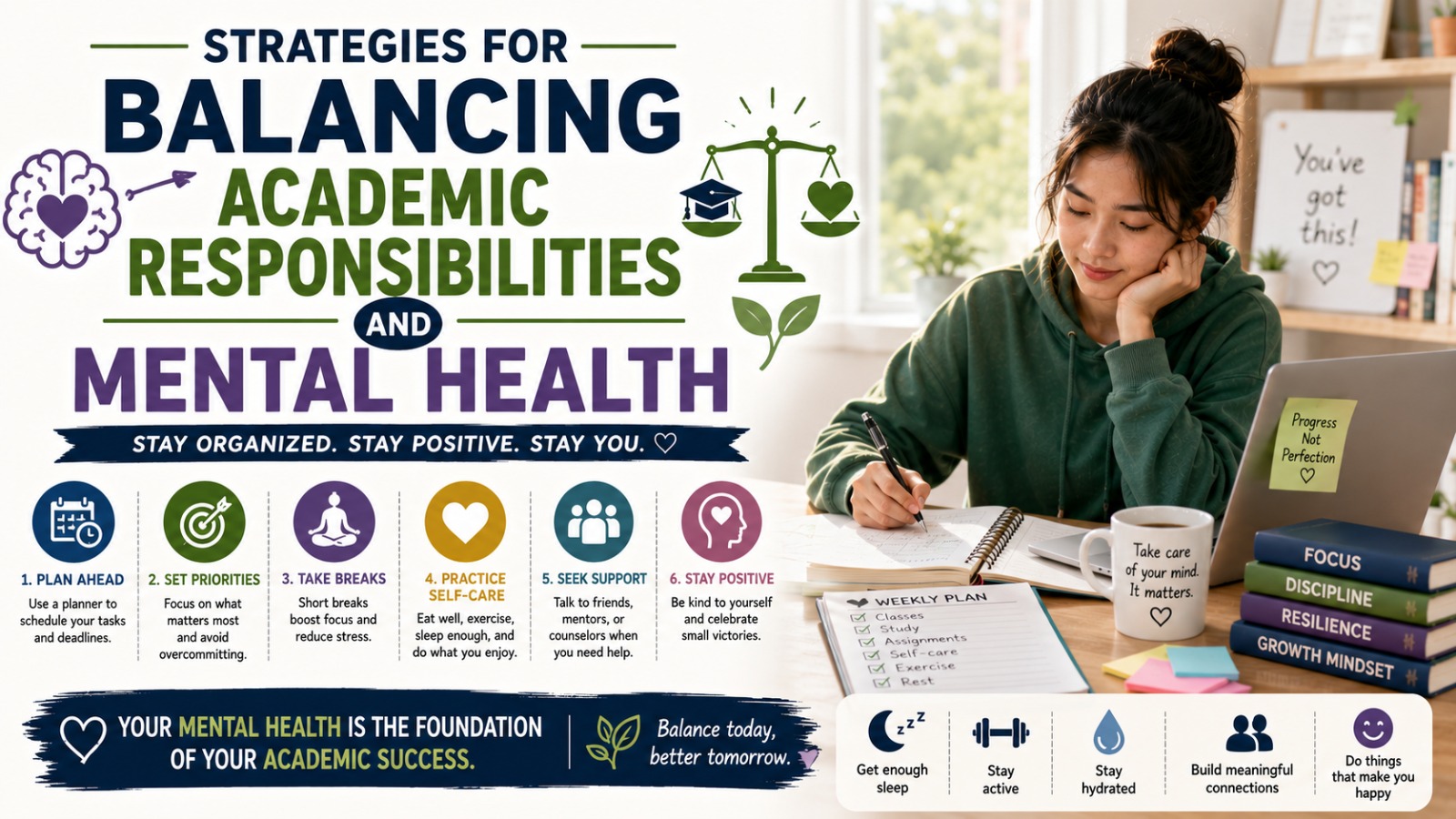
Balancing academic responsibilities and mental health has become an important challenge for students in today’s educational environment. Students are often required to complete assignments, prepare for examinations, participate in extracurricular activities, and maintain high academic performance. These demands can create stress and emotional pressure if not managed properly.
While academic achievement is important, mental health should not be ignored. Emotional well-being plays a major role in concentration, motivation, productivity, and overall quality of life. Students who fail to balance academics and mental health may experience anxiety, burnout, and decreased academic performance. Therefore, learning effective strategies for maintaining emotional balance is essential for long-term success and personal growth.
UNDERSTANDING THE IMPORTANCE OF BALANCE
Academic responsibilities are necessary for educational development, but excessive focus on achievement can negatively affect mental health. Many students spend long hours studying without giving themselves enough time to rest or relax. This imbalance often leads to emotional exhaustion and physical fatigue.
Mental health influences how students think, feel, and respond to challenges. Students with stable emotional conditions are more likely to manage stress effectively, solve problems calmly, and maintain positive relationships. On the other hand, poor mental health can reduce concentration, lower motivation, and negatively impact academic performance.
Achieving balance between academics and emotional well-being helps students become more productive, resilient, and confident in facing educational challenges.
COMMON CHALLENGES FACED BY STUDENTS
Students face various challenges that make balancing academics and mental health difficult. One major challenge is academic pressure. Deadlines, examinations, and high expectations from parents or teachers often increase stress levels.
Another challenge is poor time management. Many students struggle to organize their schedules effectively, resulting in procrastination and last-minute work. This situation can create anxiety and emotional exhaustion.
Social comparison also affects student mental health. In competitive academic environments, students frequently compare their achievements with peers. Social media may worsen this issue by encouraging unrealistic standards of success.
In addition, lack of sleep, unhealthy lifestyles, and limited emotional support can contribute to mental health problems among students.
EFFECTIVE STRATEGIES FOR BALANCING ACADEMICS AND MENTAL HEALTH
CREATE A REALISTIC SCHEDULE
Time management is one of the most effective strategies for maintaining balance. Students should create realistic daily or weekly schedules that include study time, rest, exercise, and personal activities.
Breaking large assignments into smaller tasks can make work feel more manageable and reduce stress. Prioritizing responsibilities also helps students focus on important tasks without feeling overwhelmed.
MAINTAIN A HEALTHY LIFESTYLE
Physical health has a strong connection with emotional well-being. Regular exercise can help reduce stress, improve mood, and increase energy levels. Students should also maintain balanced nutrition and drink enough water to support concentration and productivity.
Adequate sleep is equally important. Lack of sleep may increase anxiety, reduce memory performance, and weaken emotional stability. Consistent sleeping habits help students stay mentally and physically healthy.
TAKE REGULAR BREAKS
Studying continuously without rest can lead to mental fatigue and decreased productivity. Taking short breaks during study sessions allows the brain to relax and recover.
Students can use break time for activities such as walking, listening to music, stretching, or practicing relaxation techniques. These activities help refresh the mind and improve concentration.
BUILD STRONG SUPPORT SYSTEMS
Supportive relationships are essential for maintaining mental health. Friends, family members, and teachers can provide emotional encouragement and practical advice during stressful situations.
Open communication helps students feel understood and less isolated. Students should not hesitate to share their concerns or seek professional support when necessary.
PRACTICE STRESS MANAGEMENT TECHNIQUES
Stress management techniques such as meditation, mindfulness, and deep breathing exercises can help students maintain emotional balance. These methods reduce anxiety and improve focus during academic activities.
Practicing gratitude and positive thinking can also help students develop healthier mindsets and increase emotional resilience.
THE ROLE OF EDUCATIONAL INSTITUTIONS
Educational institutions have an important role in supporting student well-being. Schools and universities should create positive learning environments that encourage both academic success and emotional health.
Providing counseling services and mental health awareness programs can help students manage stress more effectively. Teachers should also promote healthy communication and avoid placing unnecessary pressure on students.
Flexible learning methods and balanced workloads can contribute to healthier academic experiences. When educational institutions prioritize student well-being, students are more likely to achieve success without sacrificing their mental health.
CONCLUSION
Balancing academic responsibilities and mental health is essential for achieving long-term academic success and personal well-being. Excessive academic pressure without proper stress management can negatively affect emotional stability, productivity, and quality of life.
Students can maintain balance by managing time effectively, practicing healthy lifestyles, taking regular breaks, building supportive relationships, and using stress management techniques. Educational institutions also play a vital role in creating supportive environments that prioritize mental health alongside academic achievement.
A balanced lifestyle allows students to perform better academically while maintaining emotional resilience and happiness. By protecting mental health, students can enjoy more meaningful learning experiences and achieve their goals in healthier ways.
About the Author
Gusti Ayu Tita P
Author — STEKOM University
An active author focused on academic issues, educational technology, and human resource development in the campus environment.