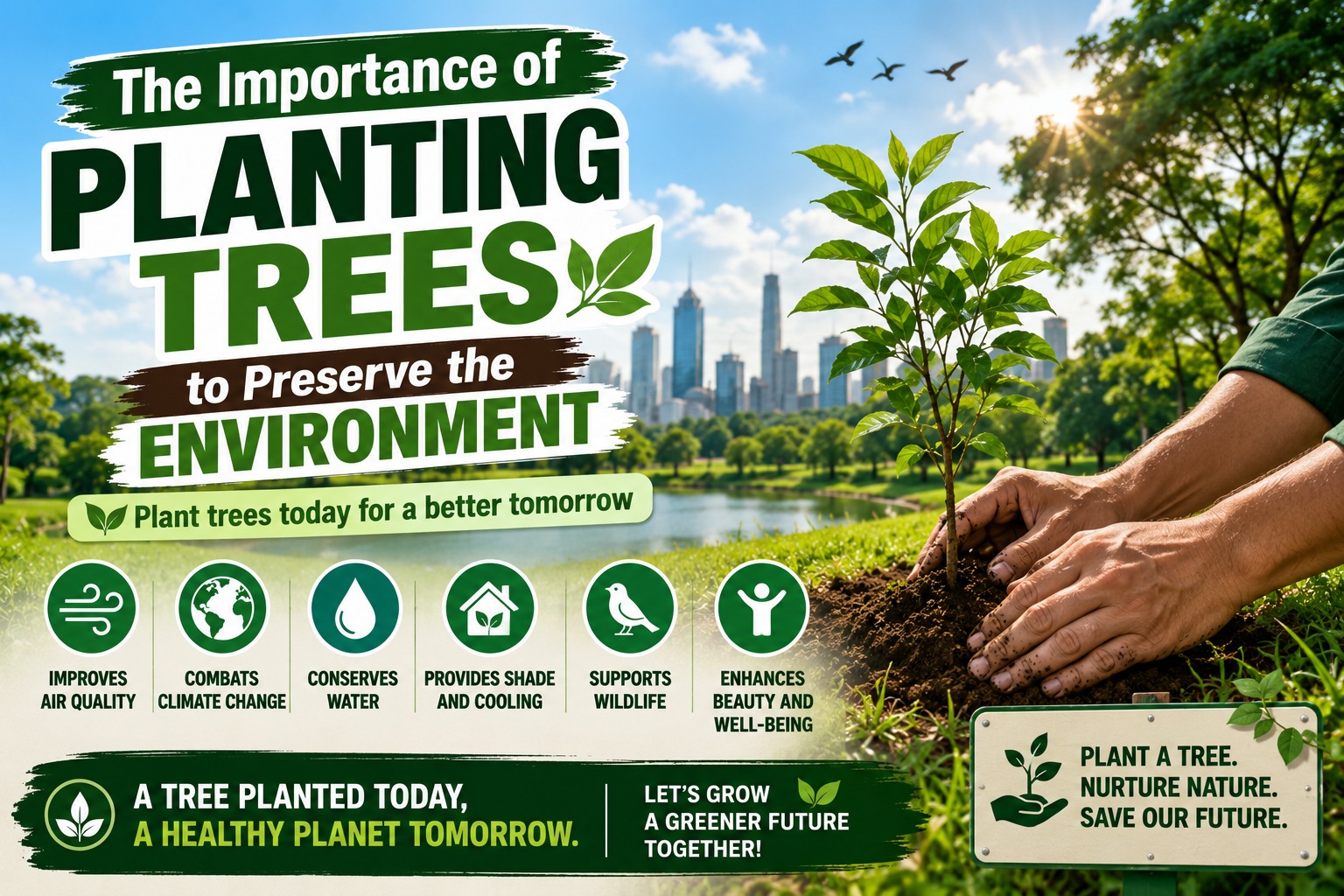
Trees are one of the most valuable natural resources on Earth. They provide oxygen, absorb carbon dioxide, support wildlife, and help maintain the balance of ecosystems. However, rapid urbanization, deforestation, and environmental destruction continue to reduce forest areas around the world. Because of this, planting trees has become an important step in preserving the environment and creating a healthier future.
Planting trees is not only beneficial for nature but also for human life. Even simple tree-planting activities can create long-term positive impacts on air quality, climate stability, and biodiversity.
WHY TREES ARE ESSENTIAL FOR THE ENVIRONMENT
Trees play a major role in maintaining environmental balance. They act as natural air filters by absorbing harmful gases and releasing oxygen into the atmosphere. Without trees, pollution levels would increase significantly, making the environment less healthy for living organisms.
Trees also help regulate temperature and reduce the effects of climate change. Forests absorb large amounts of carbon dioxide, which is one of the main causes of global warming. By planting more trees, communities can help reduce greenhouse gas emissions naturally.
BENEFITS OF PLANTING TREES
Planting trees provides many environmental, social, and economic benefits. These advantages make tree conservation and reforestation important for sustainable development.
IMPROVE AIR QUALITY
Trees absorb pollutants such as carbon monoxide, sulfur dioxide, and dust particles from the air. They produce fresh oxygen that supports healthier living conditions for humans and animals.
Urban areas with more trees often experience cleaner and cooler air compared to places with limited green spaces.
PREVENT SOIL EROSION
Tree roots help hold soil together and reduce the risk of erosion. This is especially important in areas prone to landslides or flooding.
Healthy forests also improve water absorption into the ground, helping maintain water supplies and reducing surface runoff.
SUPPORT WILDLIFE HABITATS
Trees provide food, shelter, and breeding areas for many species of birds, insects, and animals. Deforestation threatens biodiversity and disrupts natural ecosystems.
Planting trees helps restore habitats and protects wildlife from extinction.
REDUCE GLOBAL WARMING
Trees absorb carbon dioxide during photosynthesis, helping lower greenhouse gas levels in the atmosphere. Large-scale tree planting can support global efforts to combat climate change.
Green environments also reduce heat in urban areas, creating more comfortable living conditions.
ENHANCE HUMAN WELL-BEING
Green spaces with trees can improve mental health and reduce stress. Parks, gardens, and forests provide relaxing environments that encourage outdoor activities and healthier lifestyles.
Communities with more green areas often experience better environmental quality and stronger social connections.
CHALLENGES IN TREE CONSERVATION
Despite the importance of trees, many forests continue to disappear due to illegal logging, agricultural expansion, and urban development. Lack of public awareness and weak environmental regulations can also contribute to deforestation.
Climate change, forest fires, and pollution further threaten tree populations worldwide. Protecting existing forests is just as important as planting new trees.
HOW INDIVIDUALS CAN HELP
Everyone can contribute to environmental preservation through simple actions related to tree planting and conservation.
PARTICIPATE IN TREE-PLANTING ACTIVITIES
Joining local tree-planting programs can help restore green spaces and improve environmental conditions.
REDUCE PAPER WASTE
Using less paper and recycling products can decrease the demand for excessive logging.
SUPPORT ENVIRONMENTAL ORGANIZATIONS
Many organizations focus on forest conservation and reforestation projects. Supporting these initiatives can strengthen environmental protection efforts.
EDUCATE OTHERS ABOUT ENVIRONMENTAL CARE
Spreading awareness about the importance of trees can encourage more people to participate in conservation activities.
CONCLUSION
Planting trees is one of the simplest and most effective ways to preserve the environment. Trees improve air quality, reduce global warming, prevent soil erosion, and support biodiversity.
Although environmental challenges continue to grow, collective action can make a significant difference. By planting and protecting trees, people can help create a cleaner, healthier, and more sustainable world for future generations.
About the Author
Gusti Ayu Tita P
Author — STEKOM University
An active author focused on academic issues, educational technology, and human resource development in the campus environment.