Tips for Facing Competition in the Working World with Confidence
Gusti Ayu Tita P
1 Juli 2026
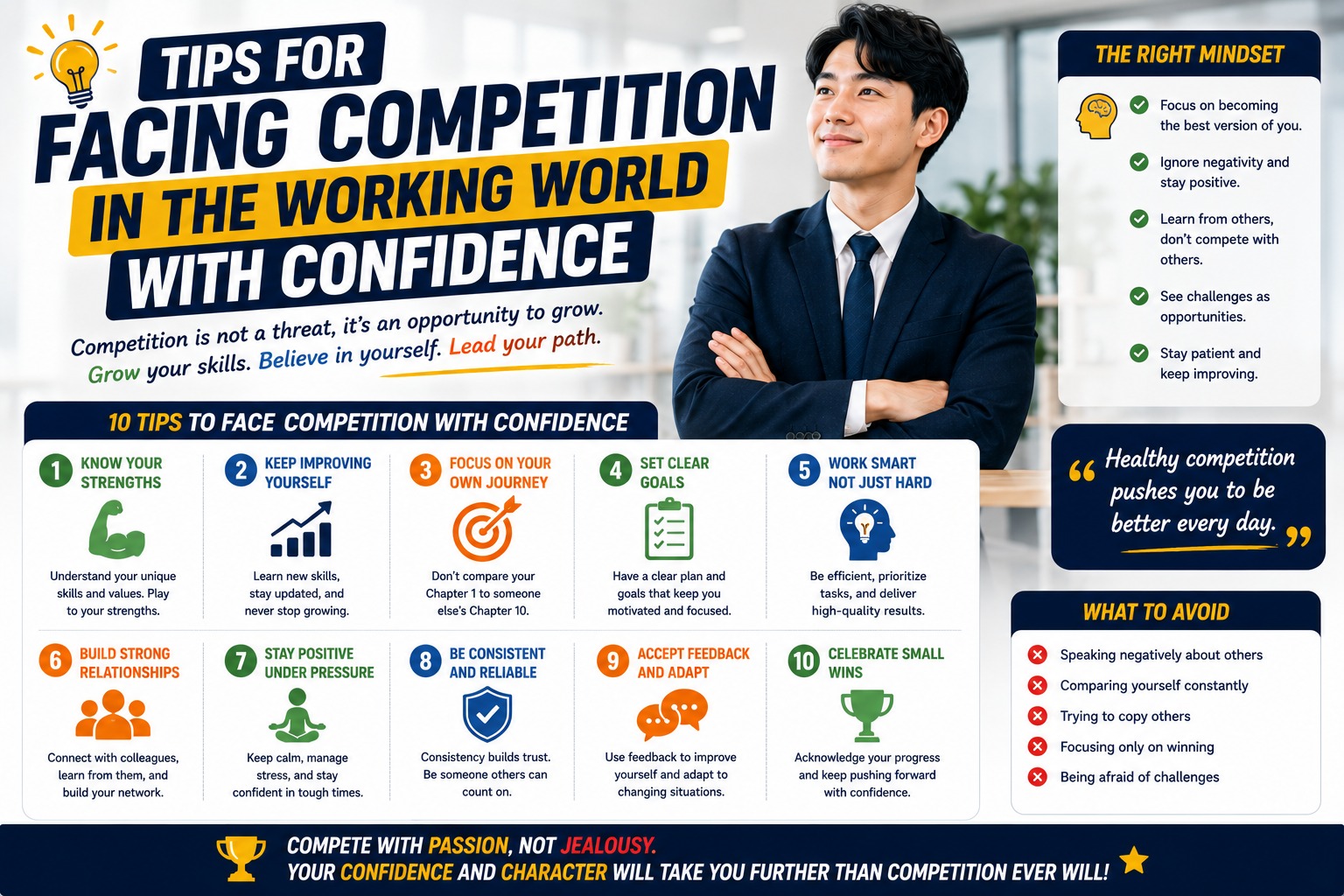
Competition in the working world is becoming increasingly intense as industries continue to grow and evolve. Employees are expected to improve their skills, maintain productivity, and adapt quickly to workplace changes. For many professionals, competition can feel stressful and challenging. However, with confidence, preparation, and the right mindset, competition can become an opportunity for growth and career development. Individuals who face professional competition positively are usually more motivated to improve themselves and achieve greater success.
DEVELOP SELF-CONFIDENCE
Confidence is one of the most important factors for handling workplace competition successfully. Employees who believe in their abilities are more likely to take opportunities, express ideas, and perform well under pressure.
Building confidence starts with recognizing personal strengths, achievements, and skills. Instead of comparing yourself negatively to others, focus on continuous self-improvement and personal progress.
CONTINUE IMPROVING YOUR SKILLS
In a competitive working environment, employees must keep developing both technical and interpersonal skills. Companies value individuals who are adaptable and willing to learn new things.
Taking courses, attending workshops, reading industry trends, and improving digital skills can increase professional value and competitiveness. Employees who continue learning are often better prepared for career challenges and opportunities.
MAINTAIN A POSITIVE MINDSET
A positive attitude can help employees stay motivated during difficult situations. Instead of seeing competition as a threat, view it as a chance to grow and improve professionally.
Positive thinking also helps reduce stress and maintain emotional balance. Employees who stay optimistic usually adapt more easily to workplace challenges and changes.
AVOID COMPARING YOURSELF EXCESSIVELY
Comparing yourself constantly with coworkers can reduce confidence and create unnecessary pressure. Every individual has different experiences, strengths, and career journeys.
Focus on improving your own abilities and achieving personal goals. Healthy competition should inspire motivation rather than create insecurity.
BUILD STRONG COMMUNICATION SKILLS
Good communication skills are essential for professional success. Employees who communicate clearly and confidently often build stronger relationships with coworkers, clients, and supervisors.
Effective communication also helps individuals express ideas, solve conflicts, and contribute positively during teamwork and workplace discussions.
STAY PROFESSIONAL IN EVERY SITUATION
Professionalism is highly important in competitive environments. Maintaining discipline, respect, honesty, and responsibility helps create a positive reputation in the workplace.
Avoid unhealthy competition, gossip, or negative behavior toward coworkers. Employers appreciate employees who compete fairly and contribute positively to the team.
LEARN TO HANDLE CRITICISM
Feedback and criticism are common in professional environments. Instead of reacting emotionally, use constructive criticism as an opportunity for improvement.
Employees who accept feedback maturely often grow faster and become more adaptable in competitive workplaces.
EXPAND YOUR PROFESSIONAL NETWORK
Networking can provide valuable career opportunities and support. Building relationships with mentors, coworkers, and industry professionals helps employees gain insights, advice, and professional connections.
A strong professional network can also increase confidence by creating access to guidance and collaboration opportunities.
MANAGE STRESS EFFECTIVELY
Competition can sometimes create pressure and anxiety. Managing stress effectively is important for maintaining focus and productivity.
Healthy habits such as exercising, resting properly, and maintaining work-life balance can help employees remain mentally and physically prepared for workplace challenges.
TAKE INITIATIVE AND BE PROACTIVE
Employees who take initiative often stand out in competitive environments. Volunteering for responsibilities, offering solutions, and showing dedication demonstrate professionalism and leadership potential.
Being proactive also helps employees gain valuable experience and build stronger trust with supervisors.
CONCLUSION
Facing competition in the working world with confidence requires continuous self-improvement, professionalism, and a positive mindset. By improving skills, managing stress, building communication abilities, and focusing on personal growth, employees can handle workplace competition more effectively. Healthy competition should be viewed as motivation to grow, learn, and achieve greater professional success.
About the Author
Gusti Ayu Tita P
Author — STEKOM University
An active author focused on academic issues, educational technology, and human resource development in the campus environment.