Artificial Intelligence in the Career World: Opportunities and Challenges
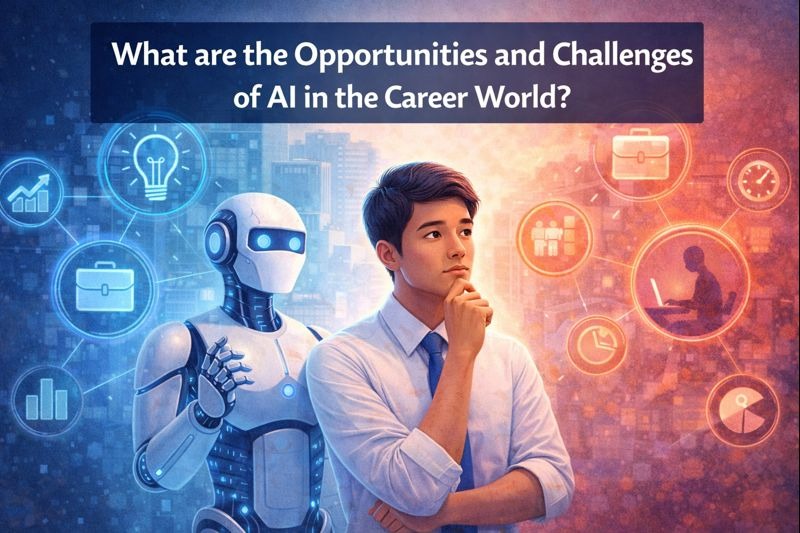
Artificial Intelligence (AI) has become one of the hottest topics across various industries, transforming the way we work and interact. With its ability to process large amounts of data and perform complex tasks, AI offers many opportunities but also presents challenges that cannot be ignored. This article discusses the opportunities and challenges that the career world faces as a result of AI advancements.
1. Opportunities Presented by AI
AI brings several significant opportunities to the career world.
When implemented properly, AI can enhance productivity, innovation, and business performance.
1.1. Increased Work Efficiency
AI is capable of automating various routine tasks, such as data processing and inventory management.
Automation allows employees to focus on more strategic and creative tasks.
For example, in marketing, AI can analyze market trends and consumer behavior, helping marketers make more informed decisions.
1.2. Creation of New Job Opportunities
Although there are concerns that AI will replace human jobs, the reality is that AI also creates new career paths.
Roles such as Data Scientist, AI Ethicist, and Robotics Engineer are increasingly in demand.
Companies are now seeking professionals who can manage, maintain, and develop AI systems.
1.3. Improved Decision-Making Quality
AI supports decision-makers by analyzing data and providing deeper insights.
AI-based analytical tools enable businesses to make more accurate predictions, reduce risks, and improve outcomes.
1.4. Service Personalization
AI enables companies to deliver more personalized experiences to customers.
In the retail industry, AI-powered recommendation systems can increase sales by offering products that match user preferences.
2. Challenges Faced by AI
In addition to opportunities, AI also presents several major challenges.
These challenges must be addressed to ensure fair and sustainable workforce development.
2.1. Risk of Job Replacement
One of the biggest concerns is the replacement of routine and repetitive jobs.
Workers in sectors such as manufacturing, customer service, and administration face higher risks of job displacement.
2.2. Skills Gap
Not all workers possess the skills required to adapt to the AI era.
The skills gap can lead to inequality in the labor market.
Therefore, continuous training and education are essential to help employees remain competitive.
2.3. Ethical Challenges
The use of AI raises ethical issues, particularly regarding data privacy and algorithmic bias.
Biased training data can lead to unfair or discriminatory decisions.
Companies must consider ethical principles when implementing AI technologies.
2.4. Investment Requirements
Implementing effective AI systems requires significant financial investment.
Many small businesses may struggle to afford these costs, potentially widening the gap between large and small companies.
3. Conclusion
Artificial Intelligence offers various opportunities to improve efficiency and decision-making quality in the career world.
However, the challenges associated with AI are equally significant and require serious attention from companies, employees, and policymakers.
With the right approach, the workforce can adapt and fully leverage the potential of artificial intelligence. Continuous learning and adaptability are essential to ensuring a better and more sustainable future of work.
About the Author
Gusti Ayu Tita P
Author — STEKOM University
An active author focused on academic issues, educational technology, and human resource development in the campus environment.