
What Mistakes Should You Avoid When Registering for Marriage at KUA?
Gusti Ayu Tita P
19 September 2026
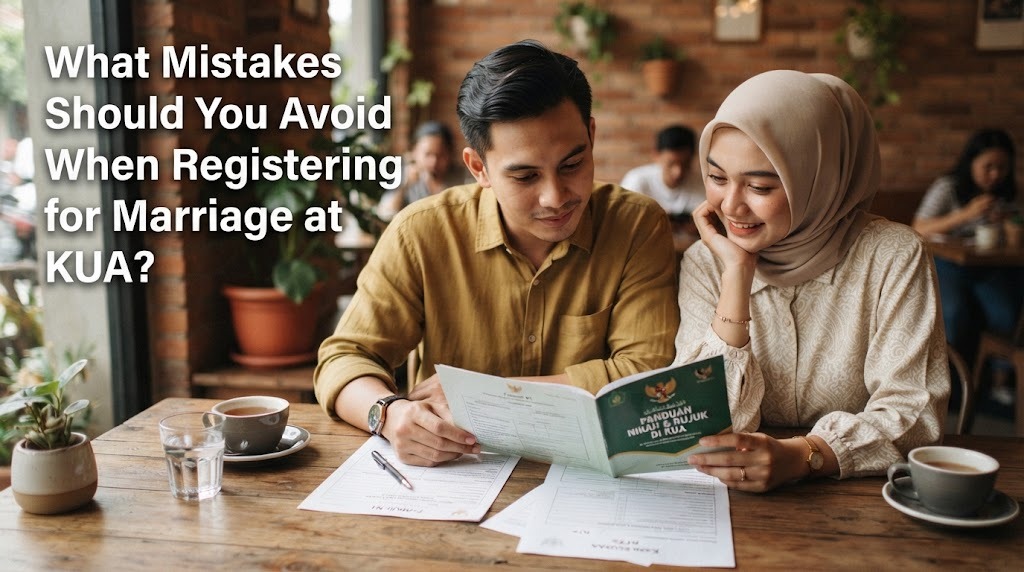
Registering for marriage at the Kantor Urusan Agama or KUA requires careful preparation. Couples need to provide the correct documents, follow the registration schedule, and complete the required procedures before the marriage ceremony. Under Minister of Religious Affairs Regulation Number 30 of 2024, marriage registration can be submitted directly at the KUA where the ceremony will take place or online through SIMKAH.
Although the process is generally manageable, administrative mistakes can cause delays. Some problems happen because couples register too late, submit incomplete documents, or provide information that does not match their official identity documents. Knowing the common mistakes in advance can make the registration process more organized.
REGISTERING TOO CLOSE TO THE MARRIAGE DATE
One common mistake is waiting until only a few days before the marriage ceremony to register. Under the current rules, the registration of the intention to marry should generally be submitted no later than 10 working days before the ceremony. This period gives the KUA time to check the documents and complete the required procedures.
If registration is submitted less than 10 working days before the ceremony, additional requirements may apply. These can include a dispensation from the subdistrict head or a stamped statement explaining the reason for the late registration, according to the applicable procedure. Therefore, couples should begin the registration process as early as possible.
SUBMITTING INCOMPLETE DOCUMENTS
Another mistake is submitting an application without checking whether all required documents have been prepared. Basic requirements can include the marriage introduction letter, birth certificate, KTP, family card, health certificate, and consent from the prospective bride and groom. Additional documents may be required depending on personal circumstances.
For example, people who are divorced or widowed may need to provide a divorce certificate or a death certificate for their previous spouse. TNI or Polri members may need permission from their superior or unit. Preparing a checklist based on personal circumstances can help prevent missing documents.
PROVIDING INCORRECT PERSONAL INFORMATION
Incorrect personal information is another problem that couples should avoid. Names, dates of birth, identification numbers, and other details should be consistent with official documents. Even a small difference in important identity information can require clarification or correction during the verification process.
Before submitting the application, couples should compare the information in their KTP, family card, birth certificate, and other supporting documents. They should also carefully review the information entered into SIMKAH when registering online. Accurate information helps the KUA conduct the administrative examination properly.
CHOOSING THE WRONG KUA
Couples should also pay attention to the KUA where the marriage ceremony will take place. If the marriage is held outside the residential district, a marriage recommendation from the KUA in the residential area is generally required. This document is part of the administrative requirements for couples marrying outside their residential district.
Choosing the destination KUA early makes it easier to determine which documents are needed. Couples should communicate with both the KUA of residence and the destination KUA when necessary. This is especially important when the wedding venue is located in a different district.
IGNORING SPECIAL REQUIREMENTS
Not every couple has exactly the same administrative requirements. Some people need additional documents because of their age, previous marital status, occupation, or other circumstances. For example, prospective couples under 21 years old generally need written permission from a parent or guardian, while those under 19 years old may need a marriage dispensation from the court.
There are also specific requirements for certain other situations, including polygamy and TNI or Polri membership. Couples should not assume that the standard document checklist applies to everyone. Asking the KUA about individual circumstances before registration can help prevent unnecessary delays.
SKIPPING MARRIAGE GUIDANCE
Another mistake is treating marriage guidance as something that can simply be ignored. Current KUA procedures require prospective couples to participate in marriage guidance before the marriage ceremony. The program provides preparation for married life and serves as part of the pre-marriage process.
Couples should therefore pay attention to the schedule provided by the KUA. Completing this requirement early can help prevent problems before the wedding date. It is also an opportunity for couples to learn about responsibilities, communication, and family life.
FAILING TO ATTEND THE MARRIAGE EXAMINATION
The marriage examination is another important stage that should not be overlooked. During this process, the KUA checks the documents and verifies information about the prospective bride, groom, and marriage guardian. The purpose is to ensure that the administrative and marriage requirements have been properly fulfilled.
Couples should attend according to the schedule given by the KUA and bring the required documents. If a document is incomplete, the KUA can request that it be corrected or completed before the ceremony. Responding quickly to these requests can help keep the registration process on schedule.
RELYING ONLY ON UNOFFICIAL INFORMATION
Another mistake is relying entirely on information from social media, friends, or old articles. Marriage registration rules can change, and individual circumstances can result in different document requirements. The current framework for marriage registration is PMA Number 30 of 2024, which replaced the previous regulation on marriage registration.
For this reason, couples should confirm important information with the KUA handling their registration. Official KUA or Ministry of Religious Affairs information is more appropriate for checking current requirements. This is particularly important when dealing with special circumstances or late registration.
NOT KEEPING COPIES OF IMPORTANT DOCUMENTS
Couples should avoid submitting documents without keeping appropriate copies or records for themselves. Registration documents, recommendation letters, application information, and other supporting records may be useful if an administrative issue needs to be clarified. Keeping these records also makes it easier to check what has already been submitted.
Digital copies can be stored securely, while important physical documents should be kept in an organized folder. Couples should also keep any registration evidence or information received through SIMKAH. Good document management can make the overall process easier to track.
CONCLUSION
Several mistakes can make marriage registration at KUA more difficult, including registering too late, submitting incomplete documents, entering incorrect personal information, and choosing the wrong KUA. Couples should also pay attention to special requirements, marriage guidance, and the marriage examination. The current rules generally require registration no later than 10 working days before the marriage ceremony.
The easiest way to avoid administrative problems is to prepare early and check every document carefully. Couples should compare their personal information with official documents and confirm specific requirements with the relevant KUA. With proper preparation, the marriage registration process can be more orderly and easier to complete.
About the Author
Gusti Ayu Tita P
Author — STEKOM University
An active author focused on academic issues, educational technology, and human resource development in the campus environment.