Why Does Happiness Feel Temporary in Our Lives?
Gusti Ayu Tita P
3 Juli 2026
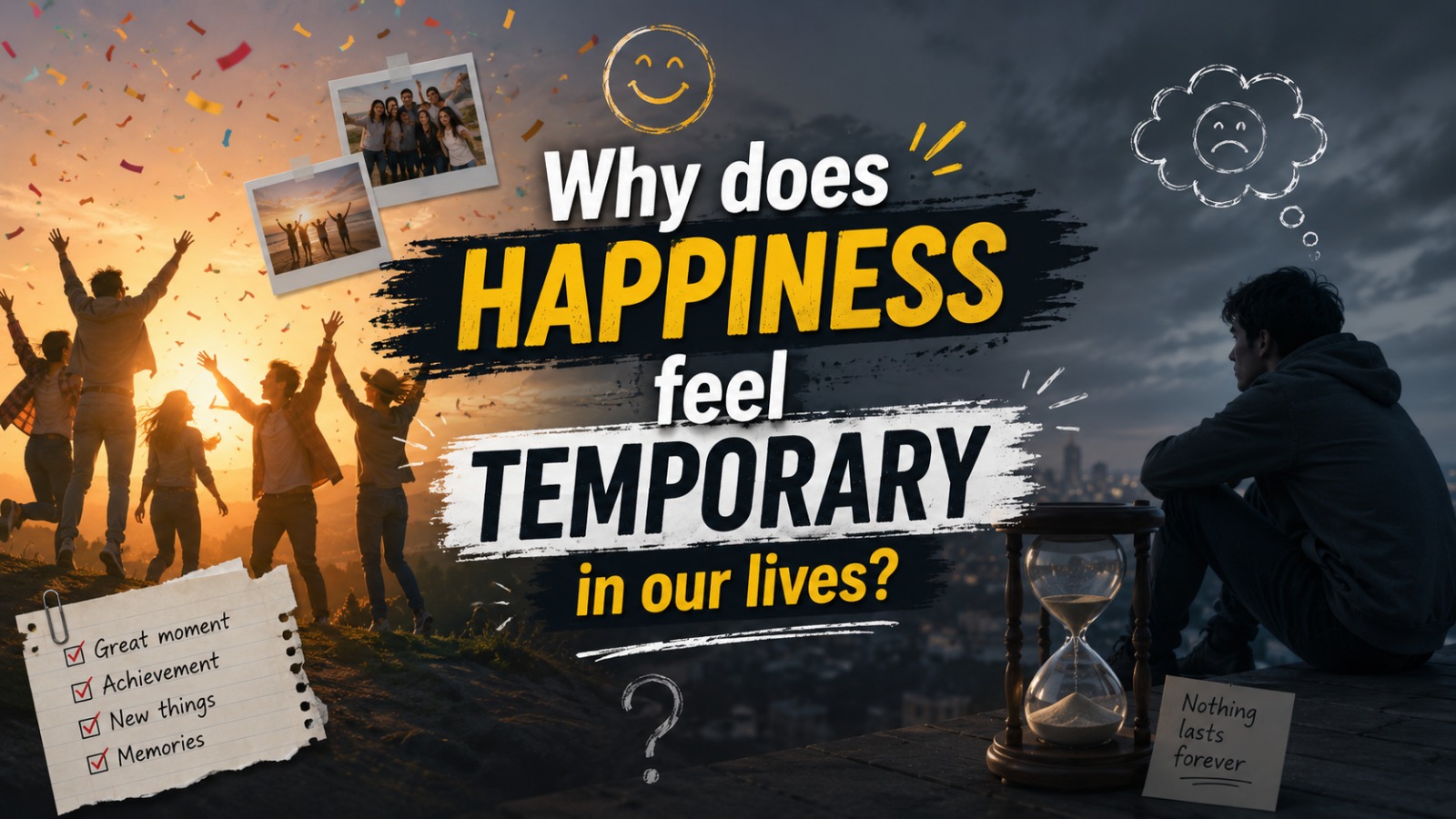
Happiness is something most people seek, yet it often feels fleeting. One moment, life feels fulfilling and joyful, and the next, that feeling fades without warning. This raises an important question: why does happiness seem so temporary in our lives? Understanding this can help us build a more stable and meaningful sense of well-being.
THE NATURE OF HUMAN EMOTIONS
Human emotions are naturally dynamic. Just like sadness, anger, or excitement, happiness is not meant to last forever in a constant state. Our emotional system is designed to respond to changes in our environment, helping us adapt and survive.
Because of this, happiness tends to come in waves. When something positive happens, we feel uplifted. Over time, however, that emotional high gradually settles back to a baseline level. This natural cycle makes happiness feel temporary, even when life is going well.
THE ROLE OF ADAPTATION
One major reason happiness fades is something known as hedonic adaptation. This concept explains how people quickly get used to positive changes in their lives. Whether it is a new job, a personal achievement, or a material possession, the excitement does not last forever.
As we adapt, what once made us happy becomes normal. This does not mean the joy was not real, but rather that our minds adjust to maintain balance. Without this adaptation, we might struggle to respond effectively to new challenges or experiences.
EXTERNAL VS INTERNAL SOURCES
Happiness that depends solely on external factors often fades faster. Achievements, possessions, and recognition can bring joy, but they are temporary by nature. Once the moment passes, the feeling may diminish.
On the other hand, internal sources of happiness—such as gratitude, purpose, and self-acceptance—tend to be more lasting. While they still fluctuate, they provide a deeper and more stable sense of contentment over time.
THE IMPACT OF EXPECTATIONS
Expectations also play a significant role in how we experience happiness. When we expect to feel happy all the time, we may become disappointed when that does not happen. This unrealistic standard can make normal emotional changes feel like failure.
Learning to accept that happiness is not constant allows us to experience it more fully when it appears. It also helps us become more resilient during less joyful moments.
FINDING MEANING BEYOND MOMENTS
Instead of chasing constant happiness, it can be more fulfilling to focus on meaning and growth. Life is made up of a range of experiences, both positive and challenging. Each contributes to personal development and a richer understanding of ourselves.
By appreciating small moments and embracing the full spectrum of emotions, we can create a deeper sense of satisfaction that goes beyond temporary happiness.
CONCLUSION
Happiness feels temporary because it is part of a natural emotional cycle influenced by adaptation, expectations, and external factors. Rather than seeing this as a limitation, it can be viewed as an opportunity to explore deeper forms of fulfillment.
When we shift our perspective from chasing constant happiness to appreciating meaningful experiences, life becomes more balanced and rewarding.
About the Author
Gusti Ayu Tita P
Author — STEKOM University
An active author focused on academic issues, educational technology, and human resource development in the campus environment.