Why Minimum Wages Differ in Each Region
Gusti Ayu Tita P
20 Juli 2026
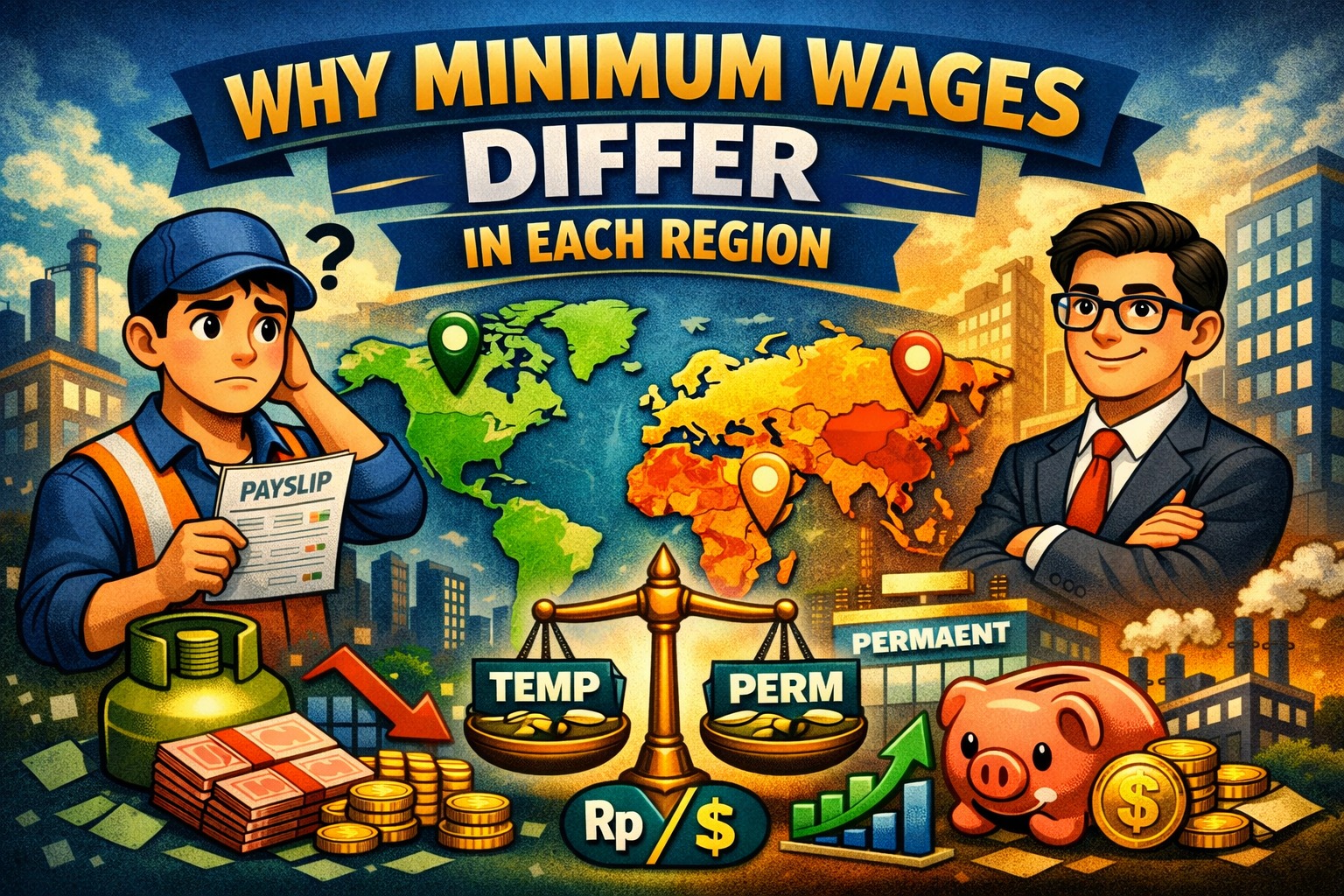
Minimum wages are not the same in every city, province, or country. Some regions offer significantly higher wages, while others maintain lower salary standards. These differences are influenced by many economic, social, and industrial factors that affect the cost of living and labor market conditions in each area.
Understanding why minimum wages differ in each region helps workers, employers, and job seekers make better financial and career decisions.
COST OF LIVING IS DIFFERENT IN EVERY REGION
One of the biggest reasons minimum wages vary is the difference in living costs. Large cities usually have more expensive housing, transportation, food, and healthcare compared to smaller towns or rural areas.
For example, workers living in major business cities often spend more money on:
- Rent or housing
- Public transportation
- Electricity and utilities
- Daily meals
- Education
- Healthcare services
Because expenses are higher, governments typically set higher minimum wages in these areas to help workers maintain a reasonable standard of living.
INDUSTRIAL DEVELOPMENT AFFECTS WAGE LEVELS
Regions with strong industrial sectors usually provide higher wages because companies compete for skilled workers. Manufacturing zones, technology centers, and business districts often attract domestic and international investment.
Industrial regions commonly include sectors such as:
- Automotive manufacturing
- Electronics production
- Logistics and warehousing
- Banking and finance
- Technology services
- Export industries
When many companies operate in one area, labor demand increases, encouraging higher salaries.
ECONOMIC GROWTH PLAYS A MAJOR ROLE
Regions with stronger economies generally have higher wage standards. Local governments consider economic growth when determining annual minimum wage adjustments.
Areas with fast-growing economies often experience:
- Increased business activity
- More job opportunities
- Higher consumer spending
- Greater investment inflows
- Rising company profits
As economic conditions improve, workers usually expect better compensation to match the region’s development.
POPULATION DENSITY INFLUENCES SALARIES
Highly populated cities tend to have higher minimum wages because demand for housing, transportation, and public services increases living costs.
Large urban areas often face:
- Traffic congestion
- Expensive property prices
- Higher utility costs
- Increased competition for jobs
To balance these challenges, governments may set higher wage standards in densely populated regions.
LOCAL GOVERNMENT POLICIES MATTER
Minimum wage decisions are often influenced by local government regulations and labor policies. Wage councils typically include representatives from government agencies, labor unions, and business organizations.
These discussions usually consider:
- Inflation rates
- Regional economic growth
- Company capabilities
- Worker welfare
- Employment conditions
As a result, wage levels can vary significantly between neighboring regions.
LABOR SUPPLY AND DEMAND IMPACT WAGES
The labor market also affects minimum wage differences. Regions with high demand for workers often offer better salaries to attract employees.
For example:
- Technology companies may compete for programmers
- Factories may need skilled machine operators
- Hospitality businesses may seek experienced staff
When skilled labor becomes difficult to find, companies may raise salaries above minimum wage levels.
INFRASTRUCTURE AND INVESTMENT INCREASE REGIONAL WAGES
Areas with modern infrastructure and strong transportation systems usually attract more investors and businesses. Better infrastructure supports industrial growth and economic activity.
Examples of important infrastructure include:
- Highways
- Airports
- Ports
- Industrial parks
- Internet connectivity
- Public transportation systems
Regions with advanced infrastructure often experience faster economic growth and higher wages.
NATURAL RESOURCES CAN INFLUENCE WAGES
Some regions have higher wages because of valuable natural resources such as oil, gas, mining, or plantations. Resource-rich areas may offer better salaries due to higher company profits and specialized labor needs.
Industries that often pay competitive wages include:
- Mining
- Oil and gas
- Energy production
- Palm oil plantations
- Marine industries
Workers in these sectors sometimes earn far above standard regional minimum wages.
TOURISM AREAS MAY OFFER UNIQUE WAGE CONDITIONS
Tourism destinations often have different wage structures depending on visitor demand and local economic conditions.
Hotels, restaurants, and tourism businesses may provide:
- Service bonuses
- Tips
- Seasonal incentives
- Flexible work systems
However, wages in tourism areas can fluctuate depending on tourist activity and economic stability.
EDUCATION AND SKILL LEVELS AFFECT REGIONAL PAY
Regions with more universities, training centers, and skilled workers often develop stronger economies and higher wage standards.
Highly educated workforces usually support industries such as:
- Technology
- Finance
- Healthcare
- Education
- Research and development
Companies are often willing to pay more for skilled and educated employees.
DIFFERENT REGIONS HAVE DIFFERENT BUSINESS CAPABILITIES
Not all businesses can afford the same wage levels. Smaller regions may have limited economic activity, smaller companies, and lower productivity levels.
If wages are raised too high in economically weaker areas, some businesses may struggle financially. Governments therefore attempt to balance worker welfare with business sustainability.
MINIMUM WAGE DIFFERENCES CAN AFFECT MIGRATION
Workers often move to regions with higher salaries in search of better opportunities. Industrial cities and economic centers usually attract large numbers of job seekers from smaller regions.
This migration can lead to:
- Urban population growth
- Housing demand increases
- More competition for jobs
- Economic expansion in large cities
As more workers relocate, regional wage discussions become even more important.
CONCLUSION
Minimum wages differ in each region because economic conditions, living costs, industrial growth, labor demand, infrastructure, and government policies vary widely from one area to another. Regions with strong economies and high living expenses generally offer higher wages, while smaller or less developed areas often maintain lower salary standards.
Understanding these differences helps workers choose suitable career locations and allows businesses to plan fair compensation strategies based on regional economic realities.
About the Author
Gusti Ayu Tita P
Author — STEKOM University
An active author focused on academic issues, educational technology, and human resource development in the campus environment.