
Effective Work Efficiency Strategies in the Industrial World
Gusti Ayu Tita P
14 Juni 2026
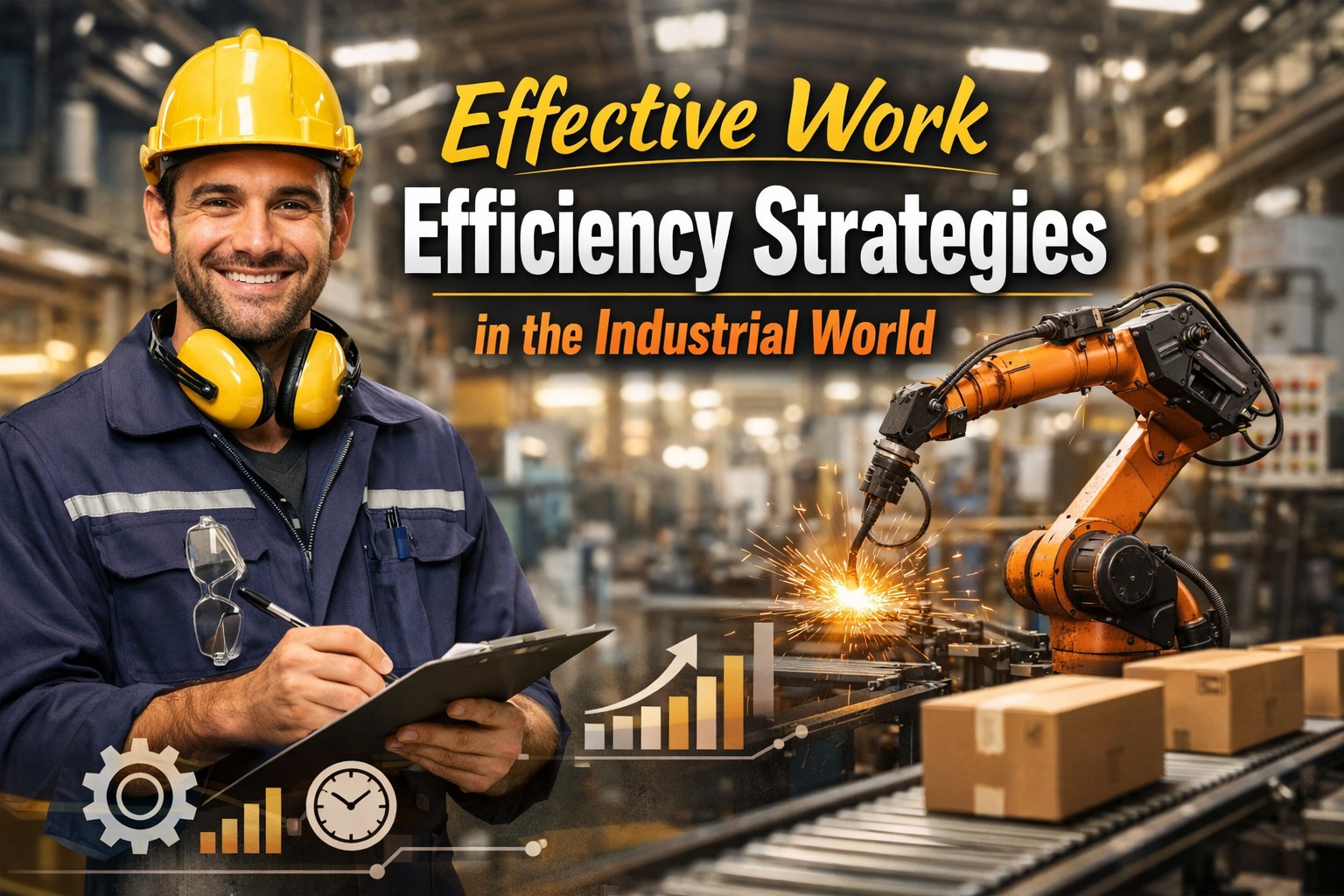
In today’s competitive industrial era, work efficiency has become one of the most important factors in achieving business success. Companies in manufacturing, construction, logistics, and other industrial sectors continuously seek ways to improve productivity while reducing operational costs. Employees who understand efficient work strategies can complete tasks faster, maintain high-quality results, and contribute positively to company growth. This is why mastering effective efficiency strategies is essential for both workers and management teams.
The industrial world is constantly evolving due to technological advancements and global competition. Businesses that fail to improve efficiency may struggle to survive in the long term. Therefore, implementing the right strategies can help industries remain productive, innovative, and competitive. Efficient work systems also create a safer and more organized working environment for everyone involved.
THE IMPORTANCE OF WORK EFFICIENCY IN INDUSTRY
Work efficiency plays a major role in increasing industrial productivity and operational stability. When employees can complete tasks effectively, companies are able to save time, reduce waste, and improve product quality. Efficient operations also help businesses meet customer demands more quickly and accurately. As a result, customer satisfaction and company reputation can increase significantly.
In addition, efficient work practices can improve employee performance and motivation. Workers who have clear systems and organized workflows tend to experience less stress and confusion during daily operations. This creates a more positive workplace atmosphere and encourages better teamwork. Strong efficiency strategies also help companies adapt faster to changes in market demands and industrial trends.
IMPLEMENTING TIME MANAGEMENT STRATEGIES
One of the most effective ways to improve industrial efficiency is through proper time management. Employees should prioritize important tasks, create daily work schedules, and avoid unnecessary delays during production processes. Time management helps workers stay focused and complete assignments according to deadlines. Companies that manage time efficiently often achieve higher productivity levels compared to competitors.
Another important aspect of time management is minimizing distractions in the workplace. Excessive meetings, poor communication, and unorganized workflows can reduce overall efficiency. Industrial companies should implement clear procedures and provide employees with structured task management systems. By doing so, workers can focus on completing essential responsibilities without wasting valuable production time.
UTILIZING TECHNOLOGY AND AUTOMATION
Modern industries increasingly rely on technology and automation to improve operational efficiency. Automated machines, digital monitoring systems, and smart manufacturing technologies can significantly reduce manual errors and production delays. These innovations allow companies to produce goods faster while maintaining consistent quality standards. As technology continues to develop, industries that adopt automation often gain a strong competitive advantage.
Technology also improves communication and data management within industrial operations. Cloud systems, production software, and real-time monitoring tools help managers make faster and more accurate decisions. Employees can easily track progress, identify production issues, and coordinate tasks more efficiently. The integration of digital solutions ultimately supports long-term industrial growth and sustainability.
IMPROVING EMPLOYEE SKILLS AND TEAMWORK
Highly skilled employees are essential for maintaining efficient industrial operations. Companies should regularly provide training programs to improve worker knowledge, technical abilities, and problem-solving skills. Skilled employees are more capable of handling challenges quickly and maintaining productivity under pressure. Continuous learning also helps workers adapt to new technologies and changing industrial systems.
Strong teamwork is equally important in achieving work efficiency. Employees who communicate effectively and cooperate with each other can complete tasks more smoothly and avoid unnecessary conflicts. Industrial companies should encourage collaboration between departments to ensure better workflow coordination. A supportive team environment can improve productivity, strengthen employee morale, and create better overall performance.
MAINTAINING WORKPLACE SAFETY AND ORGANIZATION
A safe and organized workplace directly contributes to higher work efficiency. Industrial environments that prioritize safety can reduce accidents, minimize downtime, and improve employee confidence. Companies should provide proper safety equipment, conduct regular inspections, and educate workers about workplace safety procedures. Safe working conditions help employees perform tasks more comfortably and effectively.
Organization is another key factor in improving industrial productivity. Clean and structured work areas allow employees to access tools and materials quickly without wasting time. Proper inventory management and organized production systems also reduce operational errors. When safety and organization are maintained consistently, industrial performance can improve significantly over time.
CONCLUSION
Effective work efficiency strategies are extremely important in the modern industrial world. Companies that focus on time management, technology adoption, employee development, and workplace safety are more likely to achieve sustainable growth and stronger competitiveness. Efficient industrial systems not only increase productivity but also improve employee satisfaction and operational quality. Businesses that continuously optimize efficiency will have greater opportunities to succeed in an increasingly competitive global market.
By implementing the right strategies, industries can create productive, organized, and innovative work environments. Efficiency is not only about working faster but also about working smarter and achieving better results with available resources. Therefore, improving work efficiency should remain a top priority for every industrial organization seeking long-term success.
Tentang Penulis
Gusti Ayu Tita P
Penulis — Universitas STEKOM
Penulis aktif yang berfokus pada isu-isu akademik, teknologi pendidikan, dan pengembangan sumber daya manusia di lingkungan kampus.



