How Can We Keep Public Facilities Clean?
Gusti Ayu Tita P
18 September 2026
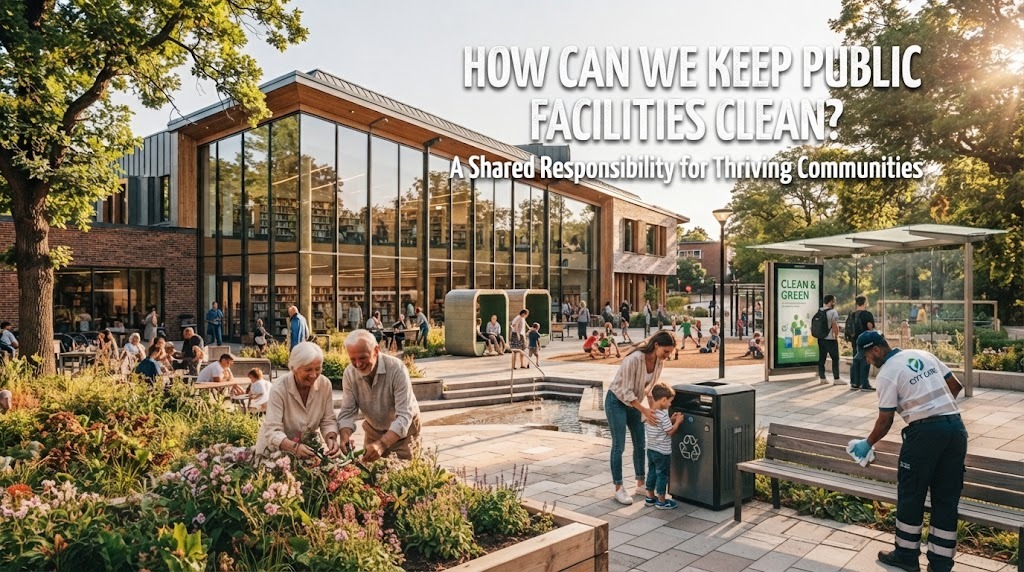
Public facilities are shared spaces that people use for different daily activities. Bus stops, parks, public toilets, sidewalks, markets, and other public spaces need to be kept clean so everyone can use them comfortably. Clean facilities can create a healthier and more pleasant environment for the community. However, keeping public facilities clean is not only the responsibility of cleaners or facility managers. Everyone who uses public facilities has an important role in maintaining their cleanliness.
THROW WASTE INTO THE PROPER BINS
One of the easiest ways to keep public facilities clean is to dispose of waste properly. People should put rubbish into the appropriate trash bins instead of leaving it on sidewalks, benches, floors, or other public areas. If different waste bins are available, users should follow the labels for recyclable and non-recyclable waste. When a trash bin is full, people should avoid placing additional waste beside it and report the problem to the facility manager when possible. Proper waste disposal can prevent litter and make public spaces more pleasant.
USE FACILITIES RESPONSIBLY
People should use public facilities according to their intended purpose. Damaging, scratching, breaking, or misusing public property can make the facilities uncomfortable and unsafe for other users. For example, visitors should not stand on seats that are not designed for that purpose or damage plants in public parks. Responsible use can also reduce the need for frequent repairs. By treating shared facilities with care, communities can help extend the useful life of public infrastructure.
KEEP PUBLIC TOILETS HYGIENIC
Public toilets require special attention because many people use them every day. Users should flush after use, dispose of waste in the correct place, and leave sinks and floors as clean as possible. People should also avoid damaging toilet equipment, taps, doors, or other fixtures. Facility managers need to clean toilets regularly and make sure water, soap, and other basic supplies are available when appropriate. Good hygiene habits from both users and managers are necessary to maintain clean public toilets.
CLEAN UP AFTER USING PUBLIC SPACES
People should avoid leaving food containers, drink cups, tissues, or other waste after spending time in a public area. Cleaning up personal waste before leaving is a simple habit that can make a significant difference. In parks, users should also avoid leaving food scraps that could attract pests. Families can teach children to clean their surroundings after eating or playing. When everyone takes responsibility for their own waste, public spaces can stay cleaner for the next users.
FOLLOW CLEANLINESS RULES
Public facilities often have rules designed to maintain cleanliness and protect shared spaces. Users should pay attention to signs, instructions, and restrictions displayed in parks, transportation areas, toilets, markets, and other facilities. For example, some areas may prohibit smoking, littering, or bringing certain items into specific spaces. Following these rules can reduce activities that may create waste, odors, or damage. Respecting public facility rules is an important part of responsible community behavior.
REMIND OTHERS POLITELY
Maintaining cleanliness can become easier when community members encourage one another. If someone accidentally drops rubbish or leaves waste in the wrong place, others can give a polite reminder without creating unnecessary conflict. Friendly reminders can help people become more aware of their responsibility toward shared spaces. Parents, teachers, community leaders, and other groups can also encourage clean habits through simple examples. A culture of mutual care can help make cleanliness a shared community habit.
REPORT DIRTY OR DAMAGED FACILITIES
Some cleanliness problems cannot be solved by individual users alone. When people find overflowing trash bins, broken toilets, blocked drains, or damaged public facilities, they can report the problem to the responsible manager or local authority. Quick reports can help maintenance teams identify problems and take appropriate action. Users should provide clear information about the location and type of problem when making a report. Community reporting can support faster maintenance and help prevent small problems from becoming bigger ones.
SUPPORT COMMUNITY CLEANING ACTIVITIES
Communities can organize activities to maintain shared environments. Neighborhood cleanups, waste collection activities, tree care, and public-space maintenance can encourage residents to work together. These activities can also increase awareness about the importance of protecting facilities that everyone uses. Participation does not always need to involve large events because simple actions can also contribute to cleaner surroundings. Through cooperation, residents can build a stronger sense of responsibility for their shared environment.
TEACH CLEAN HABITS FROM AN EARLY AGE
Clean habits are easier to maintain when they are introduced early. Parents and teachers can teach children to throw away rubbish properly, respect public property, and clean up after activities. Children can learn these behaviors through simple examples at home, school, parks, and other public places. Consistent guidance can help turn cleanliness into a normal part of daily behavior. Over time, these habits can contribute to a cleaner and more responsible community.
CONCLUSION
Keeping public facilities clean requires cooperation between users, communities, and facility managers. Proper waste disposal, responsible use, good hygiene, rule-following, reporting problems, and community participation can all help maintain cleanliness. Facility managers also need to provide regular cleaning, maintenance, and suitable waste management systems. At the same time, residents should remember that public facilities belong to the shared environment and need to be treated with care. When everyone contributes, public facilities can remain cleaner, healthier, safer, and more comfortable for all users.
Tentang Penulis
Gusti Ayu Tita P
Penulis — Universitas STEKOM
Penulis aktif yang berfokus pada isu-isu akademik, teknologi pendidikan, dan pengembangan sumber daya manusia di lingkungan kampus.