How Do Volcanic Eruptions Affect Agricultural Activities?
Gusti Ayu Tita P
19 September 2026
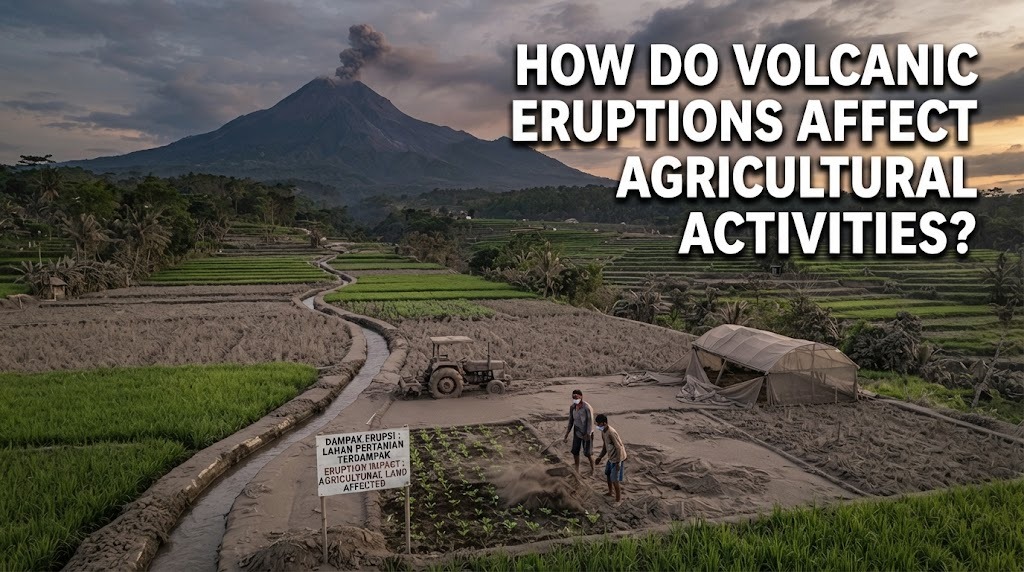
Volcanic eruptions are natural events that can have a major impact on the environment and human activities. One of the sectors that can be affected is agriculture, especially in areas located near active volcanoes. Volcanic ash, lava, heat, and other materials can damage crops, soil, water sources, and farming equipment. However, volcanic materials can also provide minerals that improve soil fertility over a longer period. Understanding these effects can help farmers prepare for volcanic hazards and protect their agricultural activities.
CROP DAMAGE FROM VOLCANIC ASH
Volcanic ash can cover agricultural land and plants during an eruption. A thick layer of ash can block sunlight and reduce the ability of plants to carry out photosynthesis. Ash can also make leaves heavy, causing some plants to bend or break. If the ash contains harmful substances or is very thick, crops may experience serious damage or die.
The impact depends on the amount of ash, the type of crop, and the duration of ash exposure. Farmers may need to remove ash carefully from valuable plants after conditions become safe. Crops that are ready for harvest may also become difficult to sell if they are covered with ash. Therefore, volcanic ash can directly reduce agricultural production and farmer income.
EFFECTS ON SOIL AND LAND
Volcanic eruptions can change the condition of agricultural soil. Fresh volcanic materials may contain minerals that can contribute to soil fertility after they weather and mix with the existing soil. However, immediately after an eruption, thick ash deposits can make farming difficult and may temporarily affect soil conditions. Some volcanic materials can also change soil acidity and influence how plants absorb nutrients.
Over time, volcanic areas can become productive agricultural regions when volcanic materials have weathered and suitable plants begin to grow again. However, farmers may need to wait until the land is safe and suitable for cultivation. Soil recovery can take different amounts of time depending on the eruption, climate, soil type, and agricultural practices. Proper soil management can help farmers restore productive farmland.
IMPACT ON WATER SOURCES
Volcanic eruptions can affect water sources used for agriculture. Ash and other volcanic materials may enter rivers, irrigation channels, ponds, and reservoirs. This can reduce water quality and make irrigation more difficult. Heavy rainfall after an eruption can also transport volcanic materials into waterways and increase the risk of lahars.
Contaminated or sediment-filled water can create problems for crops and agricultural equipment. Farmers should follow information from local authorities about water safety before using affected sources. Cleaning irrigation systems may also be necessary when volcanic materials enter them. Protecting water sources is important because reliable and safe water is essential for agricultural production.
EFFECTS ON LIVESTOCK AND FARMING ACTIVITIES
Volcanic eruptions can affect not only crops but also livestock and farm operations. Ash may irritate the eyes and respiratory system of animals when they breathe or consume contaminated feed. Pastures can also become covered by ash, reducing the availability of suitable food for livestock. Farmers may need to move animals to safer locations and provide clean food and water.
Agricultural equipment can also be damaged by ash and other volcanic materials. Fine ash may enter engines and machinery, increasing the need for cleaning and maintenance. Roads and transportation routes may also be disrupted, making it harder to deliver farm products to markets. These conditions can increase farming costs and reduce income for agricultural communities.
LONG TERM EFFECTS ON AGRICULTURE
The effects of a volcanic eruption do not always end when the eruption stops. Farmers may continue to face problems such as damaged crops, reduced harvests, poor access to farmland, and disrupted irrigation systems. Agricultural recovery may require financial support, land rehabilitation, new seeds, and improvements to farming infrastructure. Farmers may also need to change planting schedules or choose crops that are more suitable for recovering land.
In the longer term, weathered volcanic materials can contribute to fertile agricultural soils in some volcanic regions. This is one reason why many farming communities have historically developed around volcanic areas despite the risks. However, fertile soil does not remove the danger of future eruptions. Farmers need to balance the benefits of volcanic soils with proper disaster preparedness.
HOW FARMERS CAN PREPARE FOR VOLCANIC ERUPTIONS
Farmers can reduce potential losses by preparing before an eruption occurs. They should understand local volcanic hazards, evacuation routes, and official warning systems. Important supplies such as clean animal feed, water, protective equipment, and basic farming tools should be prepared when possible. Farmers can also protect valuable equipment and keep important agricultural records in safe locations.
During and after an eruption, farmers should follow official instructions and avoid entering dangerous areas before authorities declare them safe. They should monitor information about ashfall, water quality, livestock safety, and access to farmland. Proper preparation can reduce damage and help agricultural activities recover more quickly. Disaster preparedness is important for protecting crops, livestock, property, and farmer livelihoods.
CONCLUSION
Volcanic eruptions can affect agricultural activities through crop damage, soil changes, water contamination, livestock problems, and disrupted farming operations. The short-term effects can be severe, while volcanic materials may contribute to soil fertility over a longer period. Farmers can reduce risks by understanding volcanic hazards, preparing emergency supplies, and following official safety information. With proper preparation and recovery efforts, agricultural communities can gradually restore their activities after an eruption.
Tentang Penulis
Gusti Ayu Tita P
Penulis — Universitas STEKOM
Penulis aktif yang berfokus pada isu-isu akademik, teknologi pendidikan, dan pengembangan sumber daya manusia di lingkungan kampus.