How Does A Volcanic Eruption Occur?
Gusti Ayu Tita P
19 September 2026
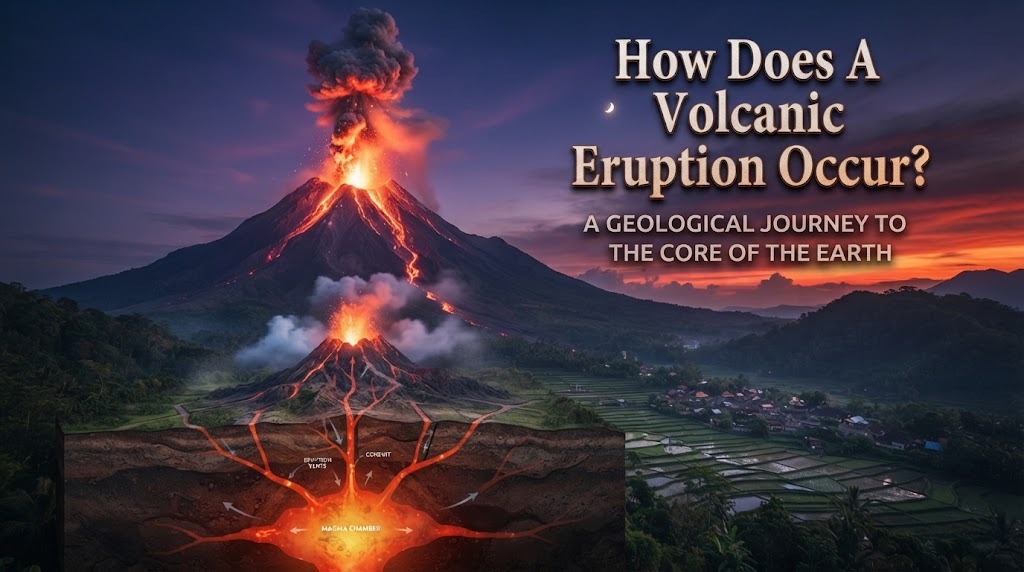
A volcanic eruption occurs when magma and volcanic gases move from beneath Earth’s surface and escape through an opening in the volcano. Magma is formed deep inside Earth and can collect in a chamber beneath a volcano. As magma rises, pressure can increase because of expanding gases and changes in the volcanic system. When the pressure becomes strong enough, magma may break through cracks or volcanic vents. The eruption can release lava, ash, gases, and rock fragments into the surrounding environment.
MAGMA FORMS AND COLLECTS UNDERGROUND
The process begins when magma forms beneath Earth’s crust due to high temperatures and geological processes. The magma can move through cracks and collect in a magma chamber beneath a volcano. As more magma enters the chamber, the pressure inside the volcanic system may increase. The magma can also contain dissolved gases that contribute to this pressure. These changes create conditions that may eventually lead to an eruption.
MAGMA RISES TOWARD THE SURFACE
When pressure and buoyancy allow magma to move upward, it can travel through cracks and channels in the Earth’s crust. The rising magma may cause small earthquakes as it pushes through surrounding rocks. Scientists can monitor these earthquakes to detect changes in volcanic activity. As magma approaches the surface, the pressure around it decreases. This allows dissolved gases to expand and can further increase pressure inside the magma.
VOLCANIC GAS EXPANDS
Magma contains gases such as water vapor, carbon dioxide, and sulfur dioxide. When magma rises toward the surface, the lower surrounding pressure allows these gases to form expanding bubbles. The bubbles can increase pressure within the magma and help drive it upward. If the gas escapes slowly, the eruption may be less explosive in some volcanic systems. If gas becomes trapped, the increasing pressure can contribute to a more explosive eruption.
PRESSURE BREAKS THROUGH THE VOLCANIC VENT
As pressure continues to build, the surrounding rock or volcanic vent may no longer contain the pressure. A pathway can open, allowing magma, gas, ash, and rock fragments to move toward the surface. If the magma is fluid, lava may flow relatively gently from the volcano. If the magma is thick and traps large amounts of gas, the eruption can become much more explosive. The type of magma and structure of the volcano therefore influence how the eruption develops.
VOLCANIC MATERIALS REACH THE SURFACE
Once the eruption begins, different types of volcanic materials can be released. Lava may flow down the volcano, while ash and gases can rise into the atmosphere. Explosive eruptions may also produce pyroclastic flows and volcanic bombs. The distance and direction of these materials depend on the eruption style, wind, terrain, and other conditions. These materials can affect people, ecosystems, buildings, agriculture, and transportation.
CONCLUSION
A volcanic eruption occurs through a series of processes involving magma movement, gas expansion, increasing pressure, and the opening of volcanic pathways. Magma rises from underground and eventually reaches the surface when pressure becomes strong enough. The eruption may release lava, ash, gases, and other volcanic materials. Each volcano can behave differently because its magma composition and internal structure are not the same. Understanding the eruption process helps communities recognize volcanic hazards and prepare for possible impacts.
Tentang Penulis
Gusti Ayu Tita P
Penulis — Universitas STEKOM
Penulis aktif yang berfokus pada isu-isu akademik, teknologi pendidikan, dan pengembangan sumber daya manusia di lingkungan kampus.