How Does LDKS Teach Students to Make Decisions?
Gusti Ayu Tita P
19 September 2026
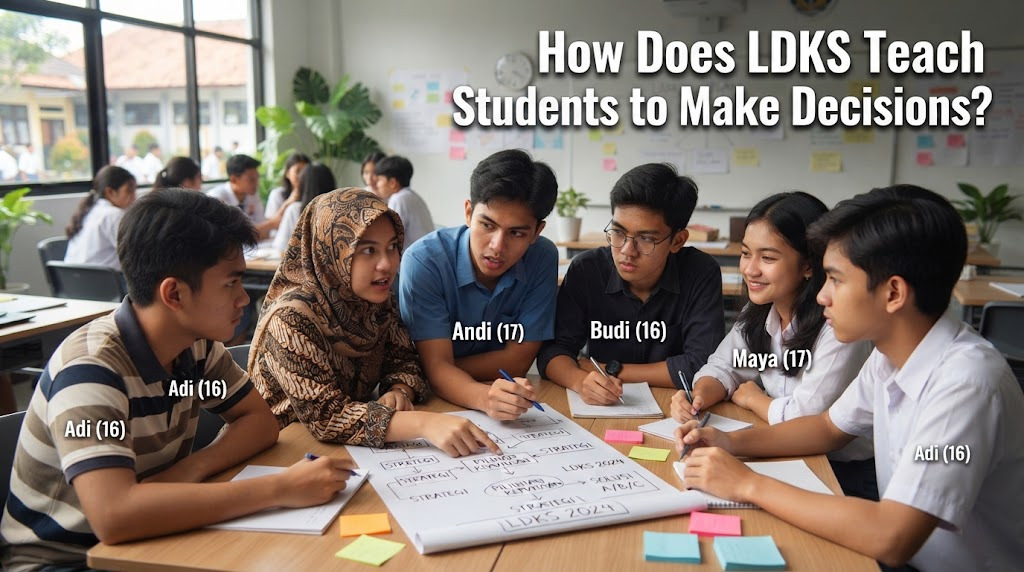
LDKS, or Student Leadership Training, is an activity that gives students opportunities to learn leadership, teamwork, responsibility, communication, and decision-making. During LDKS, students may face different situations that require them to think carefully before choosing an action. They can practice considering options, discussing ideas, and understanding the possible consequences of their decisions. These experiences can help students develop decision-making skills in a practical and educational environment. The ability to make appropriate decisions can also be useful in students’ academic activities, organizations, and everyday school life.
WHY IS DECISION-MAKING IMPORTANT FOR STUDENTS?
Decision-making is an important skill because students regularly face situations that require them to choose between different options. They may need to decide how to complete an assignment, divide responsibilities in a group, manage their time, or respond to a problem. Good decisions usually require students to consider information and possible consequences before taking action. LDKS can provide situations where students can practice this process through leadership activities and group tasks. As a result, students may become more familiar with making thoughtful choices.
Learning to make decisions also helps students become more responsible for their actions. Instead of always waiting for teachers or friends to provide answers, students can learn to consider possible solutions themselves. They can understand that every choice may produce different results. This experience can encourage independent thinking while still teaching students to listen to advice when necessary. Developing this ability during school can prepare students for more complex responsibilities in the future.
HOW DOES LDKS GIVE STUDENTS OPPORTUNITIES TO MAKE DECISIONS?
LDKS often includes activities that require students to choose strategies, assign tasks, or determine how a team should complete an activity. These situations give students practical opportunities to use their judgment. For example, a group may need to decide how to solve a challenge within a limited amount of time. Students can discuss several possibilities before selecting the option they consider most suitable. Through this process, they can practice practical decision-making instead of only learning the concept theoretically.
Different students may have different ideas about how to handle the same situation. LDKS can teach students to listen to those ideas before reaching a group decision. They can learn that making a decision does not always mean forcing others to accept their own opinion. Instead, students can compare suggestions and consider which option best supports the group's objective. This can develop both decision-making skills and respectful communication.
HOW DOES LDKS TEACH STUDENTS TO CONSIDER CONSEQUENCES?
Understanding consequences is an important part of making responsible decisions. During LDKS, students may participate in simulations or activities where their choices affect the next stage of a task. This can help them recognize that decisions may have positive or negative effects. Students can learn to think about what might happen before choosing an action. Such activities can strengthen their ability to make responsible choices.
Students can also learn from decisions that do not produce the expected results. Instead of simply considering an unsuccessful decision as a mistake, they can discuss what happened and identify possible improvements. This reflection can help them understand the connection between actions and outcomes. They may become more careful when evaluating options in future situations. In this way, learning from mistakes can become an important part of decision-making development.
HOW DOES TEAMWORK SUPPORT DECISION-MAKING DURING LDKS?
Teamwork can play an important role in helping students practice decision-making during LDKS. Many activities require students to discuss problems, exchange opinions, and agree on a common strategy. Students learn that decisions can become more effective when different perspectives are considered. They can practice expressing their own ideas while also respecting the opinions of other team members. This process can strengthen team decision-making and communication skills.
Working in a team can also teach students how to handle disagreements. Not every member will always support the same idea, so students may need to compare different suggestions before reaching an agreement. They can learn to focus on the group's goal instead of simply defending their personal preferences. This experience can help students understand the importance of cooperation and compromise. These skills can later be applied to group assignments, classroom projects, and school organizations.
HOW CAN LDKS BUILD STUDENTS’ CONFIDENCE IN MAKING DECISIONS?
Confidence can influence how students respond when they need to make a decision. LDKS gives students opportunities to practice choosing an action and explaining the reasons behind their choices. When students receive constructive feedback, they can understand what they did well and what could be improved. This process may gradually make them more comfortable with taking responsibility for their choices. Decision-making confidence can therefore develop through repeated practice and reflection.
However, confidence does not mean making decisions without considering information or advice. LDKS can teach students to combine confidence with careful thinking and responsibility. Students can learn that asking questions or requesting input from others is not a sign of weakness. Instead, it can be part of a thoughtful decision-making process. This balance can help students become confident and responsible decision-makers.
HOW CAN STUDENTS APPLY LDKS DECISION-MAKING SKILLS AT SCHOOL?
The decision-making skills learned through LDKS can be applied to many situations in students’ daily school lives. Students may use these skills when planning group assignments, organizing activities, managing study schedules, or solving classroom problems. They can practice identifying a problem, considering possible solutions, and choosing an appropriate action. These habits can support student leadership in both formal and informal school activities. Students can also become more prepared to handle responsibilities without always depending on others.
The skills can become more useful when students continue practicing them after LDKS ends. Teachers, classmates, and school organizations can provide additional opportunities for students to make responsible choices. Students can reflect on the results of their decisions and use those experiences to improve future actions. Over time, decision-making can become a practical skill that supports academic, social, and organizational development. LDKS can therefore provide a foundation for responsible decision-making that students can continue developing throughout their school years.
CONCLUSION
LDKS can teach students to make decisions by giving them opportunities to analyze situations, consider options, work with others, evaluate consequences, and take responsibility for their choices. Through practical activities, students can experience decision-making rather than simply learning about it theoretically. They can also learn that good decisions require communication, careful thinking, and consideration of other people's perspectives.
The decision-making skills developed through LDKS can be useful in classroom activities, group projects, student organizations, and everyday situations. Students may become more confident when facing choices while also learning to consider the possible results of their actions. With continued practice, responsible decision-making can become an important part of their personal and leadership development.
Tentang Penulis
Gusti Ayu Tita P
Penulis — Universitas STEKOM
Penulis aktif yang berfokus pada isu-isu akademik, teknologi pendidikan, dan pengembangan sumber daya manusia di lingkungan kampus.