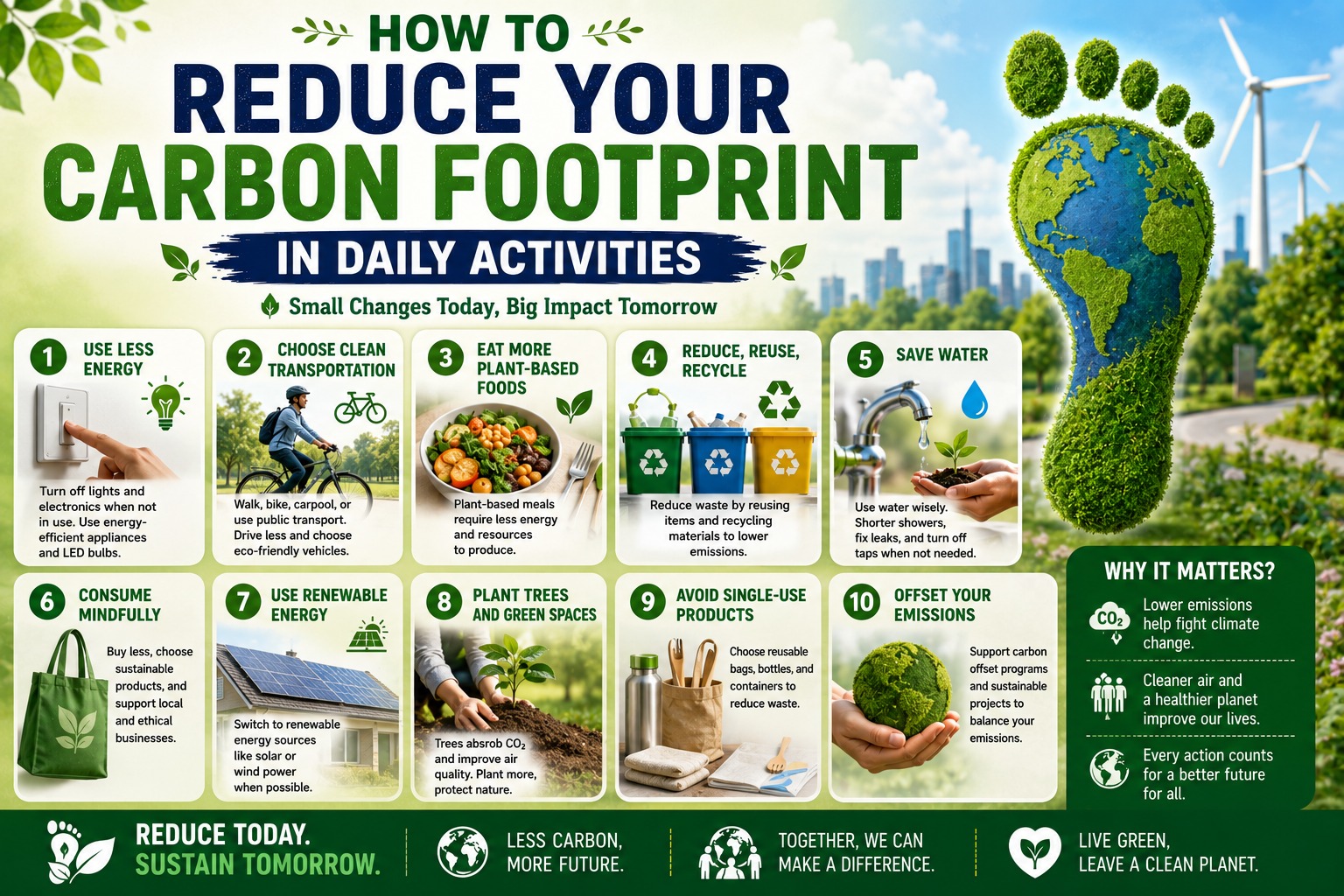
Reducing your carbon footprint has become increasingly important in today’s world. Climate change, rising global temperatures, and environmental pollution are closely linked to human activities that produce excessive greenhouse gas emissions. Daily habits such as transportation choices, energy consumption, food waste, and plastic use all contribute to carbon emissions.
A carbon footprint refers to the total amount of greenhouse gases released into the atmosphere due to human activities. Although industries and large corporations contribute significantly to global emissions, individuals also play an important role in protecting the environment. By making simple lifestyle changes, everyone can help reduce carbon emissions and support a healthier planet.
UNDERSTANDING CARBON FOOTPRINT
A carbon footprint measures the amount of carbon dioxide and other greenhouse gases produced by activities such as driving vehicles, using electricity, consuming products, and generating waste. The larger the carbon footprint, the greater the impact on climate change and environmental damage.
Many daily activities rely on fossil fuels, including transportation, manufacturing, and electricity production. Burning coal, oil, and natural gas releases harmful gases into the atmosphere, contributing to global warming.
Reducing carbon footprints helps slow climate change, conserve natural resources, and improve environmental sustainability.
USE ENERGY MORE EFFICIENTLY
Saving energy is one of the easiest ways to reduce carbon emissions. Excessive electricity use increases the demand for fossil fuel-based power generation.
Here are some effective energy-saving habits:
- Turn off lights and electronic devices when not in use
- Use energy-efficient LED bulbs
- Unplug chargers and appliances after use
- Limit air conditioner and heater usage
- Choose energy-efficient household appliances
Using renewable energy sources such as solar panels can further reduce dependence on fossil fuels and lower household carbon emissions.
CHOOSE ENVIRONMENTALLY FRIENDLY TRANSPORTATION
Transportation is one of the largest contributors to greenhouse gas emissions. Cars, motorcycles, airplanes, and other fuel-powered vehicles release significant amounts of carbon dioxide into the atmosphere.
People can reduce transportation-related emissions by:
- Walking or cycling for short distances
- Using public transportation
- Sharing rides with others
- Driving fuel-efficient or electric vehicles
- Reducing unnecessary travel
These actions not only help the environment but also reduce fuel expenses and improve air quality.
REDUCE PLASTIC AND HOUSEHOLD WASTE
Plastic waste and excessive consumption contribute to environmental pollution and carbon emissions during production and disposal processes. Applying sustainable waste management practices can significantly reduce environmental impact.
Simple ways to reduce waste include:
- Using reusable shopping bags and water bottles
- Avoiding single-use plastics
- Recycling paper, plastic, and metal
- Composting organic waste
- Buying products with minimal packaging
The 3R method — Reduce, Reuse, and Recycle — is an effective strategy for lowering waste-related carbon emissions.
ADOPT SUSTAINABLE EATING HABITS
Food production and transportation generate large amounts of greenhouse gases. Certain foods, especially highly processed products and excessive meat consumption, have higher environmental impacts.
People can lower their carbon footprint by:
- Reducing food waste
- Eating more fruits and vegetables
- Supporting local food products
- Avoiding excessive packaged foods
- Choosing sustainable food sources
Planning meals properly and storing food carefully can also help reduce unnecessary waste.
SAVE WATER RESPONSIBLY
Water treatment and distribution require energy, which means excessive water use also contributes to carbon emissions. Conserving water supports both environmental protection and energy efficiency.
Some practical water-saving habits include:
- Turning off taps when not needed
- Repairing leaking pipes
- Using water-efficient appliances
- Collecting rainwater for gardening
- Reusing water whenever possible
Responsible water use helps preserve natural resources and reduce environmental pressure.
SUPPORT ECO-FRIENDLY PRODUCTS
Consumers can influence environmental sustainability through their purchasing decisions. Supporting environmentally friendly companies and products encourages more sustainable production practices.
When shopping, people should consider:
- Buying durable and reusable products
- Choosing products made from recycled materials
- Supporting sustainable brands
- Avoiding fast fashion and unnecessary purchases
Mindful consumption helps reduce waste generation and resource exploitation.
PLANT TREES AND PROTECT GREEN SPACES
Trees absorb carbon dioxide from the atmosphere and help improve air quality. Protecting forests and planting trees are important steps in reducing carbon levels.
Community tree-planting activities, urban gardening, and protecting local green spaces can contribute positively to environmental health. Green areas also provide cooler temperatures and support biodiversity.
EDUCATE AND INSPIRE OTHERS
Environmental protection becomes more effective when communities work together. Sharing knowledge about sustainable living and encouraging others to adopt eco-friendly habits can create wider positive impacts.
Schools, workplaces, and social communities can support environmental campaigns and sustainability programs to increase awareness about climate change and carbon reduction.
CONCLUSION
Reducing your carbon footprint in daily activities is an important step toward protecting the environment and combating climate change. Simple actions such as saving energy, reducing waste, using sustainable transportation, and conserving water can make a significant difference over time.
Every individual has the power to contribute to a cleaner and healthier planet. By adopting environmentally responsible habits and encouraging sustainable lifestyles, society can build a more sustainable future for generations to come.
Tentang Penulis
Gusti Ayu Tita P
Penulis — Universitas STEKOM
Penulis aktif yang berfokus pada isu-isu akademik, teknologi pendidikan, dan pengembangan sumber daya manusia di lingkungan kampus.