Simple Yoga Poses For Improving Body Flexibility
Gusti Ayu Tita P
1 September 2026
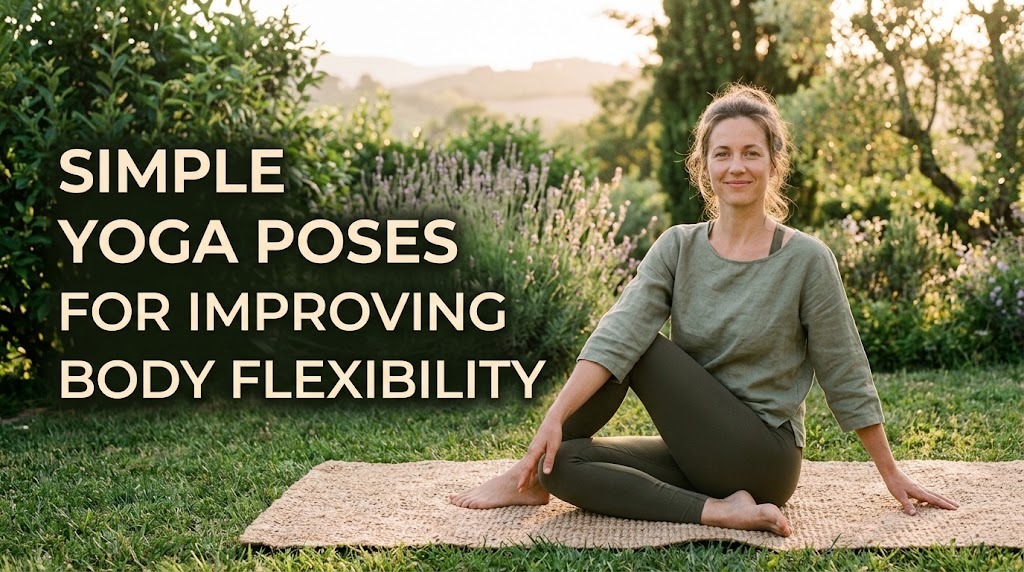
Flexibility is an important part of physical fitness because it helps the body move more comfortably through different ranges of motion. Regular stretching and suitable physical activity can support flexibility while reducing stiffness caused by inactivity. Yoga is one practical way to include gentle stretching and controlled movement in a daily routine. You do not need to be highly flexible to start practicing yoga.
For beginners, simple yoga poses are a good starting point because they allow the body to gradually adapt. The movements should be performed slowly without forcing the muscles or joints. With regular practice, simple poses may help improve mobility, balance, body awareness, and flexibility. The goal is steady progress rather than achieving difficult poses quickly.
WHY YOGA CAN SUPPORT FLEXIBILITY
Yoga combines stretching, controlled movement, balance, and body awareness. Many poses gently lengthen muscles while encouraging controlled movement around different joints. Regular practice can help people become more comfortable with movements that initially feel stiff. Consistent practice is generally more useful than stretching intensely only once in a while.
Flexibility also depends on several factors, including age, activity level, muscle condition, and individual body structure. Therefore, progress will not look the same for everyone. Yoga should be adapted to your current ability instead of forcing your body into a specific position. Comfortable and controlled movement should always be prioritized.
CHILD'S POSE FOR GENTLE STRETCHING
Child's Pose is a simple position that can provide a gentle stretch for the back, hips, and thighs. Begin by kneeling on a comfortable surface and slowly lower your upper body toward the floor. Your arms can extend forward or rest alongside your body, depending on what feels comfortable. Keep your breathing steady while holding the position.
Do not force your hips toward your heels if the position feels uncomfortable. You can place a cushion under your hips or chest for additional support. Stay in the pose for several comfortable breaths and return to the starting position slowly. This pose is useful for beginners who want a gentle introduction to yoga stretching.
CAT COW FOR SPINAL MOBILITY
Cat-Cow is a simple movement that focuses on the spine and can help improve awareness of spinal movement. Start on your hands and knees with your hands under your shoulders and knees under your hips. As you inhale, gently lift your chest and tailbone while allowing your spine to curve naturally. As you exhale, gently round your back without forcing the movement.
Move slowly and coordinate the movement with your breathing. There is no need to create a large range of motion to benefit from the exercise. If your wrists feel uncomfortable, adjust your hand position or use suitable support. Smooth and controlled movement is more important than moving as far as possible.
DOWNWARD FACING DOG FOR THE BACK AND LEGS
Downward-Facing Dog is a common yoga pose that involves the shoulders, back, hips, and legs. Begin on your hands and knees, then slowly lift your hips upward while keeping your hands firmly supported. Your knees can remain slightly bent if your hamstrings feel tight. This modification can make the pose more comfortable for beginners.
Avoid trying to force your heels toward the floor. The position should create a comfortable stretch rather than sharp pain or excessive pressure. Keep your spine as comfortable as possible and adjust the pose whenever necessary. Bending the knees is completely acceptable when it helps maintain better control and alignment.
COBRA POSE FOR THE FRONT BODY
Cobra Pose can gently stretch the front of the body while encouraging controlled movement of the spine. Lie on your stomach with your hands placed near your chest and your elbows close to your body. Slowly lift your chest using your back muscles while keeping the movement comfortable. Do not rely entirely on your arms to push the body upward.
The height of the chest does not determine whether the pose is effective. A lower lift may be more appropriate for beginners or people with limited spinal mobility. Keep your shoulders relaxed and avoid forcing the lower back into a deep bend. A gentle version of Cobra Pose is often enough for a beginner routine.
SEATED FORWARD FOLD FOR THE LEGS
A seated forward fold can provide a gentle stretch for the back of the legs and the lower back. Sit with your legs extended forward and keep your spine in a comfortable position. Slowly lean forward from the hips while keeping your movement controlled. You can bend your knees slightly if your hamstrings feel tight.
Do not pull yourself down to reach your feet. The purpose is to create a comfortable stretch rather than achieving a specific depth. A yoga strap can be used around the feet if additional support is helpful. Avoid bouncing or forcing the stretch, especially when your muscles feel tight.
LOW LUNGE FOR THE HIPS
Low Lunge can help stretch the hip area and the front of the hip of the extended leg. Start from a kneeling position and place one foot forward between your hands. Slowly move your hips forward while keeping the front knee in a comfortable position. Use a cushion under the back knee if additional support is needed.
Keep your movements slow and avoid pushing the hips too far forward. Switch sides so both sides of the body receive similar attention. Beginners can place their hands on blocks or another stable support if reaching the floor is difficult. A controlled Low Lunge can be a useful addition to a flexibility routine.
BUTTERFLY POSE FOR THE HIPS
Butterfly Pose is a simple seated position that focuses on the inner thighs and hip area. Sit comfortably, bring the soles of your feet together, and allow your knees to move outward naturally. Hold your feet or ankles without pulling aggressively. Keep your back in a comfortable position and breathe slowly.
You do not need to press your knees toward the floor. Let gravity create a gentle stretch while maintaining a relaxed posture. If your hips or knees feel uncomfortable, place cushions underneath the knees for additional support. The stretch should remain gentle and controlled throughout the exercise.
TIPS FOR IMPROVING FLEXIBILITY SAFELY
Improving flexibility takes time, so regular practice is more important than intensity. Start with a short routine and gradually increase the duration as your body becomes more comfortable. Perform each movement slowly and avoid bouncing because sudden movements can place unnecessary stress on muscles and joints. Never force a stretch into pain.
Breathing can also help you stay relaxed during stretching. Try to breathe naturally instead of holding your breath while maintaining a pose. Practicing after the body has been gently warmed up can also make movement more comfortable. Most importantly, respect your current range of motion and allow flexibility to develop gradually.
COMMON MISTAKES TO AVOID
One common mistake is trying to achieve a deep stretch too quickly. Beginners may also copy advanced practitioners without considering their own flexibility and strength. Another mistake is ignoring pain because they believe discomfort means the exercise is working. Pain should not be treated as a sign of successful stretching.
Poor breathing and rushed movements can also reduce the quality of a yoga session. Instead, focus on maintaining stable positions and controlled transitions. Use modifications whenever a pose feels too challenging. Proper technique and body awareness should always come before depth or difficulty.
HOW OFTEN SHOULD YOU PRACTICE YOGA?
There is no single schedule that works for everyone. Beginners can start with short sessions several times a week and adjust the routine according to their schedule and physical condition. Even a brief practice can help build consistency when performed regularly. Over time, you can gradually increase the duration or variety of poses.
Rest is also an important part of physical activity. Give your body enough time to recover if you feel unusually tired or sore. Avoid turning every session into an intense workout, especially when your main goal is improving flexibility. A sustainable routine is more valuable than an overly demanding schedule.
CONCLUSION
Simple yoga poses for improving body flexibility can be a practical choice for beginners who want to move more comfortably and develop better body awareness. Poses such as Child's Pose, Cat-Cow, Downward-Facing Dog, Cobra Pose, Seated Forward Fold, Low Lunge, and Butterfly Pose can be included in a gentle routine. Each movement should be performed according to your current ability. Gradual progress is more important than perfect flexibility.
Remember to breathe naturally, avoid forcing your body, and modify poses whenever necessary. Regular practice combined with patience can help you develop flexibility over time. If you have an injury, persistent pain, or a health condition that affects movement, consider seeking guidance from an appropriate health professional before starting a new exercise routine. Safe and consistent practice is the foundation of a beneficial yoga routine.
Tentang Penulis
Gusti Ayu Tita P
Penulis — Universitas STEKOM
Penulis aktif yang berfokus pada isu-isu akademik, teknologi pendidikan, dan pengembangan sumber daya manusia di lingkungan kampus.