Understanding the Stages of Elections from Start to Finish
Gusti Ayu Tita P
10 Oktober 2026
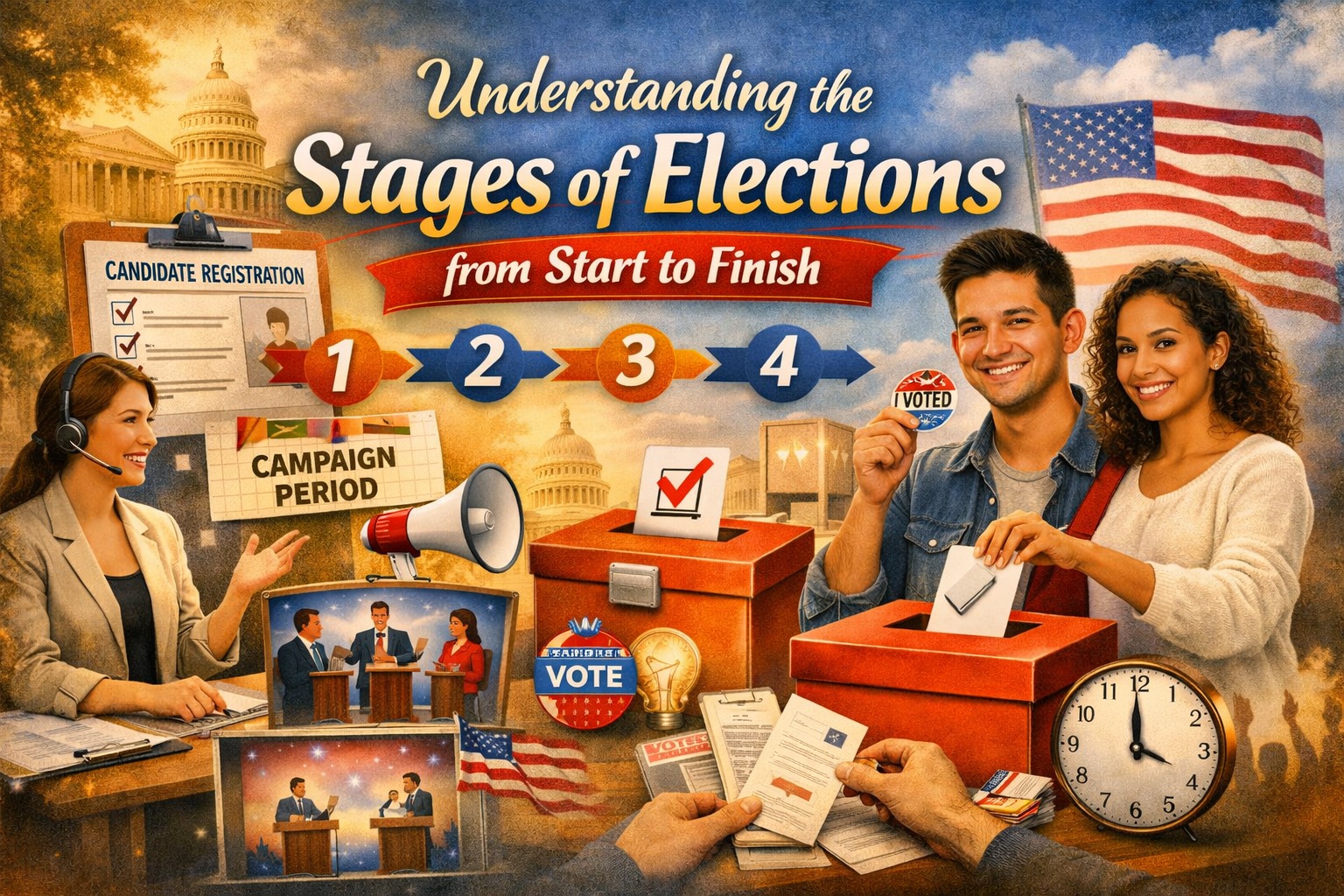
Elections are the foundation of every democratic system, allowing citizens to choose leaders who will represent their interests and shape public policies. A successful election does not happen in a single day but follows several carefully planned stages to ensure fairness, transparency, and accountability. Every phase, from voter registration to the announcement of final results, plays a crucial role in protecting democratic values. Understanding these stages helps citizens participate more confidently and responsibly in the electoral process. This guide explains the stages of elections from start to finish in a simple, informative, and easy-to-understand way.
VOTER REGISTRATION AND ELECTION PREPARATION
The election process begins with voter registration, where eligible citizens are officially recorded to participate in the election. Election authorities verify personal information to ensure that every qualified voter is included on the voter list. This stage is essential because only registered voters are allowed to cast their ballots. Accurate voter data also helps prevent duplicate registrations and other administrative issues. Proper preparation creates a solid foundation for a fair election.
Election officials also prepare polling stations, voting equipment, election materials, and trained personnel during this stage. Public awareness campaigns are organized to educate citizens about voting procedures and important election dates. These preparations help minimize confusion on election day. Well-planned logistics ensure that the voting process runs smoothly and efficiently across all regions.
CANDIDATE NOMINATION AND CAMPAIGN PERIOD
After voter registration, the next stage is candidate nomination. Individuals or political parties submit candidates according to legal requirements established by election laws. Election authorities review the applications to ensure that every candidate meets the necessary qualifications. Only eligible candidates are officially approved to participate in the election. This verification process maintains fairness and legal compliance.
The campaign period allows candidates to present their visions, missions, and policy proposals to the public. Campaign activities may include debates, public meetings, media interviews, and online communication. Voters use this opportunity to compare candidates and evaluate their leadership abilities. Ethical campaigning encourages informed decision-making while promoting healthy democratic competition.
VOTING DAY AND BALLOT CASTING
Election Day is the most anticipated stage of the electoral process. Registered voters visit designated polling stations to cast their ballots according to official procedures. Election officers verify voter identities before allowing them to vote. Secret ballots ensure that every citizen can vote freely without intimidation or external pressure. This principle protects the freedom and integrity of the democratic process.
Polling stations are supervised by authorized officials and independent observers to maintain transparency throughout the voting process. Every valid vote is carefully recorded to prevent errors or irregularities. Citizens are encouraged to follow all election rules while respecting fellow voters. Peaceful participation strengthens public confidence in the electoral system.
VOTE COUNTING AND RESULT VERIFICATION
After polling stations close, the process of vote counting begins. Election officials count every valid ballot carefully under strict supervision to ensure accuracy and fairness. Representatives from candidates and independent observers may monitor the counting process to increase transparency. This stage is essential because accurate counting determines the true outcome of the election. Every valid vote must be treated equally.
Following the count, election authorities conduct result verification to confirm that all procedures have been followed correctly. Any disputes or reported irregularities are reviewed according to legal regulations before the final results are confirmed. Verification strengthens public trust in the electoral process. Transparent reporting helps maintain confidence in democratic institutions.
ANNOUNCEMENT OF THE FINAL RESULTS
Once verification is complete, election authorities officially announce the final election results. The announcement includes the number of votes received by each candidate and identifies the winner according to election laws. Public access to accurate results promotes transparency and accountability. Official publication also reduces uncertainty and misinformation.
After the announcement, legal mechanisms remain available for resolving any remaining election disputes. Courts or authorized institutions review complaints based on evidence and applicable laws. Respecting the official outcome is an important part of democratic responsibility. Peaceful acceptance of legitimate results supports political stability and national unity.
WHY UNDERSTANDING ELECTION STAGES IS IMPORTANT?
Learning about every stage of an election helps citizens become more responsible voters. People who understand the process are better prepared to participate correctly and avoid misinformation. They are also more likely to recognize the importance of transparency, fairness, and legal compliance throughout the election. Civic knowledge strengthens democratic participation.
Understanding election stages also encourages greater public trust in democratic institutions. Citizens become more aware of their rights and responsibilities before, during, and after elections. Informed voters contribute to stronger accountability and better governance. Ultimately, democratic systems become more effective when the public understands how elections work.
CONCLUSION
Understanding the stages of elections from start to finish helps citizens appreciate the importance of every step in the democratic process. From voter registration and candidate nomination to voting, vote counting, verification, and the announcement of final results, each stage ensures that elections remain fair and transparent. Public participation, responsible voting, and respect for election rules all contribute to stronger democratic institutions. By learning how elections operate, citizens can make informed decisions and actively support a more accountable government. A well-informed electorate is the key to maintaining a healthy and sustainable democracy.
Tentang Penulis
Gusti Ayu Tita P
Penulis — Universitas STEKOM
Penulis aktif yang berfokus pada isu-isu akademik, teknologi pendidikan, dan pengembangan sumber daya manusia di lingkungan kampus.