What Is The Difference Between Small And Large Volcanic Eruptions?
Gusti Ayu Tita P
19 September 2026
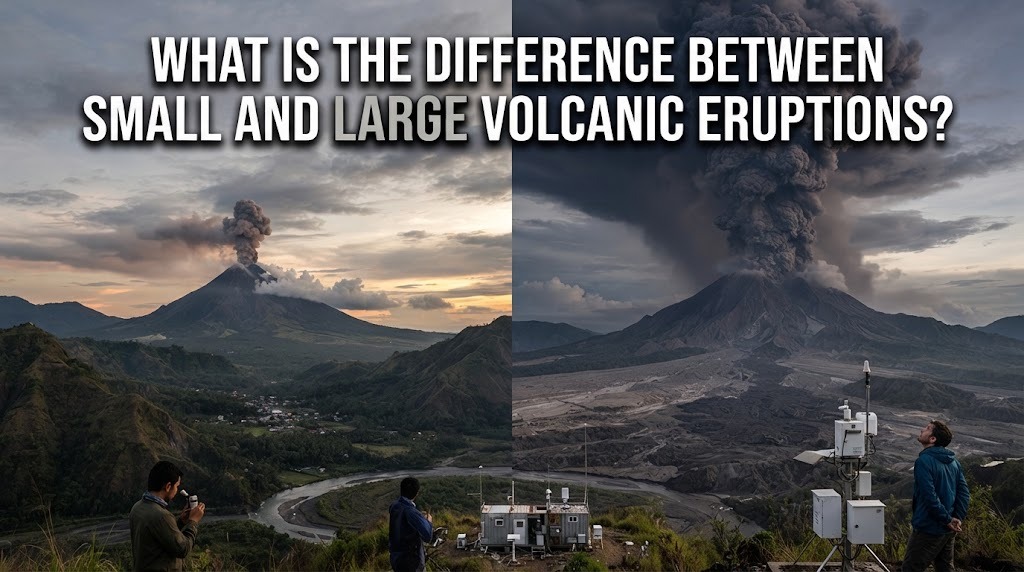
Volcanic eruptions can vary greatly in size, intensity, and impact. Some eruptions release a small amount of ash and gas, while others produce large amounts of lava, ash, and volcanic materials. The difference depends on factors such as magma composition, gas content, pressure, and eruption style. Understanding these differences helps people recognize why some volcanic eruptions create greater hazards than others.
THE AMOUNT OF VOLCANIC MATERIAL
Small eruptions generally release a smaller amount of volcanic material than large eruptions. They may produce limited ash, volcanic rocks, lava, or gases over a relatively short period. The affected area can therefore be smaller, although local hazards may still be serious. People near the volcano should still follow official safety instructions.
Large eruptions can release enormous quantities of ash, rocks, gases, and other materials. Fine ash may be carried by wind over large distances, affecting areas far from the volcano. The amount of material released can also influence how long cleanup and environmental recovery take. Therefore, eruption size can strongly affect the scale of the impact.
THE LEVEL OF ERUPTION ENERGY
Another difference is the amount of energy released during an eruption. Small eruptions may have lower explosive energy and produce relatively limited volcanic activity. Large explosive eruptions can release much greater energy and send ash and volcanic fragments high into the atmosphere. The amount of energy is influenced by the pressure and properties of magma and volcanic gases.
The behavior of an eruption can change over time. An eruption that begins relatively mildly can become more explosive if conditions underground change. Volcanic monitoring is therefore important for identifying changes in activity. Scientists use different observations and instruments to help authorities assess volcanic hazards.
THE EFFECT ON THE SURROUNDING AREA
Small eruptions may affect a limited area, especially when volcanic materials remain close to the volcano. However, even a small eruption can damage vegetation, farmland, roads, or buildings near the source. Ashfall can also affect communities depending on wind direction and the amount of ash released. The actual impact depends on both eruption characteristics and local conditions.
Large eruptions can affect much wider areas. Ash, gases, lava, pyroclastic flows, and other hazards may impact communities, agriculture, transportation, and infrastructure. The effects can continue after the eruption because ash cleanup, environmental changes, and lahars may remain concerns. Population density and preparedness also influence the overall consequences.
THE DURATION OF VOLCANIC ACTIVITY
The duration of an eruption does not always depend directly on whether it is small or large. Some small eruptions can continue for a long time, while some large explosive events may be relatively brief. What matters is how much volcanic material is released and how the eruption behaves during that period. Therefore, eruption duration should be considered separately from eruption size.
Long-lasting volcanic activity can create continuing challenges for nearby communities. Repeated ashfall or lava activity may require ongoing monitoring and safety measures. Changing volcanic conditions can also require authorities to update danger zones and evacuation guidance. Residents should continue following official information throughout the event.
THE IMPACT ON PEOPLE AND THE ENVIRONMENT
Large eruptions generally have the potential to create more widespread impacts because they can release greater amounts of volcanic material. They may affect air quality, water sources, agriculture, wildlife, and transportation over broad areas. Communities may need to evacuate if dangerous hazards threaten populated locations. Recovery can require significant time and resources.
Small eruptions can also create important risks, particularly for people living close to the volcano. Volcanic ash, gases, lava, and falling rocks can cause injuries or property damage under certain conditions. This is why eruption size alone should not be used to decide whether an event is safe. Local hazard information and official warnings are more important for making safety decisions.
CONCLUSION
The main difference between small and large volcanic eruptions is often the amount of material released, eruption energy, and potential area of impact. Large eruptions can produce more widespread hazards, while smaller eruptions may have more localized effects. However, even a small eruption can be dangerous when people are close to the volcano or exposed to specific hazards. Understanding volcanic activity and following official warnings are essential for staying safe.
Tentang Penulis
Gusti Ayu Tita P
Penulis — Universitas STEKOM
Penulis aktif yang berfokus pada isu-isu akademik, teknologi pendidikan, dan pengembangan sumber daya manusia di lingkungan kampus.