Why Can Volcanic Ash Disrupt Air Travel?
Gusti Ayu Tita P
19 September 2026
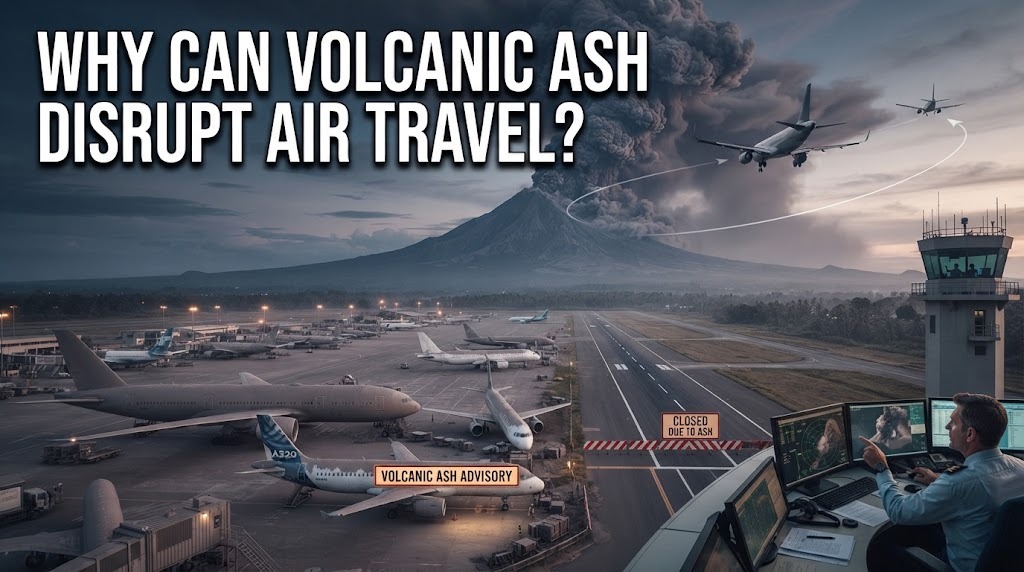
Volcanic eruptions can produce large amounts of volcanic ash that may spread far from the eruption site. Unlike ordinary dust, volcanic ash contains tiny particles of rock and minerals that can be dangerous for aircraft. When ash enters the atmosphere near flight routes, it can create serious risks for airplanes and passengers. For this reason, volcanic ash can cause flight delays, route changes, and airport closures.
WHAT IS VOLCANIC ASH?
Volcanic ash is made of very small fragments of rock, minerals, and volcanic glass produced during an eruption. These particles can become suspended in the atmosphere and travel long distances with the wind. Large ash clouds may spread across areas far from the volcano itself. Because the particles are extremely small, they may be difficult to see from an aircraft.
Volcanic ash is different from normal dust because it can contain hard and abrasive particles. These particles can damage aircraft components when they enter engines or other systems. The danger can remain even when an ash cloud is no longer clearly visible. Therefore, pilots and aviation authorities must carefully monitor volcanic ash clouds.
HOW VOLCANIC ASH AFFECTS AIRCRAFT ENGINES
One of the most serious risks is the effect of volcanic ash on jet engines. When ash enters a hot engine, some particles can melt because of the high temperature inside the engine. The melted material can stick to important engine components and disturb airflow. In severe situations, this can cause an engine to lose power or even stop working.
Ash particles can also act as an abrasive material that damages engine components. This can reduce engine performance and increase the need for inspection and maintenance. Because aircraft engines are essential for safe flight, airlines take volcanic ash warnings very seriously. Avoiding dense ash clouds is generally safer than attempting to fly through them.
EFFECTS ON AIRCRAFT VISIBILITY AND SYSTEMS
Volcanic ash can reduce visibility around an aircraft, making it more difficult for pilots to observe their surroundings. Ash can also affect aircraft sensors and other external components. Tiny particles may accumulate on surfaces and interfere with equipment. These problems can make flight operations more difficult, especially when an aircraft is near a significant ash cloud.
The particles may also cause damage to aircraft windows and other exposed surfaces. In some situations, the windshield can become cloudy or scratched, reducing the quality of outside visibility. These effects show why volcanic ash is considered an important aviation hazard. Airlines and pilots must use reliable information to avoid affected areas.
WHY FLIGHTS MAY BE DELAYED OR CANCELLED
When volcanic ash enters an important flight area, airlines may need to change their operations. Flight delays and cancellations can occur because aircraft may need to avoid dangerous airspace. Pilots and air traffic controllers must consider the location and movement of the ash cloud before choosing a safe route. Some flights may be redirected to airports that are farther away from the affected area.
Airports may also temporarily close when ash creates unsafe conditions for aircraft operations. These decisions can affect many passengers and may cause a chain of delays across different destinations. Although cancellations can be inconvenient, aviation safety is a major priority. Flight schedules can return to normal after authorities determine that conditions are safe.
HOW AVIATION AUTHORITIES MONITOR VOLCANIC ASH
Aviation authorities use several sources of information to monitor volcanic ash. Satellites, weather data, volcanic observations, and specialized ash monitoring systems can help identify the location and movement of ash clouds. This information can be shared with airlines, pilots, and air traffic controllers. Continuous monitoring is important because wind can move ash clouds to different areas.
Weather conditions are especially important because wind direction and speed can influence how far ash travels. Aviation organizations can use this information to issue warnings and support safer flight planning. Airlines can then adjust routes or schedules when necessary. Accurate monitoring helps reduce the risk of aircraft encountering volcanic ash.
HOW VOLCANIC ASH AFFECTS PASSENGERS
Passengers can experience delays, cancellations, rerouting, and longer travel times when volcanic ash affects air traffic. Travelers may need to wait at airports or change their connecting flights. In some cases, airlines may offer alternative routes depending on the situation and their policies. The disruption can affect both domestic and international travel.
However, the main reason for these changes is to reduce aviation risks. Passengers should monitor official airline and airport information when traveling near an area affected by volcanic activity. They should also allow extra time for possible changes to their travel plans. Following official updates can help travelers respond more effectively to disruptions.
CONCLUSION
Volcanic ash can disrupt air travel because it may damage jet engines, reduce visibility, affect aircraft systems, and create unsafe flying conditions. Ash clouds can travel long distances, making their impact extend beyond the area surrounding a volcano. As a result, flights may be delayed, cancelled, or redirected to safer routes. Monitoring volcanic ash and following aviation safety procedures are essential for protecting passengers and aircraft.
Tentang Penulis
Gusti Ayu Tita P
Penulis — Universitas STEKOM
Penulis aktif yang berfokus pada isu-isu akademik, teknologi pendidikan, dan pengembangan sumber daya manusia di lingkungan kampus.