Why Can Volcanoes Experience Eruptions?
Gusti Ayu Tita P
19 September 2026
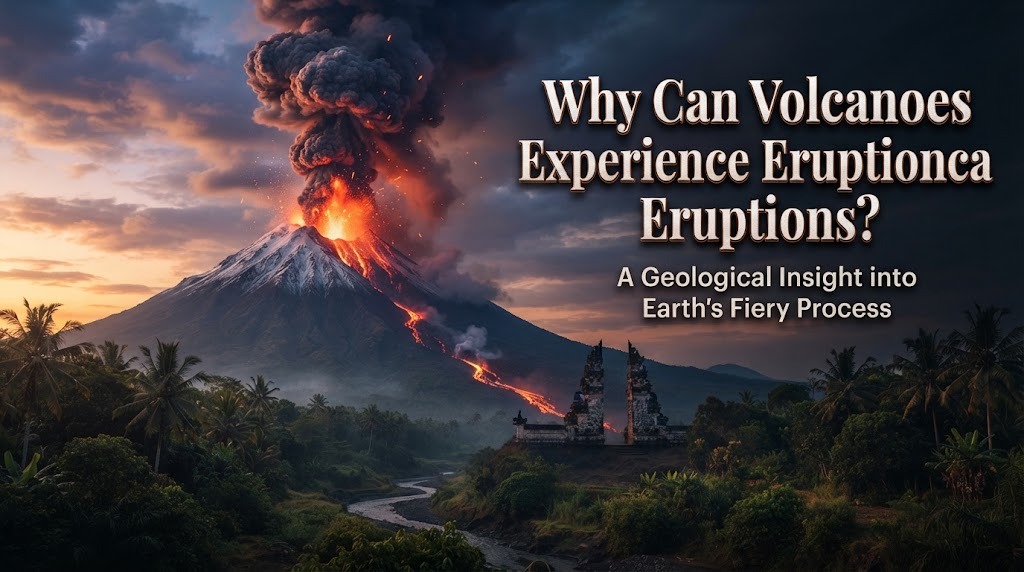
Volcanoes can experience eruptions when magma, gas, and pressure build up beneath Earth’s surface. Magma forms deep underground and may collect in a magma chamber before moving upward. As magma rises, the pressure around it decreases, causing dissolved gases to expand. When the pressure becomes strong enough, magma and volcanic materials can escape through openings in the volcano. The process and strength of an eruption depend on the geological conditions of each volcano.
MAGMA RISES FROM DEEP UNDERGROUND
One important reason volcanoes erupt is the movement of magma toward the surface. Magma can rise through cracks and channels in Earth’s crust because it is generally less dense than the surrounding solid rock. As it moves upward, it can enter shallow parts of the volcanic system. This movement may cause changes in pressure and temperature around the volcano. In some cases, increasing magma movement can lead to an eruption.
GAS PRESSURE BUILDS INSIDE MAGMA
Magma contains dissolved gases, including water vapor, carbon dioxide, and sulfur dioxide. When magma rises, the pressure around it decreases and these gases can form bubbles. The expanding bubbles increase pressure inside the magma and may help push it toward the surface. If the gas cannot escape easily, the pressure can become stronger. This process is especially important in explosive volcanic eruptions.
PRESSURE BECOMES TOO HIGH
A volcano may erupt when pressure inside its volcanic system exceeds the strength of surrounding rocks. Continuous magma movement can increase the amount of material beneath the volcano. At the same time, expanding gases can add more pressure to the system. Eventually, cracks may form or existing pathways may open. Magma, gas, ash, and other volcanic materials can then reach the surface.
VOLCANIC PATHWAYS CAN CHANGE
The pathways that carry magma toward the surface can open, narrow, or become blocked. A blockage caused by solidified lava or other material can prevent gas and magma from escaping easily. Pressure may continue to build behind the blockage. If the blockage breaks, the accumulated pressure can contribute to a sudden eruption. However, the effect of a blockage varies because every volcano has a different internal structure.
TECTONIC ACTIVITY CAN TRIGGER CHANGES
Volcanoes are often associated with tectonic plate movement. The movement of plates can create conditions that allow magma to form or rise through Earth's crust. Earthquakes and changes in underground pressure may also affect an existing volcanic system. These processes can increase activity in some volcanoes. However, tectonic activity does not mean that every nearby volcano will immediately erupt.
CONCLUSION
Volcanoes can erupt because of a combination of magma movement, gas expansion, increasing pressure, changing pathways, and tectonic activity. These factors work together and can influence the timing and type of an eruption. Each volcano has different geological characteristics, so volcanic activity can vary from one location to another. Monitoring earthquakes, gas emissions, ground deformation, and other changes helps scientists understand volcanic conditions. Understanding these processes can also support volcanic hazard preparedness.
Tentang Penulis
Gusti Ayu Tita P
Penulis — Universitas STEKOM
Penulis aktif yang berfokus pada isu-isu akademik, teknologi pendidikan, dan pengembangan sumber daya manusia di lingkungan kampus.