Challenges and Opportunities in the Digital Technology Era
Gusti Ayu Tita P
16 September 2026
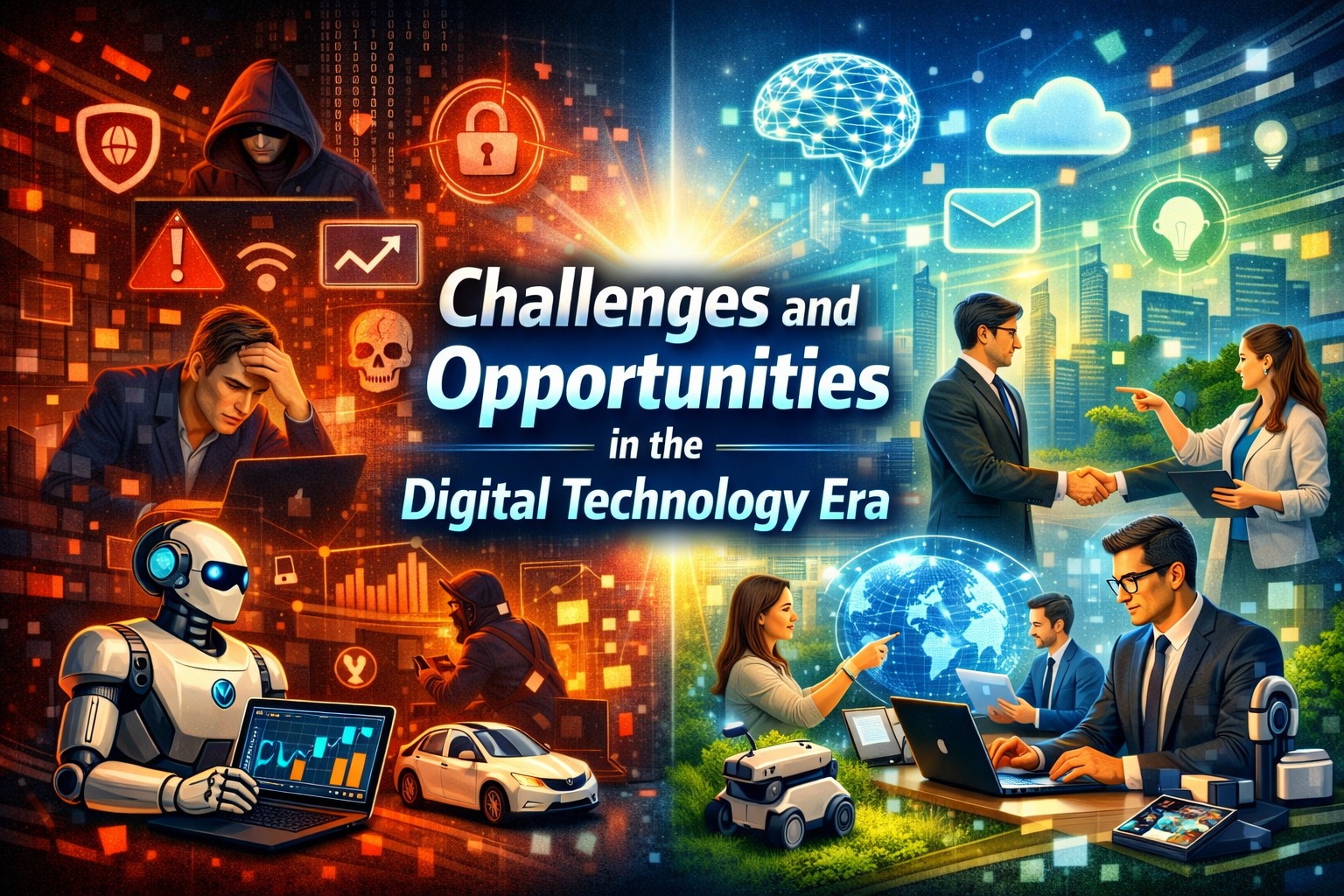
The digital technology era has reshaped the way people live, work, learn, and communicate. From artificial intelligence to cloud computing, innovation is moving at a speed never seen before. While this transformation brings exciting possibilities, it also presents new challenges that individuals, businesses, and governments must face. Understanding both sides of this digital revolution is essential to thrive in a rapidly changing world.
THE RAPID GROWTH OF DIGITAL TECHNOLOGY
Over the past two decades, digital technology has expanded into nearly every aspect of daily life. Smartphones, social media, automation, and big data have become essential tools for modern society. Businesses rely on digital platforms to reach global audiences, while remote work and online education have become common practices.
This growth has increased efficiency and accessibility, allowing people to collaborate across continents in real time. However, the rapid pace of innovation also means constant adaptation is required to keep up with new tools and systems.
MAJOR CHALLENGES IN THE DIGITAL ERA
1.CYBERSECURITY RISKS
As digital systems grow, so do the risks associated with cyber threats. Data breaches, identity theft, and ransomware attacks have become major concerns. Organizations must invest in strong security systems and educate users about safe online behavior to reduce vulnerability.
2. DIGITAL SKILL GAP
Not everyone has equal access to digital knowledge and training. Many workers struggle to keep up with new technologies, which can lead to unemployment or limited career opportunities. Bridging this digital skills gap is crucial to ensure inclusive growth.
3.PRIVACY AND DATA PROTECTION
In the digital age, personal data has become one of the most valuable assets. Companies collect massive amounts of information to improve services and marketing strategies. Without proper regulations and awareness, user privacy can be compromised.
4. TECHNOLOGY DEPENDENCE
Overreliance on technology may reduce critical thinking, creativity, and human interaction. Maintaining balance between digital and offline life is increasingly important for mental and social well-being.
OPPORTUNITIES CREATED BY DIGITAL TRANSFORMATION
1. NEW CAREER PATHS
The digital economy has opened doors to careers that did not exist a decade ago. Jobs in data science, digital marketing, cybersecurity, and software development continue to grow rapidly. Freelancing and remote work also allow people to work from anywhere in the world.
2.GLOBAL BUSINESS EXPANSION
Digital platforms enable businesses of all sizes to access international markets. Small startups can compete with large corporations by using e-commerce, social media marketing, and digital payment systems.
3. IMPROVED EDUCATION AND LEARNING
Online learning platforms make education more accessible than ever. Students can learn new skills, attend virtual classes, and access knowledge from anywhere. This democratization of education helps people continuously improve their abilities.
4.,INNOVATION AND AUTOMATION
Automation and artificial intelligence increase efficiency in industries such as healthcare, manufacturing, and finance. Technology can handle repetitive tasks, allowing humans to focus on creativity, strategy, and innovation.
HOW TO ADAPT AND THRIVE
To succeed in the digital era, individuals and organizations must embrace lifelong learning. Developing digital literacy, critical thinking, and adaptability is essential. Governments and institutions should invest in education, infrastructure, and regulations that support safe and inclusive digital growth.
Collaboration between technology creators, policymakers, and communities will help ensure that digital transformation benefits everyone.
CONCLUSION
The digital technology era brings both significant challenges and exciting opportunities. While cybersecurity risks, privacy concerns, and skill gaps remain important issues, the potential for innovation, global connectivity, and economic growth is enormous. By staying informed and adaptable, society can harness the power of digital technology to build a smarter, more connected future.
About the Author
Gusti Ayu Tita P
Author — STEKOM University
An active author focused on academic issues, educational technology, and human resource development in the campus environment.