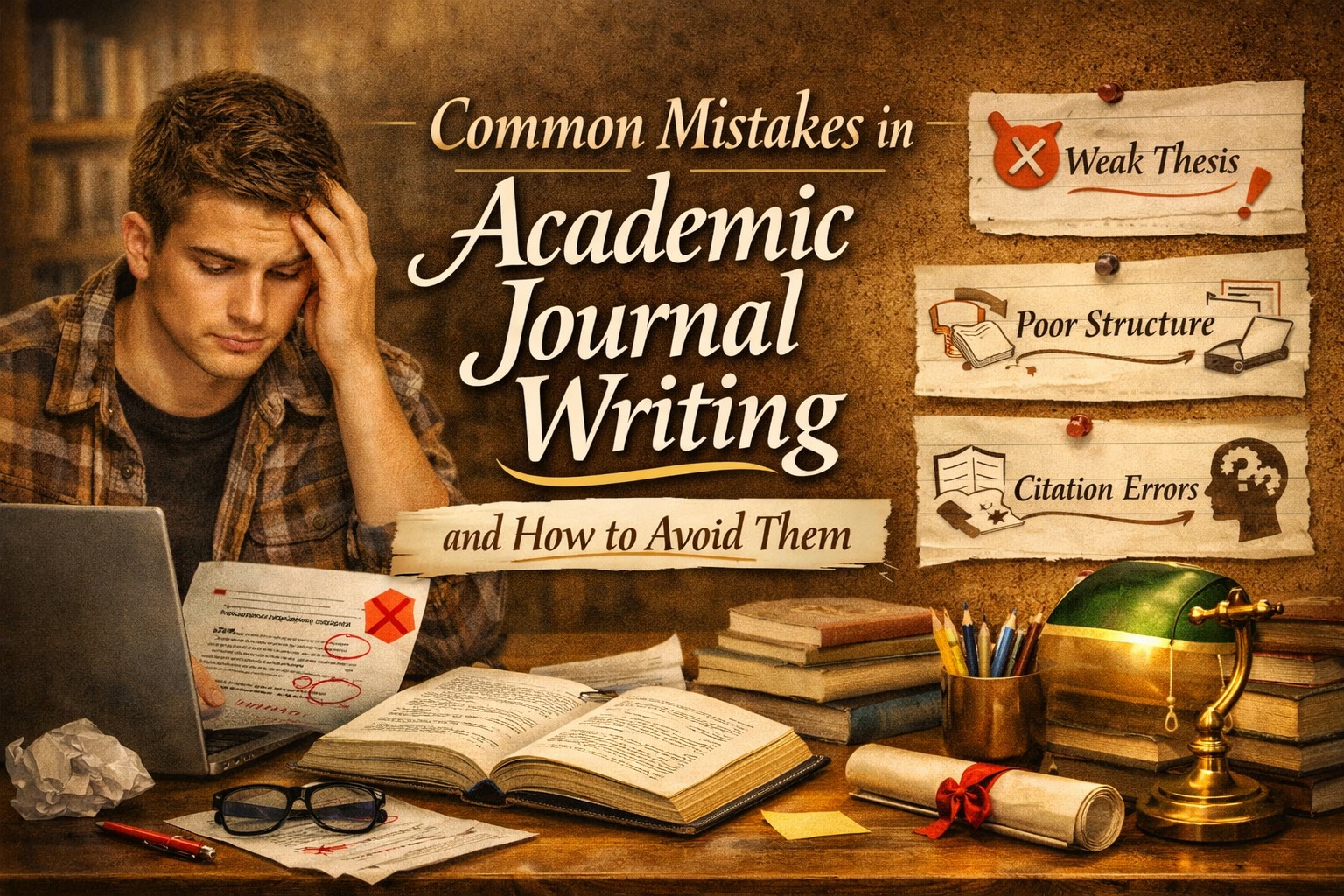
Common Mistakes in Academic Journal Writing and How to Avoid Them
Gusti Ayu Tita P
5 Oktober 2026
Writing for an academic journal is a challenging process that requires accuracy, clarity, and strong research skills. Many researchers struggle with academic journal writing because they are not fully aware of common errors that can reduce the quality of their work. Understanding these mistakes is important to improve the chances of successful publication. In this article, we will discuss the most frequent problems in research paper writing and how to avoid them effectively. By learning these points, writers can improve their scholarly publishing outcomes and reduce rejection rates.
LACK OF CLEAR STRUCTURE IN MANUSCRIPT
One of the most common problems in academic journal writing is the lack of a clear structure in the manuscript. Many writers fail to organize their ideas in a logical flow, making the paper difficult to understand. A strong journal article structure should include an introduction, methodology, results, and discussion. Without proper structure, readers may lose interest and reviewers may reject the paper. To avoid this, always follow the standard format required by the target journal.
A well-structured manuscript also improves readability and strengthens the argument of the study. Each section should connect smoothly to the next one to maintain consistency. Writers should plan their outline before starting the writing process. This simple step can significantly reduce common mistakes in academic writing. Clear structure is essential for successful manuscript submission.
CITATION AND REFERENCING ERRORS
Another frequent issue in research paper writing is incorrect or inconsistent citation. Many authors fail to follow the required referencing style such as APA, MLA, or Chicago. These citation errors can lead to plagiarism concerns and reduce academic credibility. Proper citation is a key part of scholarly publishing and must not be ignored. Always double-check every reference before submitting your manuscript.
In addition, missing references or outdated sources can weaken the research quality. Writers should use credible and up-to-date academic sources to support their arguments. Reference management tools can help reduce mistakes in formatting and ordering. Paying attention to citation details improves the professionalism of academic journal writing. This step is essential for successful acceptance in the peer review process.
WEAK RESEARCH METHODOLOGY DESCRIPTION
A weak explanation of methodology is another major problem in academic journal writing. Many researchers fail to clearly describe how their study was conducted. This makes it difficult for reviewers to evaluate the reliability of the research. A strong methodology section should explain the research design, data collection, and analysis methods. Without this clarity, the study may be considered unreliable.
In research paper writing, transparency is very important. Readers need to understand how results were obtained to trust the findings. A detailed methodology also helps other researchers replicate the study. This improves the overall value of scholarly publishing. Clear and structured methodology reduces common mistakes in academic writing and increases publication chances.
LANGUAGE AND GRAMMAR ISSUES
Language quality plays a major role in academic journal writing. Poor grammar, unclear sentences, and spelling mistakes can reduce the credibility of the paper. Even strong research can be rejected if the language is not clear and professional. Writers should always proofread their work before submission. Using academic writing tools or professional editing services can also help improve quality.
Good language use makes the paper easier to understand for reviewers and readers. It also shows professionalism in research paper writing. Simple and precise sentences are more effective than complex and confusing ones. Avoiding grammar errors is a basic requirement in scholarly publishing. Improving language quality helps reduce common mistakes in academic writing significantly.
IGNORING PEER REVIEW FEEDBACK
Ignoring reviewer comments is a serious mistake in the peer review process. Many authors do not properly revise their manuscript based on feedback. This reduces the chances of acceptance in academic journals. Reviewers provide valuable suggestions to improve clarity, structure, and research quality. Accepting and applying feedback is an important part of manuscript submission.
Writers should carefully analyze each comment and make necessary revisions. Even critical feedback helps improve the overall quality of academic journal writing. Responding professionally to reviewers increases the chances of publication. This step is essential in scholarly publishing because it ensures academic standards are met. Proper revision shows that the author is serious about improving their research paper writing.
CONCLUSION
Avoiding mistakes in academic journal writing is essential for successful publication. Issues such as poor structure, citation errors, weak methodology, language problems, and ignoring feedback can significantly affect results. By understanding these common mistakes in academic writing, researchers can improve the quality of their work. Careful planning and attention to detail are key in research paper writing. With proper preparation, the peer review process becomes easier and more effective.
About the Author
Gusti Ayu Tita P
Author — STEKOM University
An active author focused on academic issues, educational technology, and human resource development in the campus environment.