Does Staying Up Late Improve Focus or Reduce the Quality of Work?
Gusti Ayu Tita P
19 Februari 2026
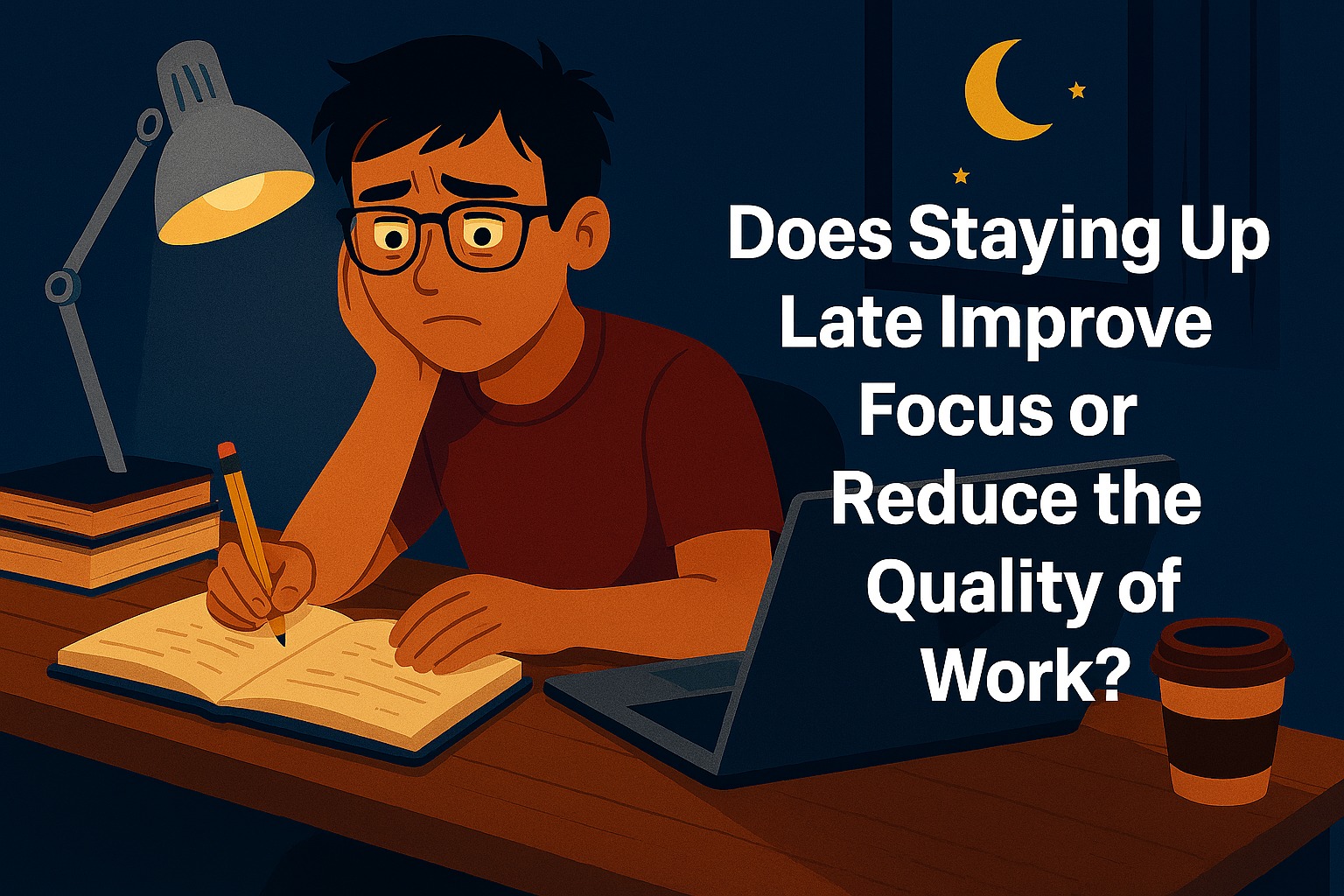
Staying up late is often seen as a quick way to meet targets, especially when tasks or work pile up. Many people feel that the quiet atmosphere at night helps them focus better and finish work faster. But is it true that staying up late improves focus, or does it actually lower the overall quality of work?
This article discusses the impact of staying up late on concentration, work performance, and the quality of results produced.
WHY IS STAYING UP LATE CONSIDERED TO IMPROVE FOCUS?
Nighttime is associated with a quieter environment and fewer distractions. There are no meeting notifications, phone calls, or other activities pulling your attention away. This condition makes some people feel it is easier to concentrate.
In addition, time pressure often triggers a strong sense of urgency. When a deadline is near, the brain switches into alert mode, making tasks feel easier and faster to complete. This factor is why many people believe staying up late helps increase focus.
However, focus that comes from pressure does not necessarily last long or lead to the best quality output.
THE IMPACT OF LACK OF SLEEP ON COGNITIVE FUNCTION
Lack of sleep has a direct impact on brain function. Concentration decreases, critical thinking weakens, and memory becomes disrupted. In a tired condition, a person is more likely to make small mistakes that can have major consequences.
Staying up late also affects decision-making ability. An idea that feels right in the middle of the night may not seem as relevant when reviewed later with a fresher body and mind. This shows that temporary focus does not always align with work quality.
WORK QUALITY VS SPEED OF COMPLETION
Staying up late may help you finish tasks quickly. However, speed does not always mean quality. Work done when the body is exhausted often requires additional revisions.
True productivity is not only measured by how fast work is completed, but also by how good the final result is. If staying up late makes your work less optimal, then that strategy should be reconsidered.
LONG-TERM RISKS TO PERFORMANCE
Repeatedly staying up late can disrupt the body’s rhythm. Lack of sleep makes it harder for the body to recover, reduces energy, and lowers motivation. In the long run, this may consistently decrease performance.
In addition, insufficient rest can affect mood and emotional stability. An unstable mental state will certainly impact work quality and professional relationships.
STRATEGIES TO MAINTAIN FOCUS WITHOUT STAYING UP LATE
To stay focused without staying up late, here are some steps you can apply:
- Set a realistic and structured work schedule.
- Break big tasks into smaller parts.
- Avoid procrastination by starting earlier.
- Reduce distractions during productive working hours.
- Maintain enough sleep every day.
With good time management, focus can be maintained without sacrificing health and work quality.
CONCLUSION
Staying up late may help focus in certain situations, especially when deadlines are approaching. However, lack of sleep can reduce cognitive function and affect work quality. Optimal focus is not only about the quiet atmosphere at night, but also about having a well-rested body.
If you want to maintain long-term performance, maintaining a healthy sleep schedule and effective time management is far wiser than relying on staying up late as your main solution.
About the Author
Gusti Ayu Tita P
Author — STEKOM University
An active author focused on academic issues, educational technology, and human resource development in the campus environment.