
Essential Skills Social Sciences Students Gain for Workplace Success
Gusti Ayu Tita P
5 Agustus 2026
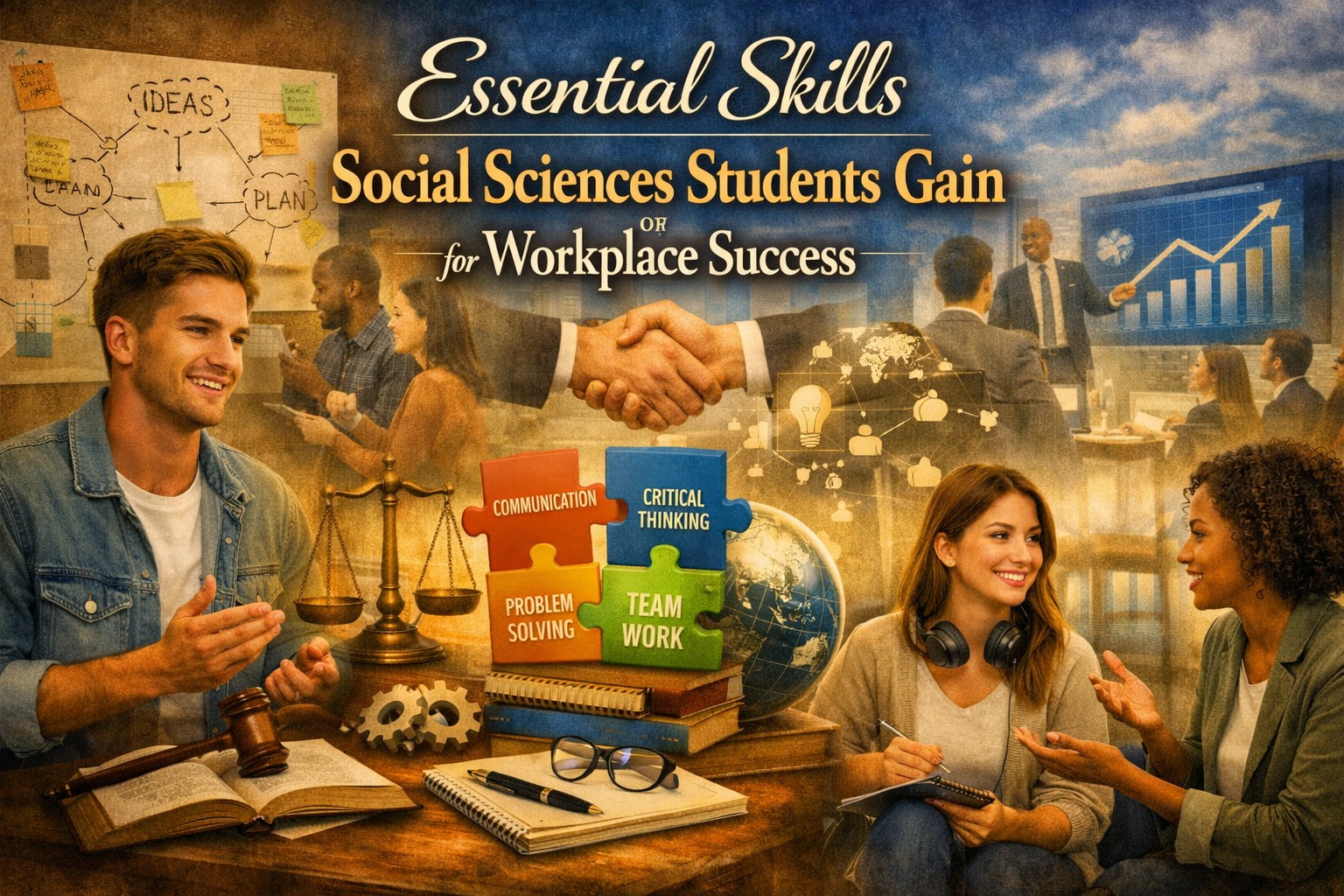
In today’s competitive job market, employers are looking for candidates who possess more than just academic knowledge. They seek individuals with strong communication abilities, analytical thinking, adaptability, and problem-solving skills. This is where Social Sciences students stand out. Through disciplines such as sociology, psychology, political science, economics, and communication studies, students develop valuable competencies that are highly relevant in modern workplaces.
The growing demand for professionals who understand human behavior, social dynamics, and organizational challenges has made Social Sciences graduates increasingly valuable across various industries. The combination of theoretical understanding and practical application equips them with the tools needed to succeed in diverse career paths. Below are some of the most important skills that contribute to their workplace success.
CRITICAL THINKING AND ANALYTICAL ABILITIES
One of the most valuable skills gained through Social Sciences education is critical thinking. Students are trained to evaluate information from multiple perspectives, identify patterns, and assess evidence before forming conclusions. This ability helps professionals make informed decisions and avoid biased judgments in complex situations.
In addition, analytical skills allow graduates to examine social trends, workplace issues, and organizational challenges effectively. Whether interpreting research findings or evaluating business strategies, the ability to analyze information thoroughly is highly appreciated by employers. These skills are especially useful in fields such as human resources, marketing, public policy, and management.
EFFECTIVE COMMUNICATION SKILLS
Strong communication skills are essential for workplace success, and Social Sciences programs place significant emphasis on developing them. Students regularly engage in presentations, discussions, research projects, and written assignments, helping them become confident communicators.
The ability to express ideas clearly, listen actively, and understand different viewpoints is crucial in professional environments. Effective communication improves teamwork, enhances client relationships, and supports leadership development. As organizations increasingly rely on collaboration, employees with excellent communication abilities become valuable assets.
PROBLEM-SOLVING AND DECISION-MAKING CAPABILITIES
Another important skill developed through Social Sciences studies is problem-solving. Students learn how to identify the root causes of issues, evaluate possible solutions, and recommend effective actions. This systematic approach enables them to address workplace challenges with confidence and creativity.
Strong decision-making skills also emerge from analyzing social, economic, and behavioral factors. By understanding how individuals and groups respond to different situations, graduates can make better decisions that consider both short-term and long-term outcomes. Employers highly value professionals who can solve problems efficiently while minimizing risks.
TEAMWORK AND INTERPERSONAL COMPETENCE
Modern workplaces require employees who can collaborate effectively with others. Social Sciences students frequently participate in group projects, community activities, and collaborative research, helping them build strong teamwork skills.
Equally important are interpersonal skills, which involve understanding emotions, managing relationships, and working with people from diverse backgrounds. These abilities contribute to a positive work environment and improve organizational productivity. Professionals who can build trust and maintain strong relationships often experience greater career advancement opportunities.
ADAPTABILITY AND CULTURAL AWARENESS
Rapid technological advancements and globalization have transformed the way organizations operate. As a result, adaptability has become one of the most sought-after workplace skills. Social Sciences students learn to understand social change, cultural differences, and evolving societal trends, making them more flexible in dynamic environments.
Furthermore, cultural awareness enables graduates to work effectively with colleagues, clients, and stakeholders from various backgrounds. Organizations operating in global markets particularly value employees who can navigate cultural diversity and promote inclusive workplace practices. This skill enhances collaboration and strengthens international business relationships.
RESEARCH AND DATA INTERPRETATION SKILLS
Research plays a central role in many Social Sciences disciplines. Students learn how to gather information, evaluate sources, conduct surveys, and interpret findings. These research skills help professionals make evidence-based decisions and contribute valuable insights to organizations.
Additionally, the ability to understand and interpret data has become increasingly important in today's data-driven economy. Social Sciences graduates can transform research findings into actionable recommendations, helping organizations improve performance, understand customer behavior, and develop effective strategies.
LEADERSHIP AND EMOTIONAL INTELLIGENCE
Many Social Sciences programs encourage students to examine leadership styles, organizational behavior, and human motivation. This knowledge helps develop effective leadership skills that are applicable across industries and job roles.
Another key strength is emotional intelligence, which involves recognizing, understanding, and managing emotions. Employees with high emotional intelligence are better equipped to handle workplace conflicts, motivate teams, and maintain productive professional relationships. These qualities often distinguish successful leaders from average managers.
CONCLUSION
The value of a Social Sciences degree extends far beyond academic knowledge. Students develop a wide range of transferable skills, including critical thinking, communication skills, problem-solving, teamwork, adaptability, research skills, and leadership abilities. These competencies are highly relevant in today's evolving workplace and contribute significantly to long-term career success.
As organizations continue to prioritize human-centered solutions and collaborative work environments, the demand for professionals with strong Social Sciences backgrounds is expected to grow. By combining analytical expertise with interpersonal understanding, Social Sciences graduates are well-prepared to thrive in diverse industries and make meaningful contributions to the modern workforce.
About the Author
Gusti Ayu Tita P
Author — STEKOM University
An active author focused on academic issues, educational technology, and human resource development in the campus environment.