How to Become a Customs Officer and Meet the Requirements?
Gusti Ayu Tita P
8 Agustus 2026
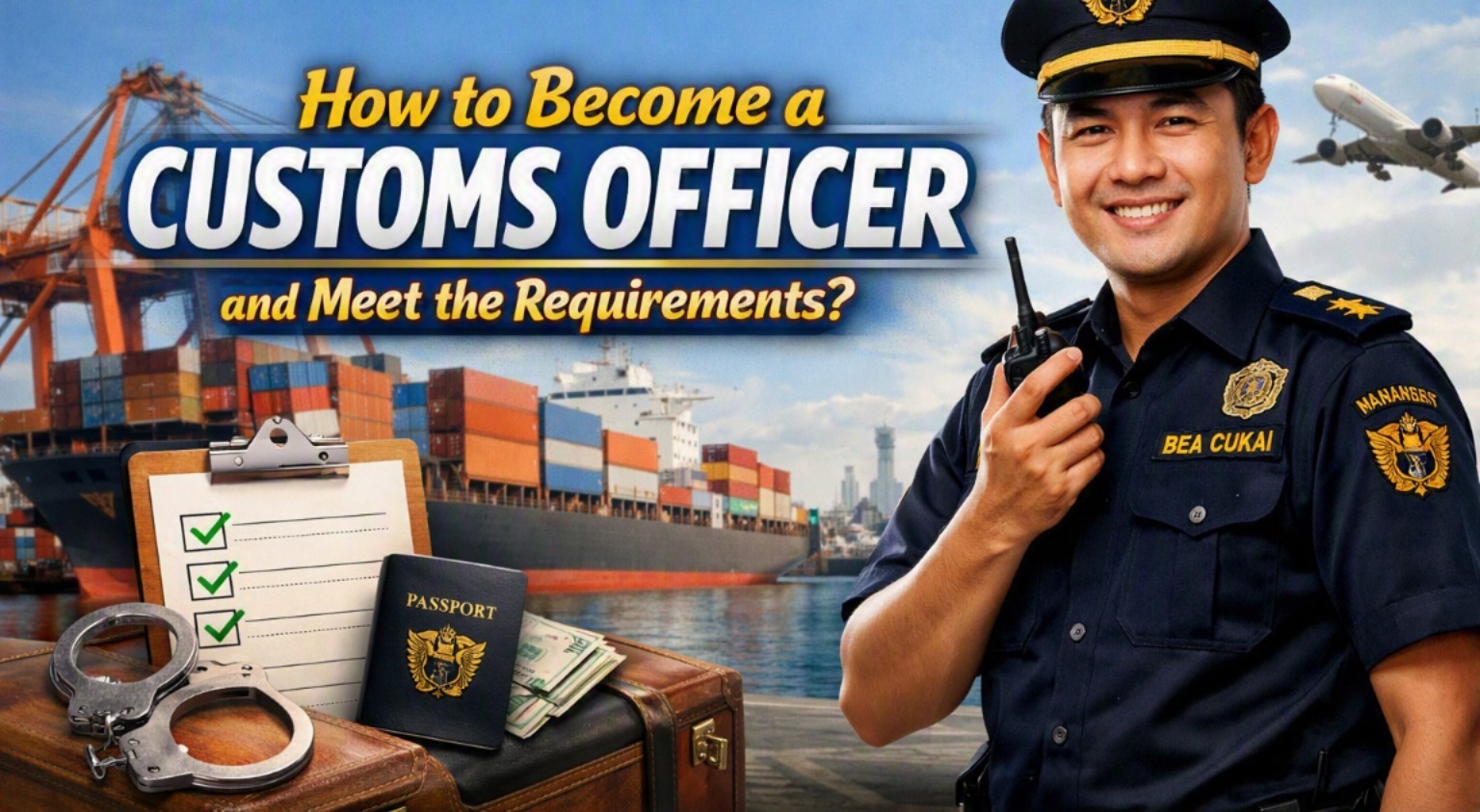
Becoming a Customs Officer is an attractive career choice for people who are interested in international trade, law, public service, and border control. Customs officers play an important role in monitoring goods entering and leaving a country, collecting customs duties and taxes, and preventing violations of customs regulations. They may work at airports, seaports, border crossings, customs offices, and other locations connected with international trade. Because the job involves public responsibility, applicants generally need suitable education, good integrity, strong discipline, and the ability to follow regulations carefully.
The requirements for becoming a customs officer can be different from one country to another because each customs administration has its own recruitment system and regulations. In Indonesia, customs functions are handled by the Directorate General of Customs and Excise (DJBC) under the Ministry of Finance. For example, the 2024 CPNS recruitment for DJBC included positions open to applicants from several education levels, including high school, diploma, and bachelor's degree, depending on the specific position.
UNDERSTAND THE ROLE OF A CUSTOMS OFFICER
A customs officer is responsible for helping ensure that international movement of goods follows applicable laws and regulations. Their duties can include checking customs documents, assessing goods, supervising imports and exports, and supporting enforcement against customs violations. Customs officers may also use risk assessment and information systems to identify transactions or shipments that require further attention. These responsibilities make accuracy, integrity, and responsibility important qualities for anyone interested in this career.
Customs work is closely connected with international trade because imported and exported goods must comply with customs requirements. In Indonesia, for example, customs procedures involve documents such as invoices, packing lists, bills of lading or airway bills, and other supporting documents depending on the transaction. A customs officer therefore needs to understand regulations and be able to examine information carefully before making or supporting an official decision.
CHECK THE EDUCATIONAL REQUIREMENTS
Education is one of the first requirements that prospective customs officers should consider. The required qualification depends on the position, recruitment pathway, and country. Some positions may require a high school qualification, while specialized administrative, legal, technological, or analytical positions can require a diploma or bachelor's degree. In Indonesia's 2024 DJBC recruitment, for instance, different positions had different educational requirements, ranging from high school level to diploma and bachelor's degree programs.
Choosing a relevant field can also provide useful knowledge for the job. Subjects related to law, economics, accounting, international relations, logistics, information technology, administration, and communication can be helpful depending on the position. However, applicants should not assume that one specific major is always required because recruitment announcements can change the qualifications for each available position. The safest approach is to compare your educational background with the official requirements published for the position you want.
MEET THE GENERAL RECRUITMENT REQUIREMENTS
Prospective customs officers must meet the general requirements established by the relevant customs authority. These requirements may include citizenship, age limits, educational qualifications, document completeness, and good legal standing. Government recruitment can also include additional conditions concerning physical or other qualifications when they are relevant to a particular position. Because these conditions can change between recruitment periods, applicants should always read the official announcement carefully.
For applicants seeking a position within Indonesia's government system, recruitment is conducted according to the official CPNS or other applicable recruitment rules. The 2024 DJBC announcement stated that applications were submitted through the national SSCASN system, while recruitment information was announced through official Ministry of Finance channels. Applicants should avoid relying on unofficial advertisements or social media posts when checking requirements because inaccurate information can lead to mistakes during registration.
DEVELOP IMPORTANT CUSTOMS SKILLS
Academic qualifications alone are not enough to build a strong career in customs. A good customs officer needs attention to detail, analytical thinking, communication skills, discipline, and problem-solving ability. Knowledge of customs regulations and international trade procedures is also valuable because customs work involves documents, goods classifications, duties, taxes, and regulatory compliance. Officers who work in enforcement roles may additionally need specialized training and professional preparation.
Technology skills are increasingly important because customs administrations use digital systems to process and monitor trade information. Indonesia's customs administration, for example, uses electronic systems for various customs processes and provides digital services to users. Learning how to work with databases, digital documents, spreadsheets, and information systems can therefore give applicants useful preparation for a modern customs environment.
PREPARE FOR THE SELECTION PROCESS
After meeting the basic requirements, applicants normally need to pass a selection process. The exact stages depend on the country and recruitment program, but government recruitment can involve document verification, written or computer-based examinations, competency assessments, interviews, and other required evaluations. Applicants should study the official selection schedule and understand every stage before submitting an application. Missing a deadline or submitting an incorrect document can prevent an otherwise qualified applicant from continuing.
Preparation should begin well before registration opens. Applicants can improve their knowledge of general government regulations, basic economics, international trade, customs concepts, logical reasoning, and communication. They should also organize important documents and regularly check official recruitment announcements for changes. A structured preparation plan can make the application process easier and reduce avoidable mistakes.
BUILD STRONG INTEGRITY AND DISCIPLINE
Integrity is one of the most important qualities for a customs officer because customs work involves public authority, trade activities, and government revenue. Officers are expected to perform their responsibilities honestly and follow applicable laws and professional standards. The Indonesian Directorate General of Customs and Excise has an official code of ethics emphasizing duties such as honesty, responsibility, discipline, careful work, and maintaining the dignity of government service.
Applicants should therefore understand that becoming a customs officer is not simply about obtaining a government position. It also means accepting responsibility for carrying out duties professionally and fairly. Good discipline should be developed during school, college, training, and daily activities. A strong reputation for honesty, responsibility, and professionalism can become an important foundation for a long-term public service career.
FOLLOW OFFICIAL RECRUITMENT INFORMATION
One of the most important steps is monitoring the official recruitment channels of the relevant government institution. Customs recruitment is not necessarily open throughout the year, and the available positions can change from one recruitment period to another. In Indonesia, the 2024 DJBC recruitment offered 435 positions, with vacancies covering different educational backgrounds and job functions. This shows why applicants should focus on the specific requirements of each recruitment announcement rather than relying on old information.
Applicants should also be careful about recruitment scams. The official 2024 DJBC recruitment announcement stated that the recruitment process did not charge applicants any fee. Always verify recruitment information through official government channels before submitting personal documents or following payment requests.
START PREPARING YOUR CUSTOMS CAREER EARLY
Preparing for a customs career can begin long before an official job vacancy is announced. Students can strengthen their English, mathematics, communication, computer, economics, and legal knowledge while developing good study habits. Reading about international trade and learning how imports and exports work can also help build a basic understanding of customs activities. These skills are useful because customs work combines public administration, regulation, technology, and international commerce.
After completing the required education, prospective applicants can monitor official recruitment announcements and compare their qualifications with available positions. The most important principle is to follow the current official requirements, because educational qualifications, selection stages, age limits, and other conditions may change. With proper preparation, relevant knowledge, strong integrity, and careful attention to recruitment rules, applicants can improve their readiness for a career as a customs officer.
CONCLUSION
Becoming a Customs Officer requires more than simply applying for a vacancy. Applicants need to meet the required education and administrative conditions, prepare for the selection process, develop relevant professional skills, and demonstrate strong integrity and discipline. Customs officers have an important role in supporting lawful international trade, protecting government revenue, and helping enforce customs regulations.
For those interested in working in Indonesia, the best strategy is to monitor official DJBC and government recruitment announcements and follow the requirements for the specific position being offered. Requirements can differ between recruitment periods, so old announcements should only be used as general references. With consistent preparation and accurate information, a career in customs can become a meaningful opportunity to contribute to public service and international trade.
About the Author
Gusti Ayu Tita P
Author — STEKOM University
An active author focused on academic issues, educational technology, and human resource development in the campus environment.