Tips for Handling Interviews at a Job Fair
Gusti Ayu Tita P
27 Agustus 2026
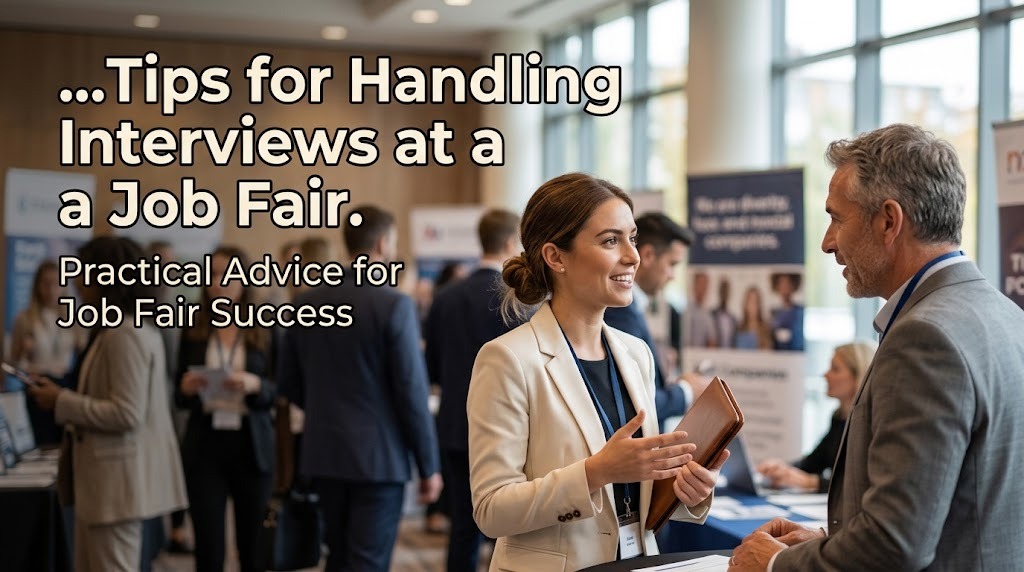
Job fair interviews give job seekers a valuable opportunity to meet recruiters and introduce themselves directly to potential employers. Unlike regular interviews, these conversations are often shorter and may happen with little notice. Candidates therefore need to be prepared to explain their qualifications clearly within a limited amount of time. Good preparation, confident communication, and professional behavior can help create a positive impression.
RESEARCH THE COMPANY AND JOB POSITION
Before attending a job fair, research the companies that are expected to participate. Learn about their industry, products or services, company values, and available job positions. Pay close attention to the qualifications and responsibilities listed for the roles you are interested in. This information helps you connect your experience and skills with what the company needs.
You do not need to memorize every detail about a company. Focus on information that can help you have a meaningful conversation with the recruiter. Prepare a simple explanation of why you are interested in the company and position. Showing that you have done basic research can demonstrate genuine interest and preparation.
PREPARE A SHORT SELF INTRODUCTION
A short self introduction is important because job fair interviews may move quickly from one candidate to another. Mention your name, educational or professional background, relevant skills, and the type of position you are looking for. Keep your introduction focused on information that supports your application. Avoid telling your entire personal history.
Practice your introduction before attending the event so you can deliver it naturally. Do not memorize every sentence because this can make your delivery sound unnatural. Instead, remember the main points you want to communicate. Adjust your introduction based on the company and position you are discussing.
PRACTICE COMMON INTERVIEW QUESTIONS
Preparing for common interview questions can help you feel more confident during a job fair interview. Recruiters may ask about your background, strengths, weaknesses, previous experience, career goals, or reasons for applying. They may also ask why you are interested in their company. Prepare honest answers based on your actual experiences.
For experience based questions, use specific examples whenever possible. Explain the situation, what you did, and what result you achieved. Students and fresh graduates can use examples from internships, academic projects, organizations, competitions, or volunteer activities. Concrete examples are usually more convincing than general statements.
HIGHLIGHT RELEVANT SKILLS
Use the interview to show how your skills can contribute to the position. Instead of simply saying that you are good at communication or teamwork, provide an example that demonstrates those abilities. Explain how you used a particular skill to complete a project, solve a problem, or achieve a goal. This gives recruiters stronger evidence of your capabilities.
Focus on the skills that are most relevant to the position. Technical skills can be discussed alongside the tools or methods you have used. Soft skills can be demonstrated through examples of collaboration, leadership, problem solving, or handling challenges. Keep your explanation concise because job fair interviews often have limited time.
COMMUNICATE WITH CONFIDENCE
Confidence can help recruiters understand your qualifications and personality more clearly. Speak at a comfortable pace and make appropriate eye contact while listening and responding. Greet recruiters politely and maintain a professional tone throughout the conversation. Good communication can make a short interview more memorable.
Being confident does not mean pretending to know everything. If you do not know the answer to a question, respond honestly and explain that you are willing to learn. Avoid speaking too quickly because of nervousness. Take a brief moment to organize your thoughts before answering difficult questions.
PAY ATTENTION TO BODY LANGUAGE
Body language can support the message you communicate during an interview. Sit or stand with good posture and show that you are paying attention to the recruiter. Avoid constantly checking your phone, looking away, or appearing distracted. A calm and attentive posture can help create a professional impression.
Nervousness is normal, especially when meeting recruiters for the first time. Take a breath and focus on the conversation rather than worrying about every small movement. Smile naturally when appropriate and listen carefully before responding. Your overall attitude matters more than trying to control every gesture.
ASK RELEVANT QUESTIONS
Job fair interviews are also an opportunity for candidates to learn more about the employer. Prepare a few questions about the position, responsibilities, recruitment process, training, or career development. Asking relevant questions can show that you are seriously considering the opportunity. It also helps you determine whether the position matches your expectations.
Avoid asking questions simply to fill the remaining time. Choose questions that provide useful information that is not already clearly explained in the job description. Listen carefully to the recruiter's response and continue the conversation naturally. A thoughtful question can sometimes lead to a more meaningful discussion.
BRING YOUR CV AND SUPPORTING DOCUMENTS
Always prepare an updated CV before attending a job fair. Bring printed copies if the event is held in person, and keep digital versions available if companies accept online applications. If relevant, prepare a portfolio, certificates, or examples of previous work. Make sure every document contains accurate and current information.
Organize your documents so they can be accessed quickly when a recruiter asks for them. Check your phone, email, or cloud storage before the event if you plan to submit digital files. Use professional file names and make sure portfolio links work properly. Being prepared can prevent unnecessary delays during the interview.
DRESS APPROPRIATELY
Your appearance should reflect the professional nature of the event. Choose clothing that is clean, neat, comfortable, and appropriate for the industry and company. A professional or business casual outfit is generally a safe option when there are no specific dress requirements. Avoid clothing or accessories that are excessively distracting.
Personal appearance is only one part of your overall presentation. Your communication, qualifications, attitude, and preparation remain more important. Choose an outfit that allows you to move comfortably because job fairs may require several hours of walking and standing. A neat appearance combined with professional behavior can create a positive first impression.
FOLLOW UP AFTER THE INTERVIEW
Pay attention to any instructions the recruiter provides at the end of the interview. They may ask you to submit additional documents, complete an online application, or wait for information about the next recruitment stage. Write down important details so you do not forget them after visiting several company booths. Following instructions carefully shows professionalism.
If the company provides an appropriate contact channel for follow up, communicate briefly and politely. Avoid sending repeated messages within a short period to ask about the result. Give the recruiter enough time to complete the selection process. While waiting, continue exploring other suitable job opportunities.
AVOID COMMON INTERVIEW MISTAKES
One common mistake is arriving at a job fair without knowing anything about the companies or positions available. Another is giving overly general answers that do not demonstrate relevant skills or experience. Candidates should also avoid exaggerating qualifications because recruiters may verify or test the information later. Honesty is essential throughout the recruitment process.
Avoid speaking negatively about previous employers, lecturers, classmates, or organizations. Do not interrupt recruiters or spend too much time talking about unrelated topics. Remember that job fair interviews are often brief, so every answer should have a clear purpose. Professional behavior can be just as important as the information presented in your CV.
CONCLUSION
Handling interviews at a job fair requires preparation, clear communication, and a professional attitude. Candidates should research companies, understand job positions, prepare a short self introduction, practice common questions, and prepare examples that demonstrate relevant skills. Bringing an updated CV and supporting documents can also make the interview process more efficient.
During the interview, remain confident, honest, attentive, and respectful. Use the opportunity to ask relevant questions and learn whether the company is suitable for your career goals. After the event, follow the recruiter's instructions and complete any required steps. With the right preparation and approach, job fair interviews can become valuable opportunities to connect with employers and move closer to employment.
About the Author
Gusti Ayu Tita P
Author — STEKOM University
An active author focused on academic issues, educational technology, and human resource development in the campus environment.