Tips for Successfully Attending a Job Fair and Finding Work
Gusti Ayu Tita P
27 Agustus 2026
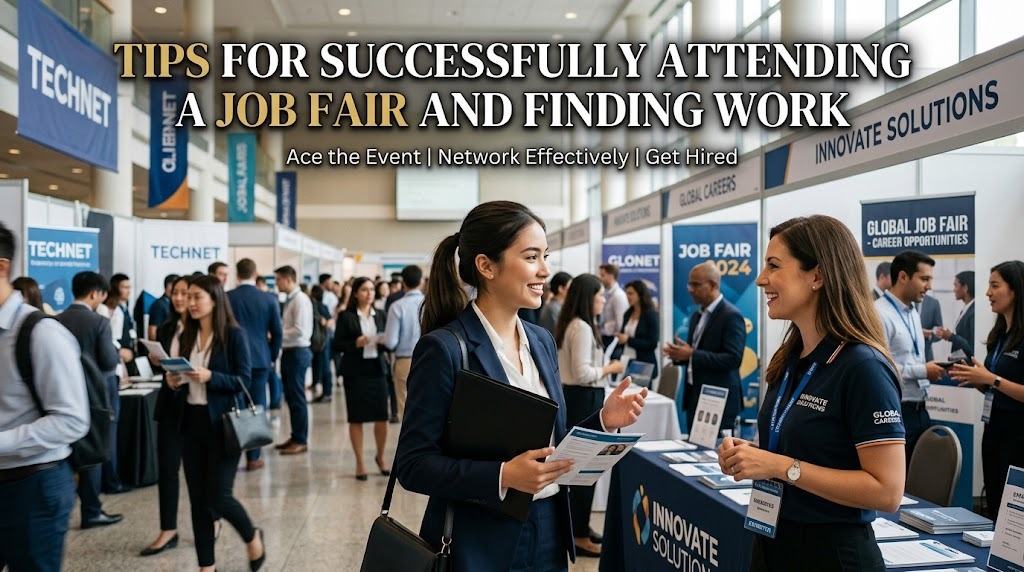
A job fair can be an excellent opportunity to meet recruiters, discover job openings, and learn more about different companies in one event. However, simply attending a job fair does not guarantee that you will get a job. Candidates need to prepare their documents, research companies, communicate effectively, and make a positive impression. With the right strategy, a job fair can become an important step toward finding suitable employment.
RESEARCH THE JOB FAIR BEFORE ATTENDING
Start by finding out important information about the job fair before the event begins. Check the date, location, registration requirements, opening hours, and list of participating companies. Knowing these details helps you prepare properly and avoid missing important opportunities. If the organizer provides a list of available positions, review it carefully before attending.
Make a shortlist of companies that offer positions matching your education, skills, and career interests. Research their business areas, available roles, and basic requirements. This preparation allows you to spend more time with companies that are relevant to your career goals. It also helps you ask more meaningful questions when speaking with recruiters.
PREPARE A PROFESSIONAL CV
A professional CV is one of the most important documents to bring to a job fair. Make sure it clearly presents your education, work experience, skills, achievements, and contact information. Keep the layout clean and easy to read so recruiters can quickly understand your qualifications. Your CV should also be relevant to the type of positions you want to pursue.
If you are interested in different types of jobs, consider preparing slightly different versions of your CV. Highlight the skills and experiences that are most relevant to each position. Fresh graduates can include internships, academic projects, organizational activities, volunteer work, and relevant achievements. Always check your CV for spelling errors and outdated information before submitting it.
LEARN ABOUT THE COMPANIES
Researching companies before attending the event can make your conversations with recruiters more effective. Learn about their products, services, industry, work culture, and current job opportunities. You do not need to memorize every detail about the company. Focus on information that is directly related to the position you want.
Company research also helps you answer questions about why you are interested in joining the organization. It shows recruiters that you are serious rather than simply submitting your CV to every available booth. Use reliable sources, especially official company channels, when gathering information. A basic understanding of the company can make you appear more prepared and professional.
PRACTICE YOUR SELF INTRODUCTION
Job fairs can be busy, so recruiters may have limited time to speak with each candidate. Prepare a short introduction that explains who you are, your educational or professional background, and the type of role you are seeking. Mention one or two relevant skills or experiences that make you suitable for the position. Keep your introduction clear and natural rather than making it sound memorized.
Practice your introduction before the event so you can speak confidently. However, avoid repeating the exact same script in every conversation. Adjust your introduction according to the company and position you are discussing. A natural conversation can help create a stronger connection with the recruiter.
DRESS PROFESSIONALLY
Your appearance can contribute to the first impression you make at a job fair. Choose clean, neat, and appropriate clothing that matches a professional environment. The level of formality can depend on the industry and event, but a polished business or business-casual appearance is generally a safe choice. Comfortable clothing is also important because you may spend several hours walking around the event.
Pay attention to simple details such as clean shoes, tidy hair, and appropriate accessories. Avoid clothing that is excessively casual or distracting. Remember that appearance is only one part of the overall impression. Your communication, attitude, skills, and professionalism remain much more important.
COMMUNICATE CONFIDENTLY WITH RECRUITERS
When approaching a company booth, greet the recruiter politely and introduce yourself. Explain briefly which position interests you and why your background may be relevant. Listen carefully to the recruiter's explanation instead of focusing only on delivering your own information. Good communication should be a two-way conversation.
Confidence does not mean speaking too much or dominating the conversation. Maintain appropriate eye contact, speak clearly, and show genuine interest. If you are nervous, take a moment to organize your thoughts before answering. A calm and respectful approach can help recruiters remember you positively.
ASK RELEVANT QUESTIONS
Asking thoughtful questions can demonstrate that you have researched the company and are genuinely interested in the opportunity. You can ask about the responsibilities of the position, required skills, recruitment stages, or professional development opportunities. Choose questions that are not already clearly answered in the job description. This makes the conversation more useful for both you and the recruiter.
Avoid asking too many questions when there is a long line of candidates waiting. Focus on the information that is most important to your career decision. Listen to the recruiter's answers and respond appropriately. A short but meaningful conversation can be more effective than a long conversation without a clear purpose.
SHOW YOUR SKILLS THROUGH EXPERIENCE
Do not simply list your skills during a conversation with a recruiter. Support important skills with examples from your previous experiences. For example, if you claim to have strong teamwork skills, explain how you contributed to a successful academic project, organization, internship, or workplace assignment. Real examples make your skills easier for recruiters to understand.
Fresh graduates can use university experiences to demonstrate their potential. Class projects, student organizations, competitions, internships, volunteer activities, and freelance work can all provide useful examples. Focus on what you did, what skills you used, and what result you achieved. This approach can make your profile more convincing even when you have limited professional experience.
BRING SUPPORTING DOCUMENTS
Prepare all documents that may be needed before attending the job fair. Besides several copies of your CV, you may need a portfolio, certificates, academic records, or other supporting documents depending on the position. Keep digital versions available as well in case a recruiter asks you to submit them online. Make sure all files have professional names and can be accessed easily.
Do not bring unnecessary personal documents unless they are specifically requested. Be careful when submitting sensitive information and make sure you understand who is receiving it and why it is needed. If a company asks you to complete an online application, verify that you are using the company's legitimate recruitment channel. Good preparation should also include protecting your personal information.
BUILD A PROFESSIONAL NETWORK
A job fair is not only about finding an immediate job opening. It is also a valuable opportunity to meet recruiters, professionals, and other people working in your target industry. Introduce yourself politely and maintain professional relationships when appropriate. Networking can help you discover opportunities that may not be publicly advertised at the event.
Do not approach people only when you need a job. Show genuine interest in their work and be respectful of their time. If a recruiter provides a professional contact or asks you to connect through a specific channel, follow the instructions appropriately. A strong professional network can become useful throughout your career.
FOLLOW UP AFTER THE JOB FAIR
Your responsibility does not end after you submit your CV. Review your notes and identify the companies and positions you applied for. If a recruiter gives you specific instructions for the next recruitment stage, complete them carefully and within the required timeframe. Keep track of applications so you do not miss important messages or deadlines.
If follow-up communication is appropriate, keep your message short, polite, and professional. Avoid sending repeated messages in a short period simply to ask about the result. Companies may need time to review applications and conduct their recruitment process. While waiting, continue applying for other suitable opportunities.
AVOID COMMON JOB FAIR MISTAKES
One common mistake is attending a job fair without knowing which companies or positions are relevant. This can waste time and make your interactions less focused. Another mistake is using the same generic CV for every position without considering the company's requirements. Candidates should also avoid exaggerating skills or experience because recruiters may test those claims during later stages.
Poor communication can also reduce the quality of an otherwise strong application. Avoid interrupting recruiters, speaking negatively about previous employers or organizations, and asking inappropriate questions. Do not become discouraged if a company does not have a suitable position for you. Every interaction can provide useful information and experience for your future job search.
CONCLUSION
Successfully attending a job fair requires more than simply bringing a CV and visiting company booths. Candidates should research participating companies, understand available positions, prepare a professional CV, practice their introduction, and communicate confidently with recruiters. Showing relevant skills through real experiences can also help candidates stand out among other applicants.
After the event, remember to follow up on applications and complete any additional recruitment steps requested by companies. Job fairs can provide valuable opportunities to find employment, build professional networks, and understand current industry needs. With careful preparation, professional communication, and a proactive attitude, candidates can make the most of every job fair they attend.
About the Author
Gusti Ayu Tita P
Author — STEKOM University
An active author focused on academic issues, educational technology, and human resource development in the campus environment.