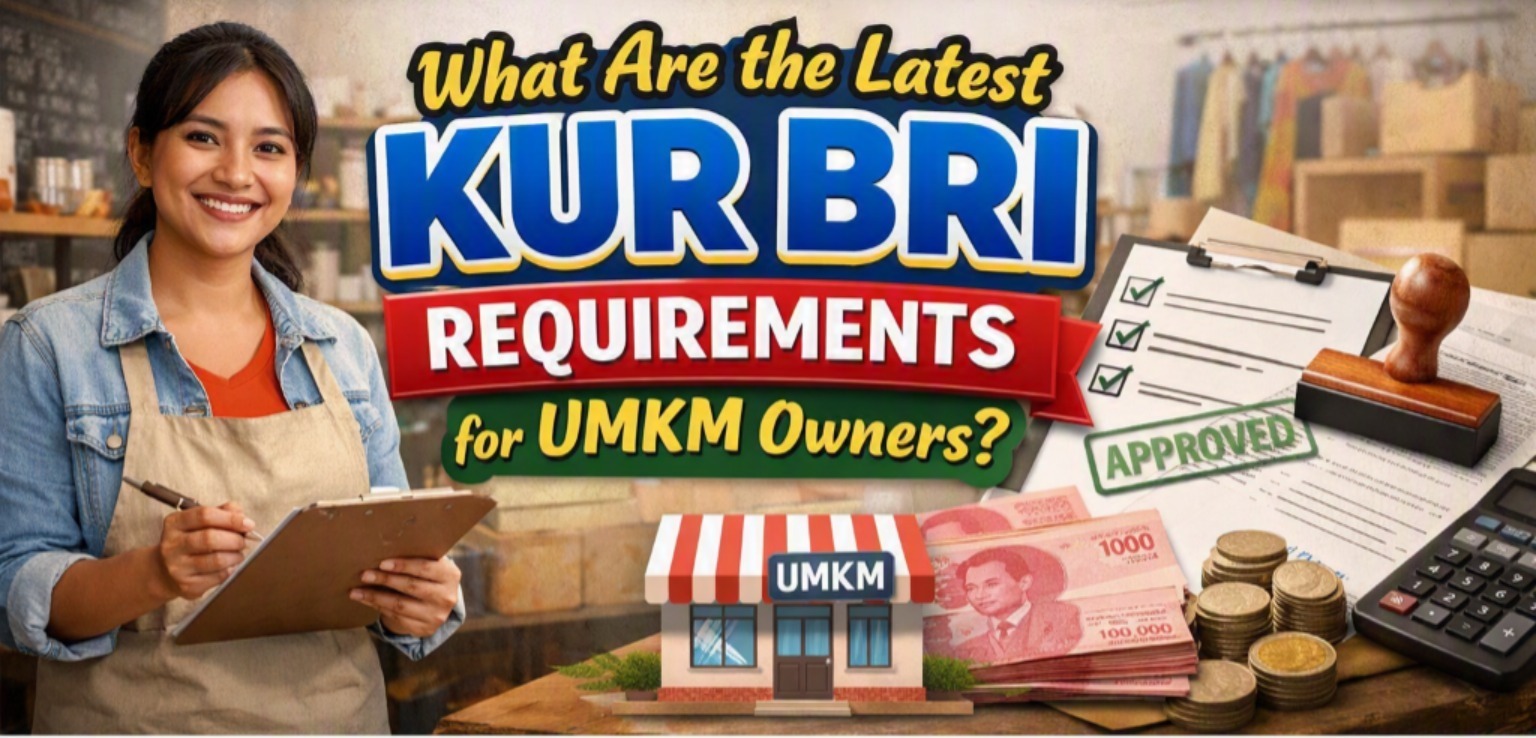
What Are the Latest KUR BRI Requirements for UMKM Owners?
Gusti Ayu Tita P
21 Agustus 2026
Kredit Usaha Rakyat or KUR BRI is one of the financing options available for UMKM owners who need additional capital for productive business activities. In 2026, BRI continues to provide KUR for eligible businesses, including financing for working capital and business investment. BRI states that KUR is intended for businesses that are productive and feasible, particularly those that have limited or insufficient additional collateral.
For UMKM owners, understanding the latest requirements is important before submitting an application. Applicants should prepare their personal identification, business legality, business history, and other supporting information according to the type of KUR requested. Requirements can also differ between KUR Super Mikro, KUR Mikro, and KUR Kecil, so applicants should verify the applicable conditions with an official BRI unit before applying.
MAIN REQUIREMENTS FOR KUR BRI
One of the main requirements for KUR BRI is having a productive and feasible business. BRI's current information states that prospective KUR debtors generally need to have a business that has been actively operating for at least six months. Applicants also need to meet applicable credit requirements, including the condition that they are not currently receiving another bank loan, except for certain consumer loans such as KPR, KKB, and credit cards.
For administration, applicants should prepare KTP, Kartu Keluarga, and business licensing documents. BRI's current KUR information also lists NIB and NPWP among the general criteria for KUR debtors. The bank will assess whether the applicant and business meet the applicable requirements before approving financing. Therefore, having complete documents does not automatically guarantee that a KUR application will be approved.
BUSINESS MUST BE PRODUCTIVE AND FEASIBLE
The business condition is an important part of the KUR application process. An applicant should be able to demonstrate that the business is actively operating and has realistic economic potential. The business may come from productive sectors such as agriculture, fisheries, livestock, plantations, processing industries, construction, tourism, services, or trade.
Business owners should therefore prepare information that can help explain their business activities clearly. Examples include the type of products or services sold, operating history, estimated turnover, business location, and intended use of the financing. A clear business profile can help the bank evaluate the feasibility of the business and repayment capacity. The final assessment remains subject to BRI's applicable procedures and credit analysis.
DOCUMENTS UMKM OWNERS SHOULD PREPARE
Before applying, UMKM owners should prepare their KTP and Kartu Keluarga as basic identity documents. Business legality should also be prepared, including an applicable business license or NIB, depending on the requirements for the applicant and business. BRI's KUR information specifically identifies identity and business licensing as administrative requirements for KUR Mikro.
Applicants should also check whether NPWP is required for their particular KUR application and financing amount. BRI's current general KUR criteria mention both NIB and NPWP, so preparing these documents can make the application process more orderly. Additional documents may be requested during the bank's assessment depending on the applicant's circumstances and type of KUR. For that reason, it is better to confirm the complete document checklist directly with an official BRI representative before submitting an application.
DIFFERENCES BETWEEN KUR SUPER MIKRO, MIKRO AND KECIL
The KUR program has different financing categories, so the requirements and financing limits can vary. BRI's 2026 information lists KUR Super Mikro with financing up to Rp10 million, while KUR Mikro covers financing above Rp10 million up to Rp100 million. Meanwhile, KUR Kecil covers financing above Rp100 million up to Rp500 million.
The financing purpose can include working capital and investment, allowing eligible business owners to use the facility according to applicable rules. BRI currently states that KUR Super Mikro has an interest rate of 3% effective per year, while KUR Mikro and KUR Kecil have rates starting from 6% effective per year, subject to the applicable scheme. Because financing terms can depend on the product and government policy, applicants should confirm the latest rate, tenor, ceiling, and other conditions when applying.
CHECK YOUR CREDIT HISTORY BEFORE APPLYING
A prospective borrower should pay attention to their credit history before submitting a KUR application. BRI's current general KUR criteria state that applicants should not have a negative record in SLIK. A problematic credit record can affect the bank's assessment because repayment history is an important consideration in determining creditworthiness.
Applicants should also make sure that information provided to the bank is accurate and consistent. Business information, identity documents, and financial details should not contain misleading information. If there are existing loans, applicants should explain them honestly according to the bank's requirements. This preparation can help reduce potential problems during the credit verification process.
HOW TO APPLY FOR KUR BRI SAFELY?
UMKM owners should submit their KUR application through official BRI channels. BRI has emphasized that KUR applications are not processed through unofficial online links, personal social media accounts, or unknown parties claiming to represent the bank. Official application services are available through BRI branches, BRI sub-branches, BRI Units, Teras BRI, AgenBRILink, and official BRI marketing personnel.
Applicants should be cautious if someone asks for money or personal information through an unofficial link while claiming to offer guaranteed KUR approval. KUR approval is not guaranteed simply because an applicant has complete documents, because the bank still conducts its own assessment. Always verify the identity of the person handling the application and use official BRI service points. This is an important step to protect personal information and avoid KUR-related scams.
TIPS TO IMPROVE KUR BRI APPLICATION READINESS
The first step is to make sure that business documents are complete and valid. Next, organize basic business information such as turnover, expenses, business duration, and the intended use of financing. Applicants should also ensure that their existing credit obligations are managed properly and that there are no unnecessary inconsistencies in the information submitted.
It is equally important to choose a KUR category that matches the actual financing needs and business capacity. Do not apply for a larger amount simply because the maximum ceiling is available. The financing should be used for productive purposes that can support business development and repayment ability. Finally, confirm the latest requirements directly with BRI because KUR terms and administrative requirements can change according to applicable regulations and bank policies.
CONCLUSION
The latest KUR BRI requirements for UMKM owners generally focus on having a productive and feasible business, meeting the required business duration, preparing valid identity and business documents, and satisfying applicable credit criteria. Current BRI information includes requirements such as KTP, KK, business legality, NIB, and NPWP, while applicants must also meet applicable SLIK and existing-credit conditions.
Understanding these requirements before applying can help UMKM owners prepare more efficiently and avoid unnecessary delays. Applicants should also select the appropriate KUR category based on their business needs and financing capacity. Most importantly, use official BRI channels and verify the latest information before submitting an application.
About the Author
Gusti Ayu Tita P
Author — STEKOM University
An active author focused on academic issues, educational technology, and human resource development in the campus environment.