Can Volcanic Eruptions Benefit The Environment In The Long Term?
Gusti Ayu Tita P
19 September 2026
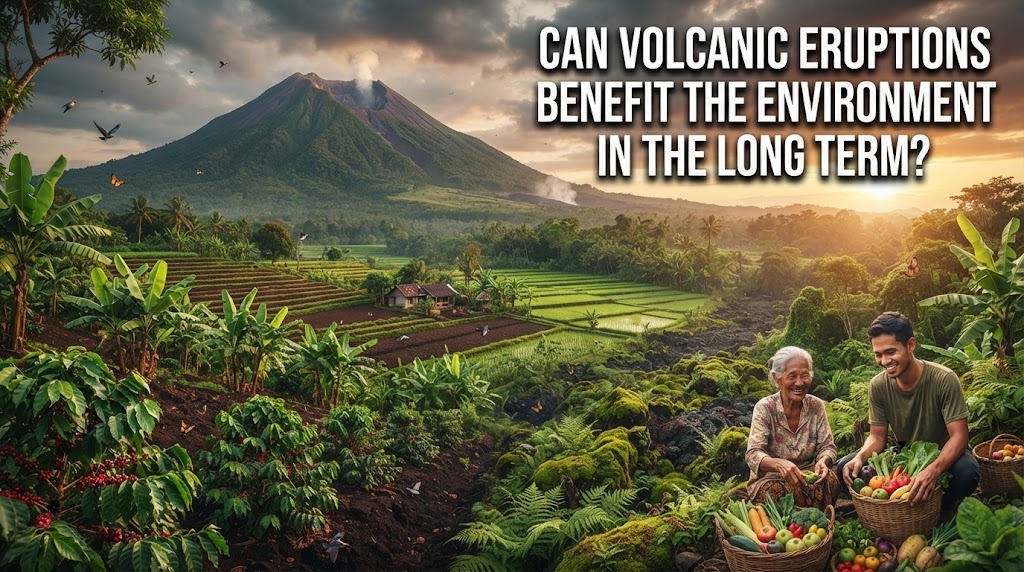
Volcanic eruptions are often associated with destruction, ashfall, and damage to surrounding areas. However, their effects on the environment are not always negative in the long term. Volcanic materials can provide minerals and nutrients that contribute to soil development and ecological recovery. Over time, areas affected by eruptions can become habitats for plants, animals, and other organisms.
HOW VOLCANIC MATERIALS ENRICH THE SOIL
Volcanic eruptions release ash, rock fragments, and other materials that contain various minerals and nutrients. As these materials break down through weathering, they can become part of the soil. Some volcanic soils can support plant growth because they contain nutrients that plants need. This process, however, does not happen immediately after an eruption.
Fresh volcanic deposits may initially make the land difficult for plants to grow. Over time, rain, microorganisms, and other natural processes help break down volcanic materials. The resulting soil can become more suitable for vegetation. Volcanic soil development is therefore an important long term environmental effect of some eruptions.
SUPPORTING NEW PLANT GROWTH
After an eruption, vegetation can gradually return to affected areas. Small plants may become the first organisms to grow on newly exposed surfaces. As vegetation develops, it can help stabilize the soil and reduce erosion. Plant growth also creates conditions that allow other organisms to return.
Different plants may establish themselves at different stages of ecological recovery. As vegetation becomes denser, it can provide food and shelter for insects, birds, and other animals. This gradual process is known as ecological succession. It shows how natural ecosystems can recover after major environmental disturbances.
CREATING NEW HABITATS
Volcanic activity can create new landscapes such as lava fields, volcanic slopes, and other geological formations. These areas may eventually become habitats for organisms that can adapt to new environmental conditions. Over time, plants can colonize these surfaces and create more suitable conditions for other species. New habitats can therefore develop through long term natural processes.
Volcanic landscapes can also increase the variety of environments within a region. Different elevations, soil conditions, and rock formations can support different types of organisms. This can contribute to biodiversity when ecosystems have enough time to develop. However, the process depends on climate, eruption characteristics, and the ability of organisms to reach the affected area.
IMPROVING NUTRIENT CYCLING
Volcanic materials can contribute to nutrient cycling within ecosystems. As rocks and ash weather, minerals can gradually become available in the soil and water. Plants can absorb some of these nutrients and use them for growth. When plants and animals die, their organic matter can return nutrients to the ecosystem.
This process supports interactions between soil, plants, animals, and microorganisms. Healthy nutrient cycling is important for maintaining productive ecosystems. However, volcanic materials do not automatically make every area fertile. Soil conditions depend on many factors, including mineral composition, climate, drainage, and biological activity.
SUPPORTING ECOSYSTEM RECOVERY
A volcanic eruption can significantly disturb an ecosystem, but nature can gradually recover when conditions become suitable. Plants begin to return, followed by insects, birds, and other organisms. As these populations increase, food webs and ecological relationships can develop again. The speed of recovery varies from one location to another.
Some areas may recover relatively quickly, while places covered by thick lava or volcanic deposits may require much longer. Human activities can also influence the recovery process. Protecting recovering ecosystems from additional disturbance can help natural processes continue. Long term ecological recovery demonstrates the ability of nature to adapt to environmental change.
LIMITS OF THE ENVIRONMENTAL BENEFITS
Although volcanic eruptions can provide long term environmental benefits, they can also cause severe and lasting damage. Large eruptions may destroy forests, agricultural land, habitats, and water systems. Thick lava and volcanic deposits can make some areas unsuitable for life for many years. Therefore, the environmental benefits should not be viewed as immediate or guaranteed.
The positive effects usually develop over years or longer periods, while the destructive effects can occur within a short time. The balance between damage and recovery depends on the size of the eruption, climate, geography, and ecosystem conditions. Understanding both sides gives a more accurate view of volcanic activity. Volcanic eruptions are natural disturbances with both short term impacts and potential long term ecological effects.
CONCLUSION
Volcanic eruptions can benefit the environment in the long term by enriching soil, supporting plant growth, creating habitats, and encouraging ecosystem recovery. These benefits usually develop gradually as volcanic materials weather and organisms return to affected areas. However, eruptions can also cause serious environmental destruction, so their effects are not entirely positive. The long term result depends on the characteristics of the eruption and the natural conditions of the affected ecosystem.
Tentang Penulis
Gusti Ayu Tita P
Penulis — Universitas STEKOM
Penulis aktif yang berfokus pada isu-isu akademik, teknologi pendidikan, dan pengembangan sumber daya manusia di lingkungan kampus.