
How Can You Identify an Evacuation Assembly Point?
Gusti Ayu Tita P
19 September 2026
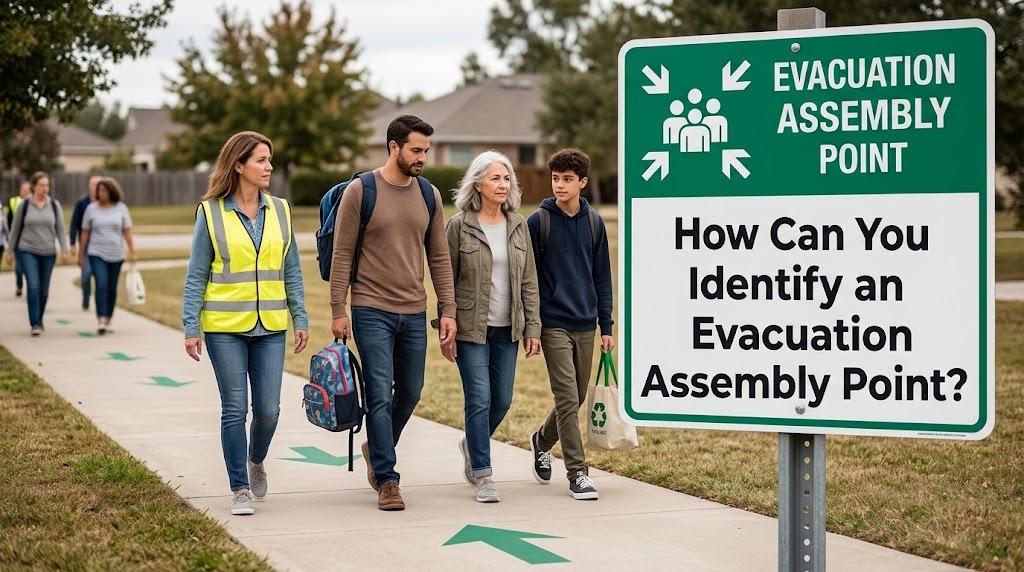
An evacuation assembly point is a designated location where people gather after leaving a dangerous area during a disaster. It helps families, schools, workplaces, and communities organize people and check whether everyone has reached safety. Knowing the assembly point before an emergency can prevent confusion and unnecessary movement. People should learn its location as part of their disaster preparedness plan.
Assembly points can be especially important when many people must evacuate at the same time. A suitable location should be away from immediate hazards and accessible through safe evacuation routes. However, the safest assembly point can depend on the type of disaster and local conditions. People should always follow instructions from local authorities or emergency personnel.
LOOK FOR OFFICIAL ASSEMBLY POINT SIGNS
The easiest way to identify an assembly point is to look for official signs or emergency maps. Signs may be placed near buildings, schools, public facilities, residential areas, or other locations where evacuation may be necessary. They can show the direction people should follow and the location where evacuees should gather.
People should become familiar with these signs before a disaster occurs. If you are unsure about the meaning or location of an emergency sign, ask the responsible authorities or building management. Do not assume that any open area is automatically a safe assembly point.
CHECK LOCAL EVACUATION INFORMATION
Local authorities often provide information about evacuation routes and assembly points based on the hazards in a particular area. This information may be available through official websites, community announcements, emergency services, or local disaster management organizations. People should check these sources before an emergency happens.
The assembly point may be different depending on the type of disaster. For example, an area suitable for one emergency may not be appropriate during a flood or tsunami. Therefore, always check disaster-specific instructions and follow the latest information provided by authorities.
CHOOSE A LOCATION AWAY FROM HAZARDS
A suitable assembly point should be located away from immediate danger. Depending on the disaster, hazards may include fire, floodwater, unstable buildings, falling objects, landslides, or damaged infrastructure. People should avoid gathering near areas where these dangers may still exist.
An assembly point should also provide enough space for people to gather without blocking emergency access. Emergency vehicles and rescue teams may need to use nearby roads to reach affected areas. Following designated gathering areas can help keep evacuation routes accessible.
CONSIDER ACCESSIBILITY AND SAFETY
An assembly point should be reasonably accessible to children, elderly people, people with disabilities, and others who may need assistance. Routes leading to the location should be considered carefully, especially if someone has difficulty walking or using stairs. Families and organizations should identify any additional assistance that may be needed.
People should also consider whether the assembly point can accommodate the expected number of evacuees. A location that is too small or difficult to access may create additional problems. Clear directions and organized movement can make it easier for everyone to reach the designated area.
LEARN MORE THAN ONE EVACUATION ROUTE
Knowing the assembly point is not enough if the route leading there becomes blocked. People should learn the main evacuation route and possible alternatives before an emergency. Roads may become inaccessible because of flooding, fallen trees, debris, fire, or damaged structures.
An alternative route should only be used when it is considered safe and appropriate. During an actual disaster, follow updated instructions from emergency personnel. Never choose a shortcut through a hazardous area simply because it appears faster.
USE MAPS AND TECHNOLOGY CAREFULLY
Digital maps and navigation applications can help people understand where an assembly point is located. Families can study the surrounding area and become familiar with nearby roads and landmarks before a disaster. Some official emergency systems may also provide digital information about evacuation areas.
However, technology should not be the only source of information. Internet connections, electricity, or mobile networks may fail during a disaster. People should therefore also remember the location using physical landmarks and official signs and keep important emergency information available offline when possible.
CHECK THAT EVERYONE HAS ARRIVED
After reaching the assembly point, families and groups should check that everyone is accounted for. Schools and workplaces may use attendance lists or other procedures to determine whether everyone has reached the safe area. Families can also agree on a simple system for checking each member.
If someone is missing, inform emergency personnel or responsible authorities instead of returning alone to a dangerous area. Trained emergency workers can coordinate searches and provide appropriate assistance. Remaining at the assembly point also makes it easier for authorities to provide further instructions.
CONCLUSION
Identifying an evacuation assembly point requires checking official signs, learning local evacuation information, avoiding hazards, and understanding safe routes. People should know the assembly point before a disaster and consider alternative routes in case conditions change. It is also important to choose locations that can accommodate people who may need additional assistance. By understanding assembly points and following official instructions, individuals and communities can make disaster evacuation more organized and safer.
Tentang Penulis
Gusti Ayu Tita P
Penulis — Universitas STEKOM
Penulis aktif yang berfokus pada isu-isu akademik, teknologi pendidikan, dan pengembangan sumber daya manusia di lingkungan kampus.















