
How Does Inner Conflict Develop When Someone Faces a Dilemma?
Gusti Ayu Tita P
21 September 2026
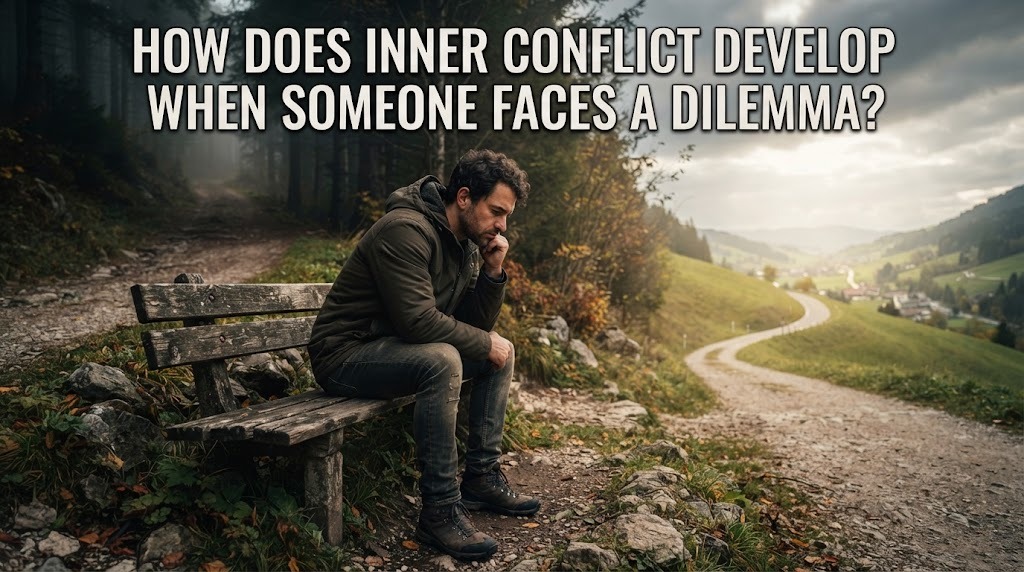
Inner conflict often develops when someone faces a dilemma that requires choosing between two or more difficult options. Each option may have important benefits, risks, or emotional consequences, making the decision harder to handle. A person may understand the practical choice while still feeling attached to another option. This difference can create emotional tension, uncertainty, and difficulty making decisions.
A dilemma does not always involve a major life decision. It can also appear in everyday situations involving relationships, education, work, finances, or personal values. The more important the consequences feel, the stronger the internal struggle may become. Understanding how inner conflict develops can help a person approach difficult choices more calmly.
WHAT IS A DILEMMA AND WHY CAN IT CREATE INNER CONFLICT?
A dilemma occurs when someone must choose between different options that each have meaningful consequences. The problem is that there may not be an option that feels completely right or completely safe. One choice may satisfy personal feelings, while another may provide greater practical benefits. This situation can make a person feel mentally divided.
Inner conflict develops when the person begins comparing these competing priorities. They may think about what they want, what they need, and what others expect from them. Competing priorities can make the decision feel more complicated than it initially appeared. As a result, the person may struggle to decide which consideration should receive greater attention.
HOW DO COMPETING VALUES CREATE INNER CONFLICT?
Personal values play an important role in difficult decisions. Someone may value loyalty, independence, security, success, or personal happiness, but a dilemma can make these values appear to conflict with one another. For example, a person may want to pursue a new opportunity while also feeling responsible for people who depend on them. Both values may be meaningful, creating emotional tension.
The conflict becomes stronger when the person believes that choosing one value means sacrificing another. They may repeatedly ask whether they are making the right choice or disappointing someone. This can lead to uncertainty and emotional pressure. Identifying the values involved can help clarify what is actually creating the internal struggle.
CAN FEAR OF CONSEQUENCES MAKE THE CONFLICT WORSE?
Yes, fear can make an existing dilemma more difficult to manage. A person may worry about making a mistake, experiencing regret, losing an opportunity, or hurting someone they care about. These concerns can make both options seem risky. As a result, the person may continue analyzing the decision without feeling ready to act.
Fear can also encourage overthinking. Instead of focusing on realistic possibilities, someone may imagine many negative outcomes that may never happen. This can make the dilemma feel larger and more threatening. Separating realistic risks from assumptions can help reduce unnecessary mental pressure.
HOW DOES UNCERTAINTY DEVELOP DURING A DILEMMA?
Uncertainty often develops because the future consequences of a decision cannot be known completely. A person may have enough information to compare the options but still be unable to predict exactly what will happen. This lack of certainty can create decision-making anxiety and make the person question their judgment.
Repeatedly searching for a perfect answer can make the situation even harder. Most important decisions involve some level of uncertainty, so waiting until every possible outcome is known may not be realistic. A person can instead focus on available facts, likely consequences, and personal priorities. This approach can make uncertainty easier to manage.
WHY CAN A DILEMMA LEAD TO OVERTHINKING?
A dilemma can encourage repetitive thinking because the person wants to avoid making the wrong choice. They may repeatedly compare advantages and disadvantages, imagine different scenarios, or ask other people for opinions. While careful consideration can be useful, excessive analysis may prevent the person from reaching a decision.
Overthinking can also cause the same information to be reviewed repeatedly without producing anything new. Writing down the main options and identifying what can actually be controlled may help organize thoughts. It can also be useful to set a reasonable time for reflection. Balanced decision-making allows a person to think carefully without becoming trapped in endless analysis.
HOW CAN SOMEONE MANAGE INNER CONFLICT DURING A DILEMMA?
Managing inner conflict begins with acknowledging that the dilemma is difficult instead of pretending that there is no emotional struggle. A person can identify the available choices, the emotions connected to each option, and the possible consequences. Separating facts, feelings, fears, and expectations can make the situation clearer.
It may also help to speak with a trusted person who can provide perspective without making the decision for them. After gathering enough information, the person can consider which option is most consistent with their values and current circumstances. The goal is not to guarantee a perfect outcome but to make a thoughtful and informed choice. If the conflict becomes persistent and significantly affects daily functioning, professional support may also be appropriate.
CONCLUSION
Inner conflict can develop during a dilemma when competing choices involve different values, emotions, risks, and expectations. Fear of consequences, uncertainty, and overthinking can make the internal struggle stronger. However, facing a dilemma does not mean that a person must find a completely risk-free answer. Through self-awareness, realistic thinking, clear priorities, and balanced decision-making, someone can better understand the conflict and move toward a considered choice.
Tentang Penulis
Gusti Ayu Tita P
Penulis — Universitas STEKOM
Penulis aktif yang berfokus pada isu-isu akademik, teknologi pendidikan, dan pengembangan sumber daya manusia di lingkungan kampus.















