
How Does Recovery Take Place After A Volcanic Eruption?
Gusti Ayu Tita P
19 September 2026
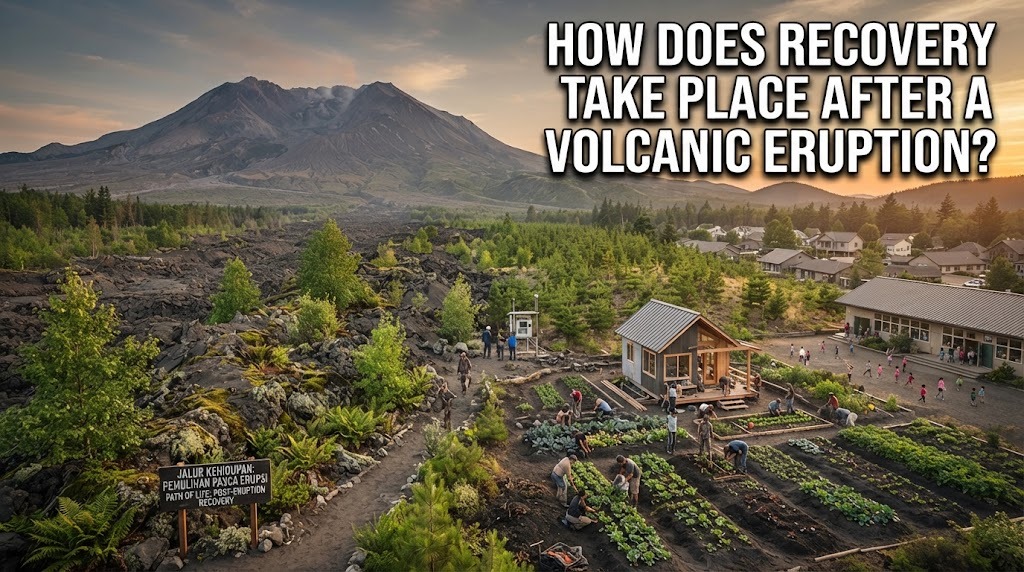
A volcanic eruption can cause major changes to communities, infrastructure, agriculture, and the natural environment. After the eruption ends, recovery takes time and usually happens in several stages. Communities need to restore essential services while also dealing with damaged land and disrupted livelihoods. The recovery process involves cooperation between residents, authorities, emergency organizations, and other supporting groups.
ENSURING SAFETY AFTER THE ERUPTION
The first step in recovery is making sure that affected areas are safe to enter. Volcanic hazards may continue after an eruption through ashfall, lava, unstable slopes, volcanic gases, and lahars. Authorities may establish restricted zones around dangerous areas. Residents should return only when official information confirms that conditions are safe.
Emergency teams may inspect roads, buildings, bridges, water systems, and other important facilities. They also assess areas that could still be affected by volcanic materials. Safety assessments help prevent people from returning to locations with hidden hazards. This stage is essential before large-scale reconstruction begins.
CLEANING AND RESTORING INFRASTRUCTURE
After an area is considered safe, communities can begin removing volcanic ash and debris. Roads, drainage systems, schools, homes, and public facilities may require cleaning and repairs. Heavy ash can place additional weight on roofs and may block drainage systems. Cleanup activities should be carried out carefully to avoid creating more airborne ash.
Damaged infrastructure may need to be repaired or rebuilt depending on the level of destruction. Restoring roads and communication systems is especially important because they support emergency services and economic activities. Basic infrastructure recovery allows communities to gradually return to normal daily activities. The process may take weeks, months, or longer depending on the damage.
RESTORING AGRICULTURE AND LIVELIHOODS
Volcanic eruptions can damage crops, farmland, livestock, and agricultural equipment. Farmers may need assistance with seeds, animal feed, tools, and financial support. Before farming resumes, soil and water conditions should be assessed to determine whether the land is suitable for cultivation. Some areas may require rehabilitation before they can be used again.
Other workers and businesses can also lose income because transportation, tourism, markets, or local services may be disrupted. Recovery programs can help people restart businesses or find temporary sources of income. Restoring livelihoods is important because economic recovery supports the long-term well-being of affected communities.
SUPPORTING COMMUNITY HEALTH
Volcanic eruptions can affect physical and emotional well-being even after the main eruption has ended. People may experience health problems related to volcanic ash, contaminated water, injuries, or disrupted living conditions. Health services may need additional resources to support affected residents. Clean water, sanitation, food, and access to medical care are important during recovery.
Communities may also experience stress after losing homes, property, or sources of income. Support from health workers, community organizations, and other services can help people manage these difficulties. Community health support should continue as long as important needs remain. Recovery is not only about rebuilding buildings but also about helping people return to stable daily lives.
RESTORING THE NATURAL ENVIRONMENT
The natural environment may also need time to recover after an eruption. Forests, rivers, farmland, and wildlife habitats can be covered or damaged by volcanic materials. Over time, plants can begin to grow again and animals may gradually return to suitable habitats. Natural recovery can take different amounts of time depending on the severity of the eruption and local environmental conditions.
In some places, human efforts can support environmental recovery through erosion control, reforestation, and restoration of damaged water systems. However, some ecosystems may recover naturally without extensive intervention. Environmental monitoring helps determine whether additional restoration is necessary. Protecting recovering areas from further disturbance can support long-term ecosystem recovery.
PREPARING FOR FUTURE ERUPTIONS
Recovery also provides an opportunity to improve preparedness for future volcanic activity. Authorities and communities can review what happened and identify weaknesses in evacuation plans, warning systems, infrastructure, and emergency response. Evacuation routes can be improved and emergency supplies can be prepared more effectively. Communities can also conduct disaster education and evacuation exercises.
Volcano monitoring systems can provide important information about changes in volcanic activity. Residents should know where to obtain reliable information and understand what to do when warnings are issued. Preparedness and recovery are closely connected because lessons from one disaster can help reduce risks during future events.
CONCLUSION
Recovery after a volcanic eruption involves safety assessment, infrastructure repair, livelihood restoration, health support, environmental recovery, and future preparedness. The process does not happen immediately and can continue for months or even years. Cooperation between communities, authorities, and support organizations is important for rebuilding affected areas. With careful planning and continuous support, communities can gradually restore their lives and become better prepared for future volcanic hazards.
Tentang Penulis
Gusti Ayu Tita P
Penulis — Universitas STEKOM
Penulis aktif yang berfokus pada isu-isu akademik, teknologi pendidikan, dan pengembangan sumber daya manusia di lingkungan kampus.















