Mutual Cooperation as Indonesia’s Cultural Identity
Gusti Ayu Tita P
19 Mei 2026
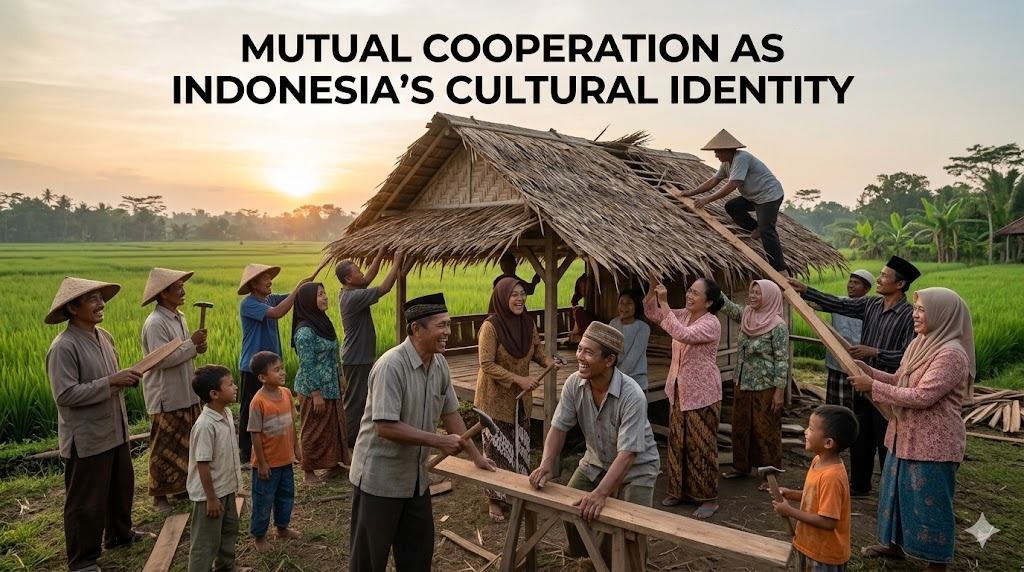
Indonesia is widely known for its rich cultural diversity and strong sense of community. Among the many cultural values preserved by Indonesian society, mutual cooperation or *gotong royong* stands out as one of the nation’s most important identities. This tradition reflects solidarity, unity, and collective responsibility in everyday life.
In the modern era, where individualism continues to grow, the value of mutual cooperation remains highly relevant. It not only strengthens social relationships but also helps communities solve problems together. Therefore, preserving the spirit of mutual cooperation is essential for maintaining Indonesia’s cultural identity.
THE MEANING OF MUTUAL COOPERATION
Mutual cooperation is a tradition where people work together to achieve common goals. In Indonesia, this value has been practiced for generations in various aspects of life, such as building houses, cleaning neighborhoods, organizing social events, and helping people during difficult times.
The concept of *gotong royong* teaches people the importance of helping one another without expecting rewards. It creates harmony and strengthens relationships among community members.
WHY MUTUAL COOPERATION IS IMPORTANT
Mutual cooperation plays a major role in maintaining social unity and cultural values. Here are several reasons why this tradition remains important today:
### STRENGTHENING SOCIAL RELATIONSHIPS
Working together encourages communication and trust between individuals. Communities that practice mutual cooperation usually have stronger social bonds and better relationships.
### BUILDING A SENSE OF UNITY
Indonesia consists of different ethnic groups, languages, and religions. Mutual cooperation helps unite people despite their differences and promotes tolerance among communities.
### SOLVING PROBLEMS TOGETHER
Many social and environmental problems can be solved more effectively when people work together. Mutual cooperation encourages collective responsibility and teamwork.
### PRESERVING CULTURAL VALUES
The tradition of helping others reflects Indonesia’s noble cultural values. Preserving mutual cooperation means protecting the nation’s identity from being lost in modernization.
CHALLENGES IN THE MODERN ERA
Although mutual cooperation remains important, modern lifestyles have created several challenges in preserving this tradition.
### GROWING INDIVIDUALISM
Technology and urban lifestyles often make people focus more on personal interests than community activities. As a result, social interaction becomes weaker.
### REDUCED COMMUNITY PARTICIPATION
Many young people spend more time online, causing participation in local social activities to decline.
### FOREIGN CULTURAL INFLUENCE
Globalization introduces foreign lifestyles that may reduce appreciation for traditional Indonesian values.
HOW TO PRESERVE MUTUAL COOPERATION
Preserving mutual cooperation requires active participation from all generations. Several actions can help maintain this valuable tradition:
### ENCOURAGING COMMUNITY ACTIVITIES
Neighborhood events, social programs, and volunteer work can strengthen the spirit of togetherness in society.
### TEACHING CULTURAL VALUES TO YOUNG GENERATIONS
Parents and schools should introduce the importance of mutual cooperation from an early age so children understand the value of helping others.
### USING SOCIAL MEDIA POSITIVELY
Digital platforms can be used to spread positive messages about unity, teamwork, and Indonesian cultural traditions.
THE ROLE OF YOUNG PEOPLE
Young people have an important role in preserving Indonesia’s cultural identity. By participating in community programs and promoting local values, they can help keep the tradition of mutual cooperation alive.
Modern technology should not eliminate cultural values. Instead, it can become a tool to introduce Indonesia’s traditions to the world.
CONCLUSION
Mutual cooperation is more than just a tradition; it is a symbol of Indonesia’s cultural identity. The values of unity, solidarity, and teamwork remain essential in modern society.
By preserving the spirit of *gotong royong*, Indonesians can maintain strong social relationships and protect their cultural heritage for future generations. Mutual cooperation continues to be an important foundation for creating a harmonious and united society.
Tentang Penulis
Gusti Ayu Tita P
Penulis — Universitas STEKOM
Penulis aktif yang berfokus pada isu-isu akademik, teknologi pendidikan, dan pengembangan sumber daya manusia di lingkungan kampus.